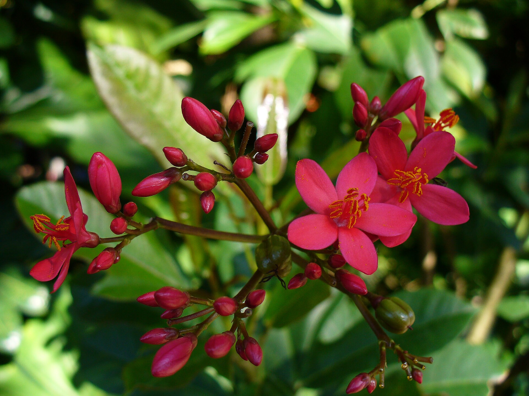
What if a plant traditionally used as medicine could also inspire a new approach to skin pigmentation? Scientists are now looking more closely at Jatropha curcas, a plant known for its medicinal uses in several countries. One of its natural compounds, called jatropholone B, has attracted attention because it may influence how skin cells produce melanin.
This finding is important because melanin is not simply a “dark pigment.” It helps protect the skin from harmful sunlight and chemicals. However, excessive or uneven melanin production can contribute to conditions such as melasma, freckles, and post-inflammatory hyperpigmentation. This has encouraged researchers to search for safer and more effective ways to regulate melanin production.
A recent study investigated how jatropholone B affects melanogenesis, the biological process responsible for melanin production. The researchers used Mel-Ab cells, a mouse-derived melanocyte cell line that produces large amounts of melanin. Their experiments showed that jatropholone B reduced melanin production in a concentration-dependent manner.
Interestingly, the compound did not directly block tyrosinase, an important enzyme involved in melanin production. Instead, it reduced the levels of two important proteins: microphthalmia-associated transcription factor (MITF) and tyrosinase. The researchers discovered that this effect was linked to the activation of a cellular signaling pathway known as extracellular signal-regulated kinase (ERK).
In simple terms, jatropholone B appears to “switch on” an internal cellular signal that eventually reduces the production of proteins involved in making melanin. When the researchers used PD98059, an ERK pathway inhibitor, the reduction in melanin, MITF, and tyrosinase was reversed. This provided evidence that ERK activation plays an important role in the action of jatropholone B.
The study is particularly interesting because it opens a new perspective on natural compounds and skin health. Rather than simply attacking tyrosinase directly, jatropholone B may regulate melanin production through the cell’s signaling system. However, this discovery should not yet be interpreted as proof that jatropholone B is a ready-to-use skin-whitening ingredient. The experiments were conducted in cultured cells, and the researchers themselves noted that further studies are needed, including investigations into its effects on cell growth and apoptosis.
This research supports Sustainable Development Goal (SDG) 3: Good Health and Well-being, particularly by contributing to scientific knowledge that may support the development of future health and skin-care innovations. Natural resources such as Jatropha curcas could become valuable sources of bioactive compounds when studied carefully and scientifically.
The scientific source for this article is “Jatropholone B from Jatropha curcas inhibits melanin synthesis via extracellular signal-regulated kinase activation in Mel-Ab cell,” by Harfina Finanda Anwar, Chang Seok Park, Marianti Manggau, Hye-Young Yun, and Dong-Seok Kim, published in the Journal of Traditional Chinese Medicine. The metadata provided for this article lists CNKI as the publisher and September 03, 2024 as the publication date. The article reports that jatropholone B activates ERK and subsequently reduces MITF and tyrosinase expression, leading to decreased melanin synthesis.