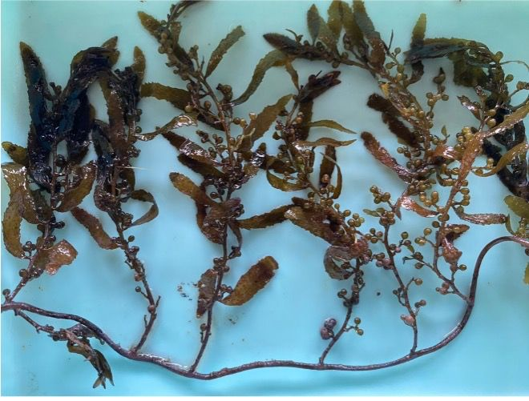
Imagine a skincare treatment that uses thousands of microscopic needles—not to cause pain, but to help a natural marine compound reach deeper layers of the skin. This idea is at the heart of a recent proof-of-concept study exploring fucoidan, a bioactive compound commonly obtained from brown seaweed, as a potential antiaging ingredient.
As we age, our skin gradually loses elasticity, moisture, and strength. Ultraviolet (UV) radiation can accelerate this process by damaging skin structures and contributing to collagen breakdown. Fucoidan has attracted scientific interest because previous research suggests that it may help promote collagen production and protect skin from UV-related damage. Yet there is a practical problem: fucoidan has a relatively large molecular size, making it difficult to penetrate the skin when simply applied to the surface.
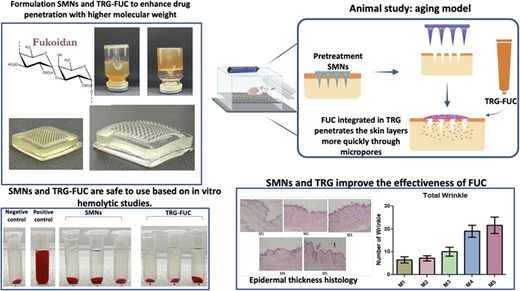
Researchers have proposed an ingenious solution: combine solid microneedles with a thermoresponsive gel. The microneedles are made from biocompatible polymers, including poly(vinyl alcohol) and poly(vinylpyrrolidone). When applied to the skin, these tiny structures create microscopic pathways. The fucoidan-containing gel can then enter these pathways. Because the gel is thermoresponsive, it can remain more fluid during application and become a gel at body temperature, helping control how the substance is released.
The results are encouraging. In ex vivo experiments, the optimized formulation delivered more than 80% of the fucoidan. Laboratory testing also showed 0% hemolysis in the tested formulations, suggesting good compatibility in that particular safety test. In UV-exposed rats, the treatment combining microneedles and fucoidan-containing gel produced significantly fewer wrinkles than the negative control. The treated animals also showed signs of improved skin elasticity. These findings suggest that microneedles may solve one of the biggest challenges of topical fucoidan delivery: getting the active compound where it is needed.
However, there is an important message for the public: this is still a proof-of-concept study. The promising results in laboratory tests and animals do not mean that a microneedle fucoidan product is already proven safe and effective for people. Human clinical studies are still needed before such technology can be considered a reliable antiaging treatment.
This research directly supports Sustainable Development Goal 3 (SDG 3): Good Health and Well-being. By developing innovative approaches to deliver bioactive compounds, research like this contributes to the broader goal of improving health-related technologies and encouraging evidence-based innovation.
The scientific source of this popular article is “Development of Transdermal Formulation Integrating Polymer-Based Solid Microneedles and Thermoresponsive Gel Fucoidan for Antiaging: Proof of Concept Study,” published in Langmuir by ACS Publications on August 22, 2024. The study was authored by Frederika Tangdilintin and colleagues. Its findings show how combining natural compounds with smart drug-delivery technology could open new possibilities for future skin-health research.