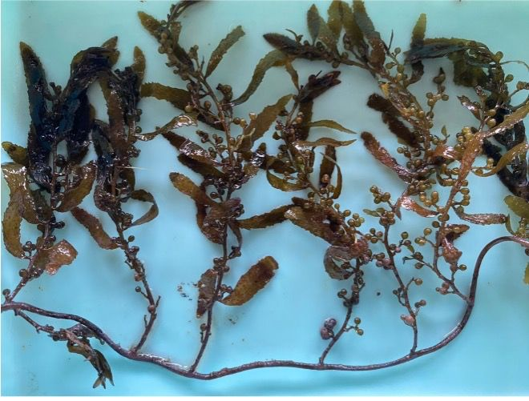
What if a seaweed growing along Indonesia’s coastline could offer more than food and shelter for marine life? Scientists are discovering that brown seaweed may contain natural compounds with promising health-related properties. One example is Sargassum polycystum, a brown alga found in South Sulawesi that contains sulfate polysaccharides, including fucoidan.
Why is this important? Cardiovascular disease is one of the leading causes of death worldwide. Oxidative stress, inflammation, and abnormal blood clotting are among the biological processes associated with cardiovascular problems. This has encouraged researchers to explore natural compounds that may have antioxidant, anti-inflammatory, and anticoagulant activities.
A study by M. Manggau and colleagues investigated sulfate polysaccharides isolated from Sargassum polycystum collected from the coast of Takalar, South Sulawesi. The researchers extracted and isolated the polysaccharides before examining their chemical characteristics and biological activities. The resulting isolate had a yield of 6.365%, while its sulfate content reached 40.45%. Analysis using infrared spectroscopy also indicated that the isolate contained fucoidan compounds.
The findings become particularly interesting when looking at antioxidant activity. Using the FRAP method, the sulfate polysaccharide isolate showed an IC50 value of 91.306 ppm. Antioxidants can help stabilize free radicals by donating electrons or hydrogen atoms. In this study, the researchers concluded that the isolate demonstrated strong antioxidant activity.
The researchers also investigated its anti-inflammatory effects in mice. The sulfate polysaccharide isolate, administered at doses of 10, 50, and 250 mg/kg body weight, produced significantly different results compared with the negative control. These findings indicated an anti-inflammatory effect in the experimental animals.
Another remarkable finding involved blood clotting. In the animal experiment, the 100 mg/kg dose showed anticoagulant activity comparable to the warfarin control. The researchers suggested that sulfate groups in the polysaccharide may interact with antithrombin III, a protein that helps regulate the blood-clotting process.
These findings support Sustainable Development Goal 3 (SDG 3): Good Health and Well-being. They demonstrate how Indonesia’s marine biodiversity could provide valuable resources for health research. At the same time, the findings should be viewed carefully. The study involved laboratory analysis and animal experiments, so the results cannot yet establish that the seaweed isolate is an effective or safe cardiovascular medicine for humans. Further research is needed.
The scientific source of this article is “Antioxidant, anti-inflammatory and anticoagulant activities of sulfate polysaccharide isolate from brown alga Sargassum policystum,” authored by Marianti and colleagues. It was published in IOP Conference Series: Earth and Environmental Science, Volume 967, Article 012029 (2022) by IOP Publishing.