


Staff Training in Izmir, Türkiye: Strengthening Capacity in Sustainable Leather Production and Quality Control
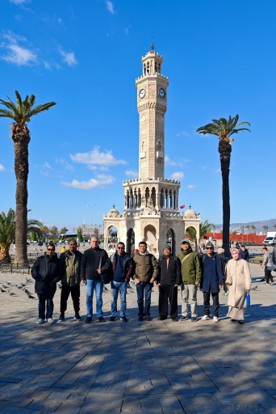
As part of continuous efforts to strengthen institutional capacity and enhance international collaboration in sustainable leather technology, a Staff Training Program was successfully implemented at the Department of Leather Engineering, Faculty of Engineering, EGE University, Izmir, Türkiye. Conducted on 25–29 November 2024, the training represented an important platform for knowledge transfer, professional development, and international engagement among consortium institutions committed to advancing innovation in the leather sector.
The program was designed to strengthen participants’ technical understanding and practical competencies in leather production and quality control systems. The training focused on key stages of the leather value chain, including hide and skin flaying techniques, chemical and physical testing procedures, and the exploration of emerging bio-based alternatives that support more sustainable industrial practices. Through a combination of lectures, laboratory activities, field exposure, and collaborative discussions, participants gained both scientific and applied perspectives relevant to current developments in leather engineering.

The activity involved 10 participants representing Indonesian consortium members, consisting of Faculty of Animal Science, Universitas Gadjah Mada (UGM), Yogyakarta; Faculty of Animal Science, Universitas Hasanuddin (UNHAS), Makassar represented by Prof. Dr. Muhammad Irfan Said and Prof. Dr. Ihsan A. Dagong; Faculty of Animal Science, Universitas Mataram (UNRAM), Mataram, West Nusa Tenggara; Indonesian Tanners Association (APKI), Yogyakarta; and the Center for Standardization and Industrial Service of Leather, Rubber, and Plastic Industries, Ministry of Industry, Yogyakarta.
The training was enriched through direct interaction with internationally recognized experts and academic partners. International collaborators who facilitated and supported the activities included Prof. Dr. Mehmet Mete Mutlu, Prof. Dr. Hasan Ozgunay, Prof. Dr. Huseyin Ata Karavana, and Dr. Ali Yorgancioglu. Their contributions provided valuable scientific insights and practical experiences regarding technological innovation, product quality assurance, and sustainable transformation within the leather industry.
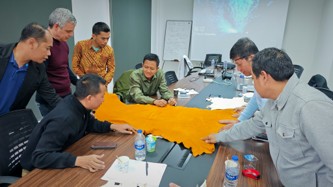
In addition to classroom and laboratory sessions, participants conducted technical visits to local leather industries located within the managed leather industrial zone in Izmir. These visits provided real-world exposure to industrial operations, quality assurance mechanisms, environmental management practices, and the implementation of innovative technologies at production scale. Such experiences strengthened participants’ understanding of how scientific knowledge can be translated into industrial applications.
This training activity also contributes directly to the achievement of the Sustainable Development Goals (SDGs). The program supports SDG 1 – No Poverty by strengthening human resources and promoting sustainable industrial opportunities; SDG 4 – Quality Education through international training, scientific exchange, and professional capacity development; SDG 15 – Life on Land by encouraging environmentally responsible production approaches and sustainable resource use; and SDG 17 – Partnerships for the Goals through strengthened collaboration among universities, government institutions, industry associations, and international partners.
Through this initiative, the consortium continues to reinforce its commitment to developing globally connected expertise and advancing sustainable innovation in leather production for long-term educational, industrial, and societal impact.
Contact:
Muhammad Irfan said
08124206293
Email: irfanunhas@gmail.com / irfan.said@unhas.ac.id


