


ELEGTEC Program Socialization at UNHAS Partners: Revitalizing Leather Processing Capacity to Support Sustainable Development in Eastern Indonesia
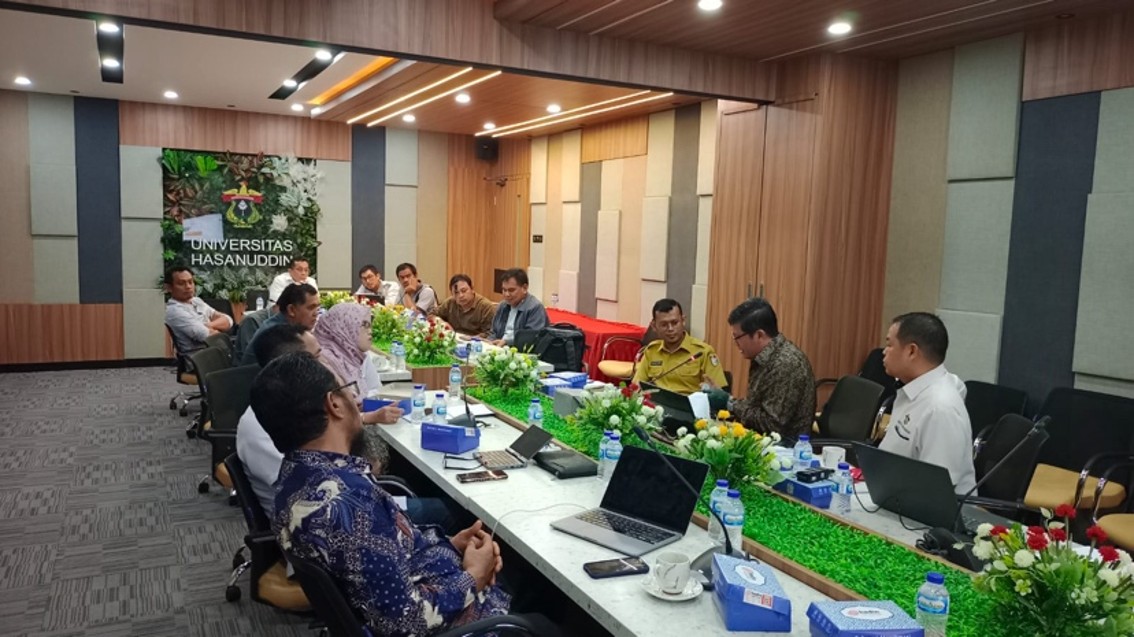
As part of continuous efforts to strengthen institutional collaboration and promote sustainable industrial innovation, the Faculty of Animal Science, Universitas Hasanuddin, through PT. Hasanuddin Agrivisi Internusa (PT. HAI), successfully organized the ELEGTEC Program Socialization at UNHAS Partners on 09 December 2024 at Hasanuddin University, Makassar, Indonesia. This strategic initiative was designed to introduce and strengthen stakeholder engagement in the ELEGTEC Program while supporting the revitalization of local leather processing capabilities in Eastern Indonesia.
The program focused on the reactivation of the Unit of Leather Processing (UPT Penyamakan Kulit) in Makassar as an integrated platform to support Micro, Small, and Medium Enterprises (MSMEs), create learning opportunities for students and artisans, and encourage the adoption of innovative technologies aimed at improving leather quality and production efficiency. Through this initiative, the university and its partners seek to build stronger linkages between academic institutions, local industries, and community-based economic activities.
The activity involved 15 participants representing Universitas Hasanuddin, slaughterhouse stakeholders (Rumah Potong Hewan), the Department of Industry and Trade (Dinas Perindustrian dan Perdagangan), and partner groups engaged in hide preservation and leather collection activities. The diversity of participants created a collaborative environment that enabled productive dialogue on challenges and opportunities in strengthening the regional leather value chain.
During the socialization sessions, participants discussed the current condition and future potential of leather processing activities in Makassar, particularly in relation to improving product quality, increasing competitiveness, and expanding market opportunities for local producers. Discussions also highlighted the importance of integrating science-based approaches, strengthening technical competencies, and introducing innovative technologies that support sustainable leather production systems.
An important aspect of the event was the emphasis on transforming the leather sector into an inclusive ecosystem that benefits education, industry, and local communities simultaneously. The revitalization of the leather processing unit is expected to function not only as a production and service facility but also as a practical learning center for students, artisans, and MSME actors seeking to improve their technical and entrepreneurial capacities.
This initiative contributes directly to the achievement of the Sustainable Development Goals (SDGs). The program supports SDG 1 – No Poverty by creating opportunities for economic empowerment and strengthening MSME competitiveness; SDG 4 – Quality Education through experiential learning, applied training, and capacity development; SDG 15 – Life on Land by promoting more responsible and sustainable utilization of animal-derived resources; and SDG 17 – Partnerships for the Goals by strengthening collaboration among universities, government institutions, industry actors, and local communities.
Contact:
Muhammad Irfan said
08124206293
Email: irfanunhas@gmail.com / irfan.said@unhas.ac.id


