


UNHAS Faculty of Animal Husbandry Equips Soppeng Farmers with High-Fiber Meat Processing Innovations
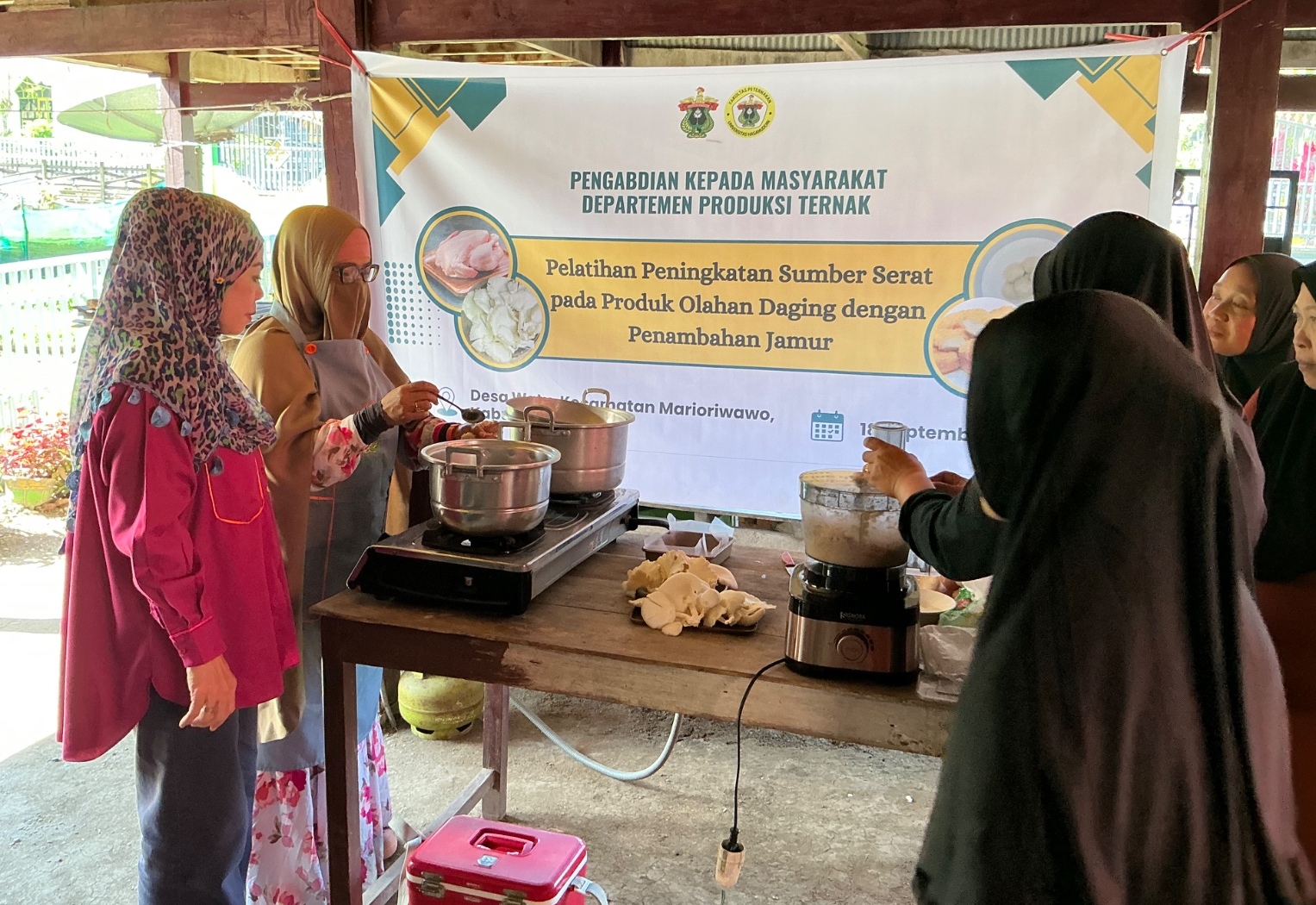
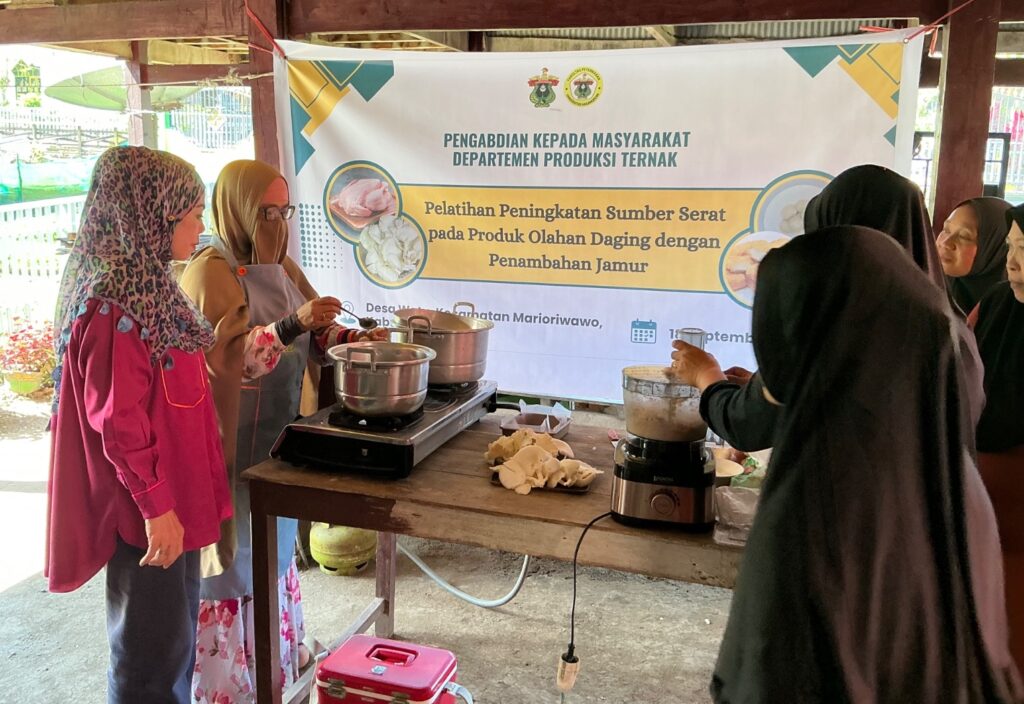
As part of its commitment to strengthening community empowerment through science-based innovation and appropriate technology, the Faculty of Animal Husbandry, Hasanuddin University (UNHAS) successfully conducted a community engagement program entitled “UNHAS Faculty of Animal Husbandry Equips Soppeng Farmers with High-Fiber Meat Processing Innovations” on 18 September 2025. The activity took place during a value-added meat processing training program for the Women Farmers Group (Kelompok Wanita Petani Kampung Baru) in Watu Village, Marioriwawo District, Soppeng Regency.
Carrying the spirit of technology-driven community empowerment, the initiative was specifically designed to improve local skills in processing livestock products into healthier food products with higher added value. Through practical training and direct knowledge transfer, the program sought to strengthen household food innovation while opening opportunities for sustainable economic development at the community level.
The activity involved 17 participants, who actively engaged in learning sessions and practical demonstrations throughout the training program. Participants were introduced to innovative approaches for processing meat products that not only maintain product quality but also improve nutritional value and market competitiveness.
The training was directly facilitated by Dr. Hajrawati, S.Pt., M.Si., who provided practical guidance and hands-on instruction on producing meatballs and nuggets enriched with oyster mushrooms. This innovation introduced a healthier approach to processed meat production by incorporating natural dietary fiber into commonly consumed products. The integration of oyster mushrooms was highlighted as a strategy to improve nutritional composition while preserving taste, texture, and consumer acceptance.
Beyond technical processing methods, the training emphasized the importance of utilizing local resources and developing products that respond to changing consumer preferences toward healthier food choices. Participants were encouraged to view livestock processing not only as a household activity but also as a potential micro-enterprise opportunity capable of generating additional income and increasing product diversification.
The program also highlighted how universities can serve as catalysts for social transformation by translating academic knowledge into practical solutions that directly benefit communities. Through this initiative, participants gained insights into product quality improvement, simple food innovation techniques, and opportunities to create value-added livestock products that are both nutritious and economically promising.
An important aspect of the activity was its focus on improving community nutrition. By introducing fiber-enriched meat products, the initiative promoted a balanced approach to food consumption while supporting awareness of healthier dietary practices in rural communities.
This activity contributes directly to the achievement of the Sustainable Development Goals (SDGs). The program supports SDG 1 – No Poverty by creating opportunities for community-based economic empowerment and value-added livestock products; SDG 3 – Good Health and Well-Being by promoting healthier and more nutritious food alternatives; SDG 4 – Quality Education through practical learning and community capacity development; and SDG 17 – Partnerships for the Goals by strengthening collaboration between universities and local communities to generate sustainable impact.
Through this initiative, Hasanuddin University continues to demonstrate its commitment to empowering communities, promoting healthy innovation, and creating meaningful societal impact through applied science and sustainable development.
Contact:
Muhammad Irfan said
08124206293
Email: irfanunhas@gmail.com / irfan.said@unhas.ac.id


