


Staff Training at Pisa, Italy: Advancing Sustainable Leather Innovation through Academic and Industrial Collaboration
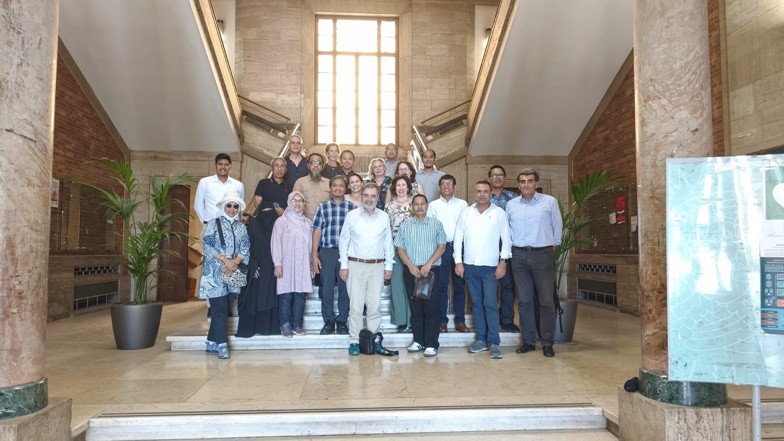
As part of ongoing efforts to strengthen institutional capacity and expand international collaboration in sustainable leather technology, the Staff Training at Pisa, Italy was successfully conducted on 19–26 July 2025. This activity formed an important component of the ELEGTEC initiative and aimed to strengthen academic competencies, foster international partnerships, and explore emerging sustainable tanning technologies that respond to contemporary industrial and environmental challenges.
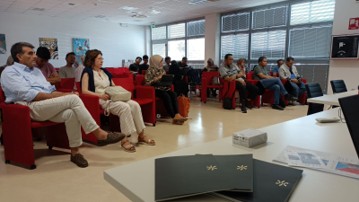
The program was implemented through a combination of academic sessions, scientific discussions, and industrial exposure activities designed to bridge theoretical understanding with real-world applications. Participants were introduced to recent developments in sustainable leather processing, with particular emphasis on green chemistry approaches, circular economy principles, resource efficiency, and technological innovation in leather production systems. The training provided opportunities to understand how scientific advancement and industrial transformation can work together to create more sustainable value chains.
The activity involved 14 participants representing Indonesian consortium members, consisting of Faculty of Animal Science, Universitas Gadjah Mada (UGM), Yogyakarta; Faculty of Animal Science, Universitas Hasanuddin (UNHAS), Makassar represented by Prof. Dr. Muhammad Irfan Said and Prof. Dr. Ihsan A. Dagong; Faculty of Animal Science, Universitas Mataram (UNRAM), Mataram, West Nusa Tenggara; Indonesian Tanners Association (APKI), Yogyakarta; and the Center for Standardization and Industrial Service of Leather, Rubber, and Plastic Industries, Ministry of Industry, Yogyakarta.
Although this training was organized under the international collaboration framework and involved activities connected to European institutional networks, the program also included interactions and learning opportunities facilitated through the consortium’s international academic ecosystem. The international partners supporting the program included Prof. Dr. Maurizia Seggiani, Prof. Dr. Anna Maria Raspolli Galletti, Michail Dellagrammatikas, and Prof. Dr. Claudia Antonetti, who shared expertise related to sustainable industrial practices, innovation pathways, and the future direction of leather technology.
A key component of the program was industrial exposure through visits to leading tanning industries. These visits enabled participants to observe advanced production systems and understand practical implementation of environmentally responsible technologies. Participants explored how circular economy concepts are integrated into industrial operations through waste minimization, process optimization, and the development of alternative materials and sustainable production strategies.
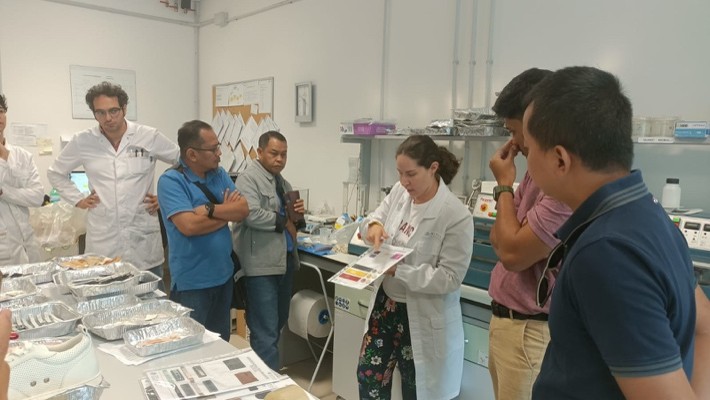
The training created a collaborative learning environment that encouraged knowledge exchange among universities, industry representatives, and institutional stakeholders. Participants were encouraged to translate acquired insights into educational programs, research initiatives, industrial development, and community engagement activities upon returning to Indonesia.
This activity directly supports the achievement of the Sustainable Development Goals (SDGs). The program contributes to SDG 1 – No Poverty by strengthening human capital and supporting sustainable economic opportunities; SDG 4 – Quality Education through international training and applied learning experiences; SDG 15 – Life on Land by encouraging environmentally responsible industrial innovation and sustainable resource utilization; and SDG 17 – Partnerships for the Goals through strengthened collaboration between Indonesian and European institutions.
Through this initiative, the consortium continues to build globally connected expertise and promote sustainable transformation within the leather sector for long-term educational, industrial, and societal impact.
Contact:
Muhammad Irfan said
08124206293
Email: irfanunhas@gmail.com / irfan.said@unhas.ac.id


