


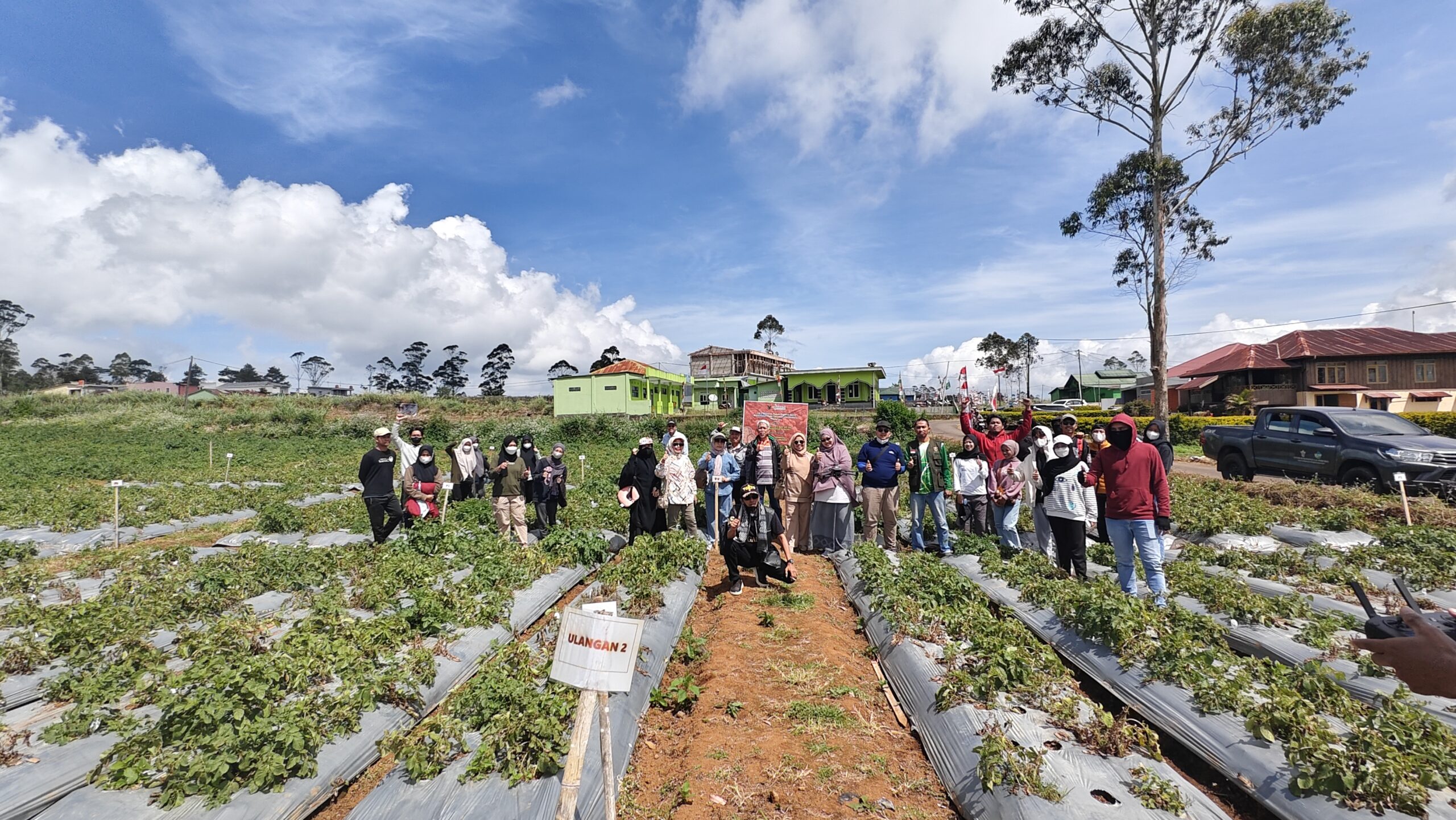

Malino, Gowa, South Sulawesi – As part of the commitment to advancing the Tri Dharma of Higher Education—education, research, and community service, the Horticulture Breeding and Biotechnology Research Group conducted a community engagement activity entitled “Unlocking Higher Potato Yields Through Innovative Farming.” The program was designed to strengthen potato production among farmers in Malino, Gowa, South Sulawesi, by introducing innovative cultivation approaches based on scientific knowledge, field experience, and sustainable agricultural practices.
Potato farming has significant economic potential in highland areas such as Malino, where favorable environmental conditions support horticultural production. However, farmers continue to face challenges related to productivity improvement, efficient crop management, environmental adaptation, and the application of appropriate agricultural technologies. Addressing these challenges requires collaboration between researchers and farming communities to develop practical solutions that can be implemented directly in farmers’ fields.
The activity was conducted on 28 August 2025 and led by Prof. Dr. Ir. Muh Farid BDR, MP as the head of the implementation team, together with members of the Horticulture Breeding and Biotechnology Research Group, university students, and local potato farmers. The program involved 30 participants, consisting of farmers, students, and research team members who actively participated in knowledge transfer, field discussions, and practical learning activities.
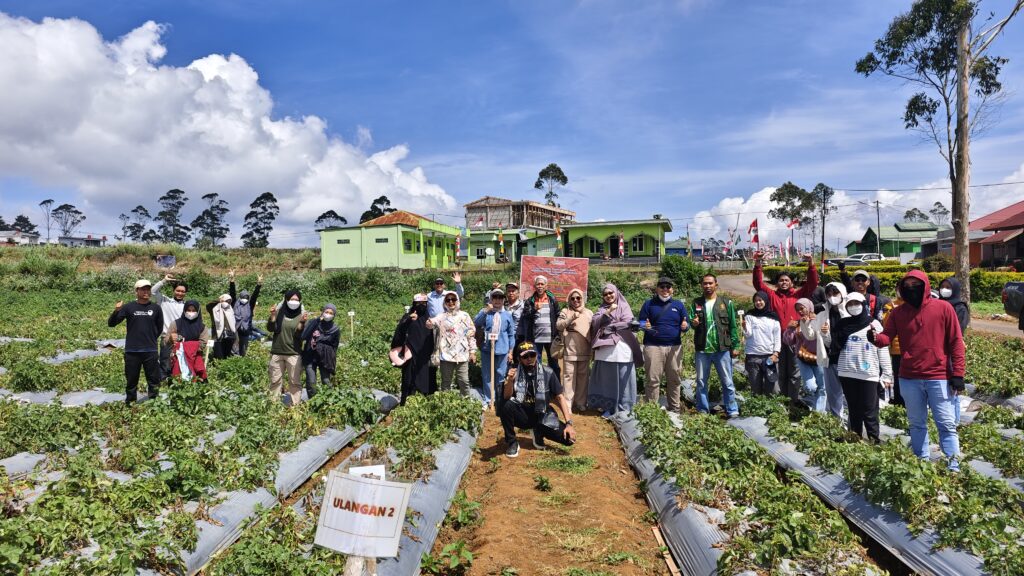
The main objective of this activity was to increase potato production on farmers’ land through innovative agricultural approaches. Rather than introducing a single technology, the program emphasized an integrated approach that combines improved cultivation practices, scientific understanding of plant growth, and sustainable crop management strategies.
The activity was also strengthened through collaboration with PT Pupuk Indonesia, which contributed as an industrial partner in the development and evaluation of innovative fertilizer solutions for potato cultivation. The fertilizers provided by PT Pupuk Indonesia were tested as part of the research activities to evaluate their effectiveness in supporting potato growth, improving plant performance, and increasing productivity under farmer field conditions in Malino. This partnership represents an important connection between research institutions and the agricultural industry, ensuring that fertilizer innovations are scientifically evaluated before being introduced to farming communities. Through this collaboration, researchers, farmers, and industry partners worked together to develop more efficient and sustainable nutrient management strategies that can support improved potato production.
During the activity, participants were engaged in discussions and practical sessions related to improving potato cultivation performance. Researchers shared insights on the importance of selecting appropriate farming techniques, optimizing crop growth conditions, and applying innovation-based management practices to support higher productivity. Meanwhile, farmers contributed their valuable field experiences, allowing researchers to better understand local challenges and develop solutions that are relevant to real farming conditions.
The involvement of students also strengthened the connection between academic learning and community application. Through direct interaction with farmers, students gained valuable experience in communicating scientific knowledge, understanding agricultural challenges at the field level, and contributing to sustainable rural development.
This collaborative initiative reflects the importance of partnerships in agricultural transformation. By connecting researchers, students, and farmers, the program created a platform for knowledge exchange and innovation adoption. Such collaboration is essential to ensure that agricultural research does not remain only within academic environments but provides meaningful benefits for farming communities.
The activity strongly contributes to the Sustainable Development Goals (SDGs), particularly SDG 1 (No Poverty) by supporting farmers’ productivity and economic opportunities through improved agricultural practices. It also aligns with SDG 4 (Quality Education) by strengthening knowledge exchange and practical learning between universities, students, and communities. Furthermore, the program supports SDG 17 (Partnerships for the Goals) by establishing collaboration among researchers, academic institutions, students, and farmers to achieve sustainable agricultural development.
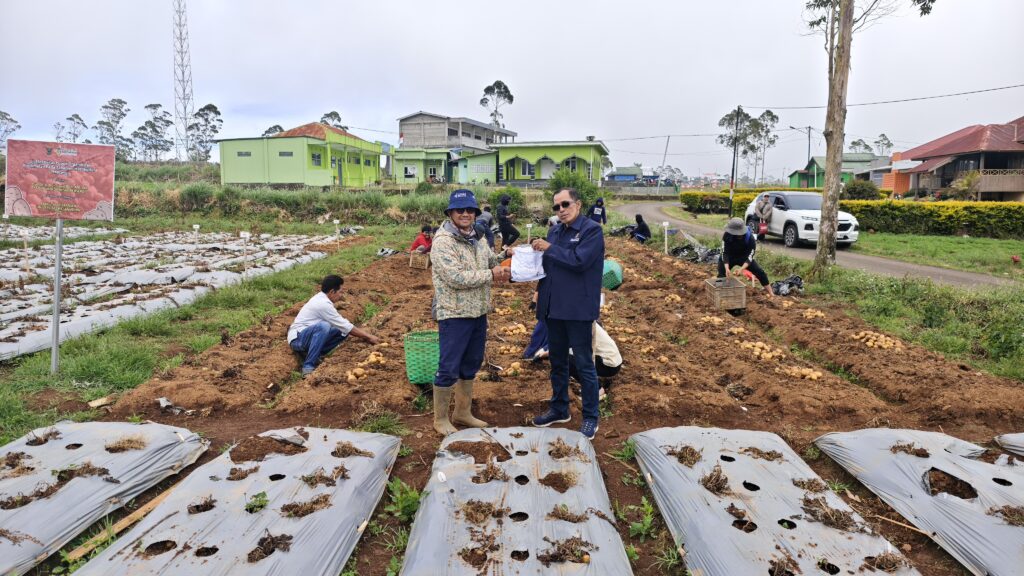
Through “Unlocking Higher Potato Yields Through Innovative Farming,” the Horticulture Breeding and Biotechnology Research Group demonstrates that agricultural advancement is not only about increasing production but also about empowering communities through science, collaboration, and sustainable innovation.
By continuing partnerships between research institutions and farmers, innovative farming solutions can become a pathway toward stronger agricultural systems, improved farmer welfare, and a more resilient food future for South Sulawesi and Indonesia.


