


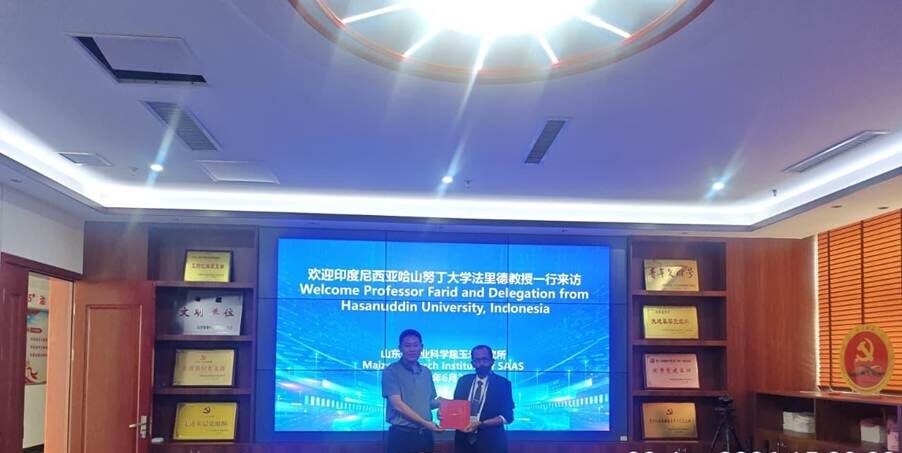

Jinan, China – As part of the commitment to strengthening global agricultural collaboration and advancing sustainable farming systems, the Horticulture Breeding and Biotechnology Research Group participated in an international Focus Group Discussion (FGD) on fertilizer innovation and sustainable agriculture held in Jinan, China, on 28 June 2026. The activity aimed to facilitate knowledge exchange, discuss research achievements, and explore future collaboration opportunities in the development of sustainable agricultural technologies, particularly in maize cultivation and fertilizer innovation.
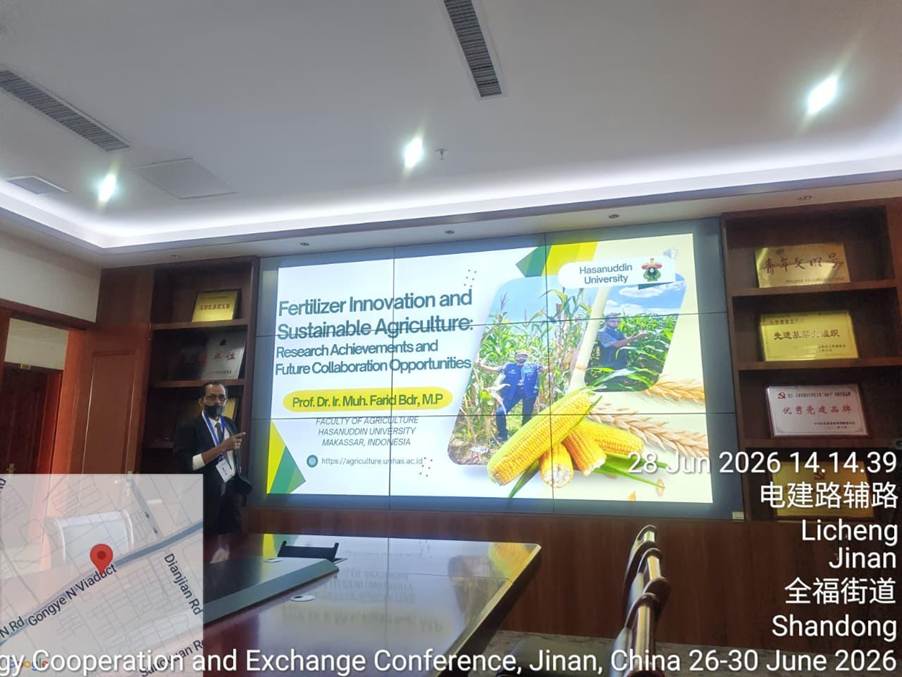
The discussion was led by the head of the research group, Prof. Dr. Ir. Muh Farid BDR, MP, who represented the research group in strengthening international scientific networks and promoting collaborative agricultural research. The activity brought together researchers, academic representatives, students, and industry partners to exchange perspectives on how innovation in fertilizer management can support higher productivity while maintaining environmental sustainability.
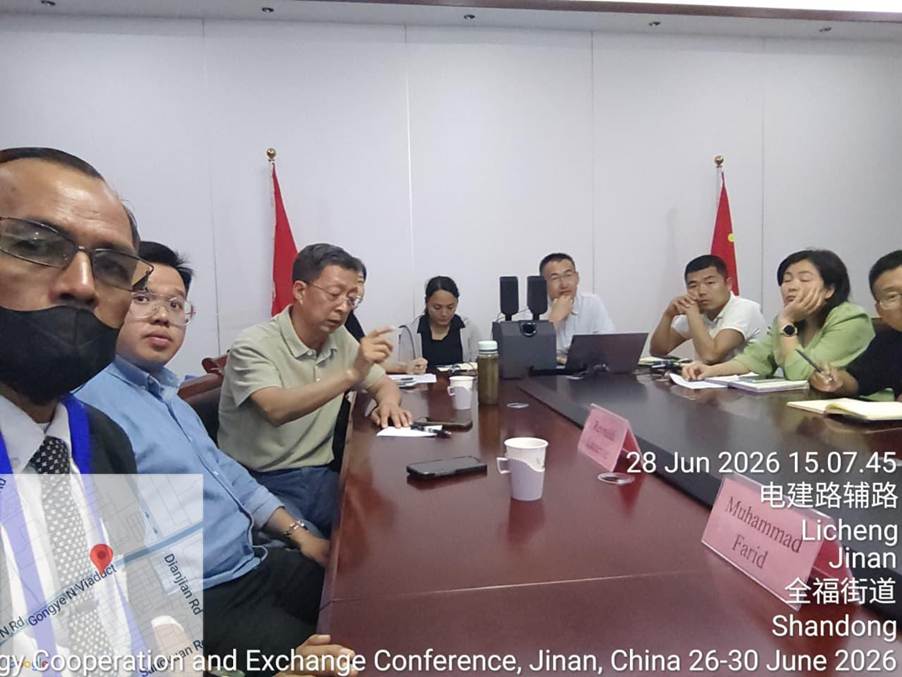
The FGD involved 12 participants from different backgrounds, including researchers, academic representatives, and students. One of the participants was Reynaldi Laurenze (PhD student), who actively participated in the scientific discussions and knowledge exchange activities. The involvement of students in international research forums provides valuable opportunities to strengthen scientific capacity, improve academic experience, and prepare future agricultural scientists with global perspectives.
This international meeting was conducted in collaboration with several strategic partners, one of our external collaborator Wang Juan as representatives from The Maize Research Institute, Shandong Academy of Agricultural Sciences (SAAS), and also Shikefeng Company. These partnerships created a platform for discussing advances in fertilizer technology, sustainable nutrient management, and innovative approaches to improving maize productivity.
The main focus of the discussion was the development of sustainable agricultural systems through the integration of plant breeding innovation, fertilizer efficiency, and environmentally responsible cultivation practices. Fertilizer management plays an important role in determining crop productivity; however, excessive or inefficient fertilizer application may create challenges for soil health and environmental sustainability. Therefore, collaboration between researchers and industry partners is essential to develop solutions that are productive, efficient, and adaptive to future agricultural challenges.
Through this FGD, participants shared research experiences, discussed potential collaborative projects, and explored opportunities for future partnerships in maize improvement and sustainable agriculture. The exchange of knowledge between Indonesian and Chinese agricultural institutions represents an important step toward developing innovations that can benefit farmers and agricultural systems globally.
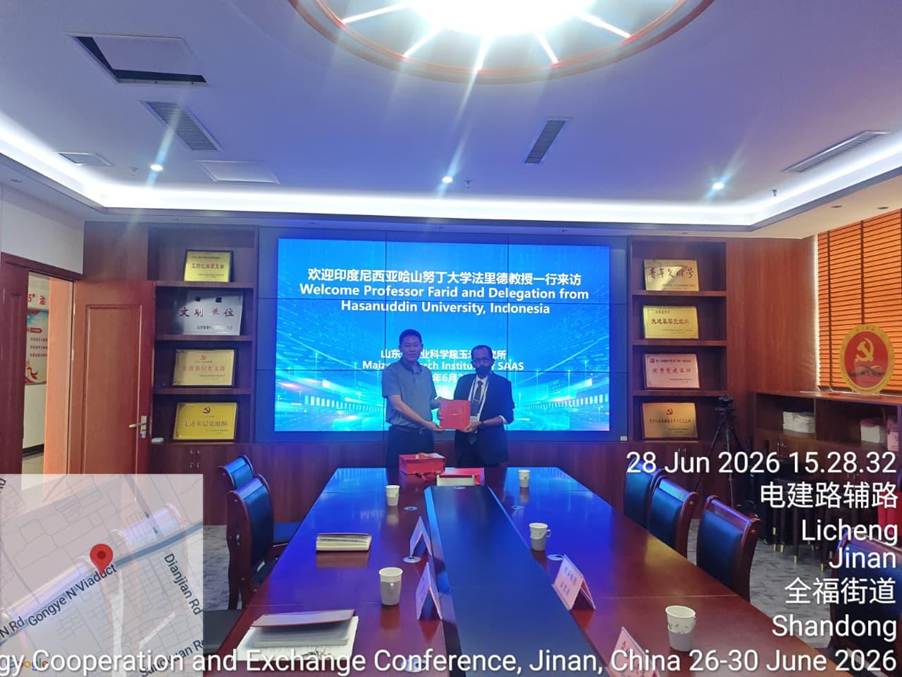
This activity contributes directly to the Sustainable Development Goals (SDGs), particularly SDG 1: No Poverty, by supporting agricultural innovations that can improve farmer productivity, economic opportunities, and rural livelihoods. It also strongly supports SDG 4: Quality Education through international knowledge exchange, research capacity development, and involvement of young scientists in global scientific discussions. Furthermore, this initiative aligns with SDG 17: Partnerships for the Goals by strengthening international collaboration between research institutions, universities, and agricultural industries.
The participation of the Horticulture Breeding and Biotechnology Research Group in Jinan demonstrates the importance of global partnerships in addressing agricultural challenges. By combining scientific expertise, technological innovation, and international cooperation, sustainable solutions for future food production can be developed more effectively.
Through continued collaboration with international partners, this initiative is expected to open new opportunities for joint research, technology development, and knowledge transfer. Ultimately, fertilizer innovation and sustainable agriculture are not only about increasing crop yields but also about building resilient food systems that support farmers, protect natural resources, and contribute to a more sustainable future.


