


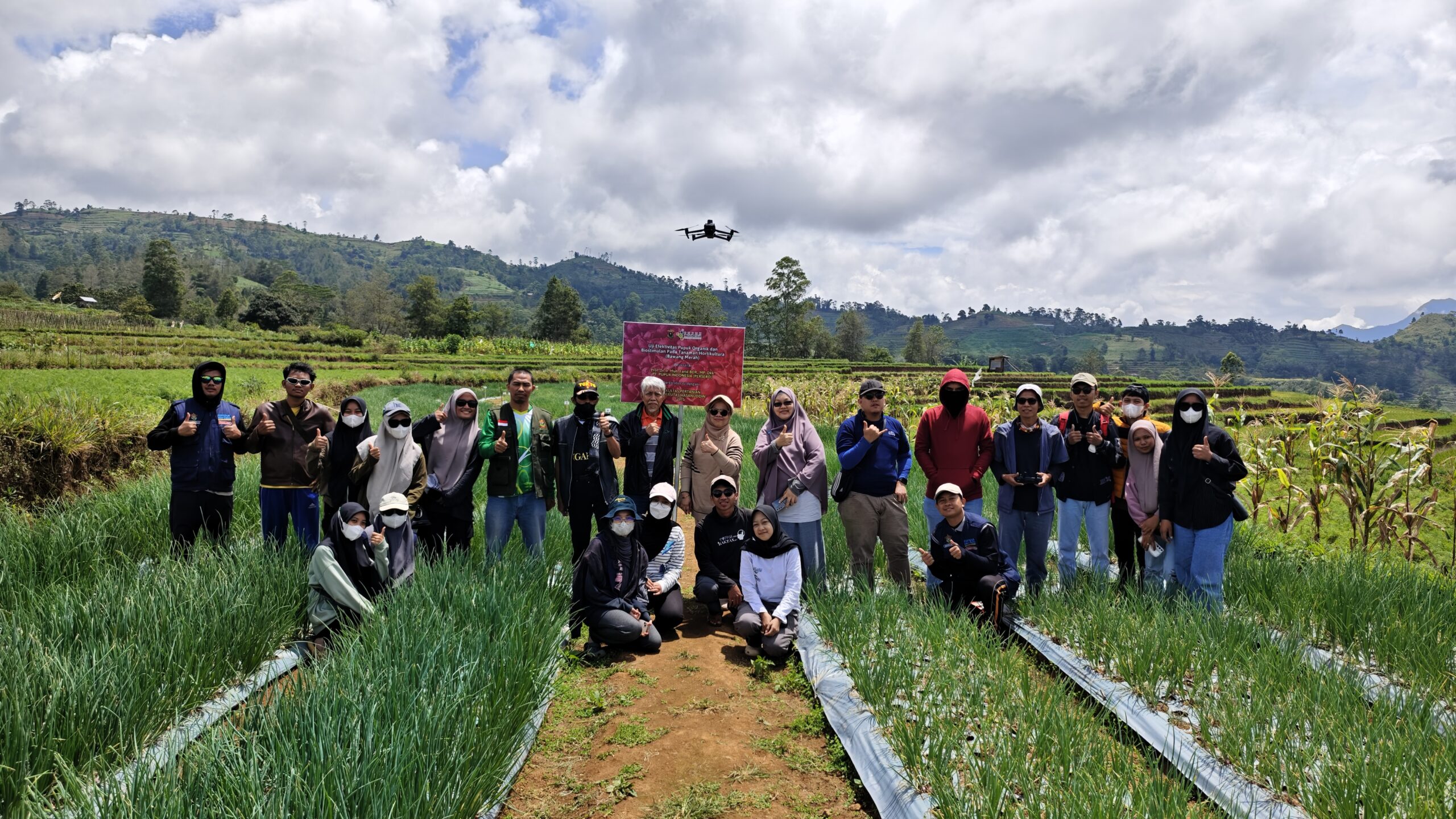

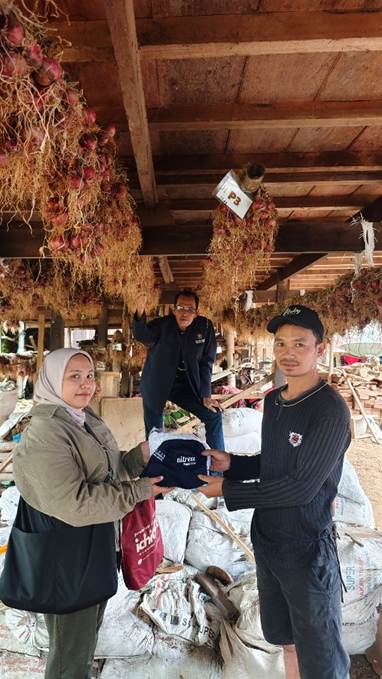
Malino, Gowa, South Sulawesi – As part of the commitment to implementing the Tri Dharma of Higher Education—education, research, and community service, the Horticulture Breeding and Biotechnology Research Group conducted a community engagement activity entitled “Growing Smarter: New Innovations in Shallot Farming.” The program was designed to support farmers in improving shallot production through innovative agricultural practices, scientific approaches, and knowledge transfer that can be directly applied in farmers’ fields.
Shallot farming plays an important role in Indonesia’s horticultural sector, providing economic value for farmers and contributing to the availability of essential agricultural commodities. However, farmers continue to face various challenges, including productivity fluctuations, changing environmental conditions, pest and disease pressures, and the need for more efficient cultivation practices. Addressing these challenges requires continuous innovation and collaboration between researchers and farming communities.
The activity was conducted in Malino, Gowa, South Sulawesi, on 29 August 2025, under the leadership of Prof. Dr. Ir. Muh Farid BDR, MP as the head of the implementation team. The program involved the Horticulture Breeding and Biotechnology Research Group, university students, and local shallot farmers. A total of 22 participants actively participated in this community engagement activity, creating an interactive environment for knowledge exchange, discussion, and practical learning.
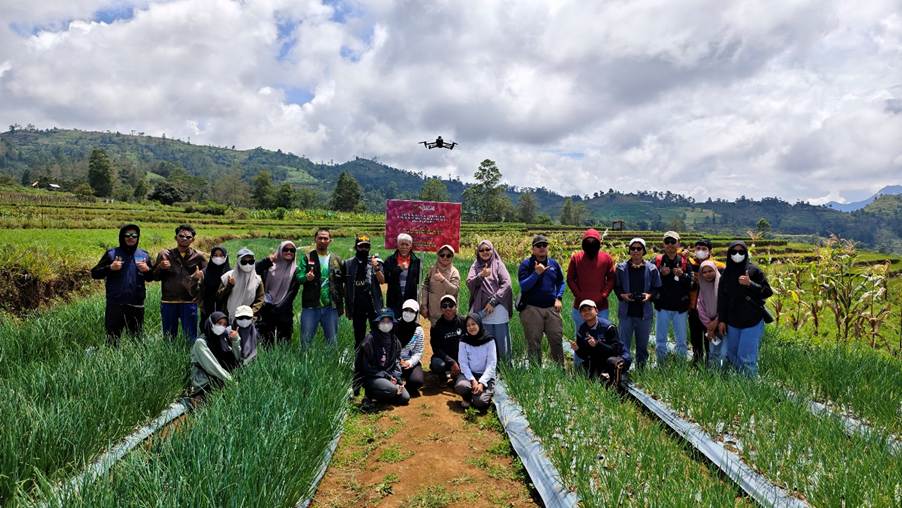
The main objective of this initiative was to increase shallot production on farmers’ land through various agricultural innovations. The activity emphasized the importance of integrating scientific knowledge with farmers’ practical experiences to develop cultivation strategies that are productive, efficient, and environmentally responsible.
The program also involved collaboration with PT Pupuk Indonesia as an important strategic partner in supporting agricultural innovation. Fertilizer products developed by PT Pupuk Indonesia were included in the research evaluation to assess their potential contribution to shallot growth, productivity improvement, and cultivation efficiency. This partnership enabled the integration of scientific research, industrial innovation, and farmers’ practical experiences in developing better nutrient management approaches for shallot production. By involving industry partners, the program not only focused on technology transfer but also strengthened the pathway from research development to practical application, supporting sustainable horticultural production and improving farmers’ capacity to adopt evidence-based farming practices.
During the program, researchers introduced innovative approaches related to improved crop management, sustainable cultivation practices, and the application of science-based agricultural techniques. Participants were encouraged to understand how proper cultivation decisions can influence plant growth, productivity, and crop quality. The discussions also provided opportunities for farmers to share their experiences, identify field challenges, and explore potential solutions together with the research team.
The collaboration between researchers and farmers represents an important bridge between academic development and real agricultural practices. Farmers contributed valuable local knowledge regarding field conditions, while researchers provided scientific perspectives and innovation-based solutions. This interaction ensured that the proposed improvements were not only scientifically relevant but also practical and suitable for implementation at the farm level.
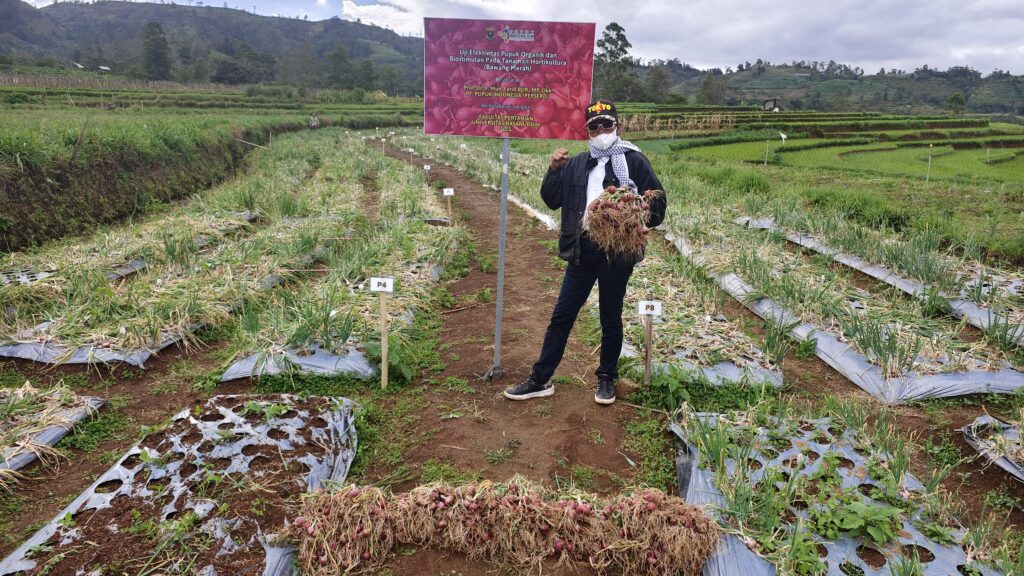
The involvement of students further strengthened the educational aspect of the activity. Through direct engagement with farming communities, students gained valuable experience in communicating agricultural knowledge, understanding farmers’ challenges, and contributing to community-based innovation. This learning process reflects the important role of universities in preparing future agricultural professionals who are responsive to real-world problems.
This activity contributes directly to the Sustainable Development Goals (SDGs), particularly SDG 1: No Poverty, by supporting farmers’ productivity and creating opportunities to improve agricultural income through better cultivation practices. It also supports SDG 4: Quality Education by promoting knowledge sharing, practical learning, and capacity building among students and farming communities. Furthermore, the program aligns with SDG 17: Partnerships for the Goals by strengthening collaboration between researchers, universities, students, and farmers in achieving sustainable agricultural development.
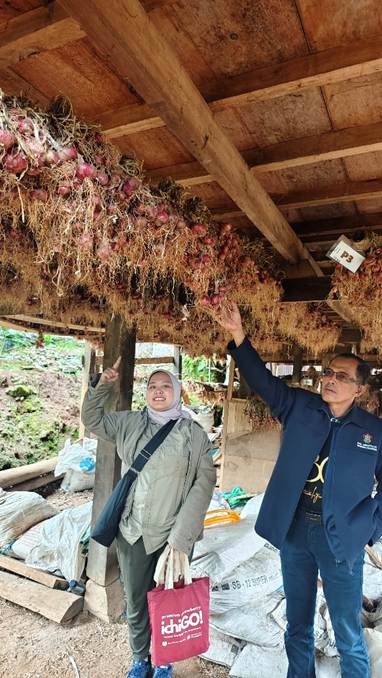
Through “Growing Smarter: New Innovations in Shallot Farming,” the Horticulture Breeding and Biotechnology Research Group demonstrates that agricultural progress is not only about increasing production but also about empowering communities through knowledge, collaboration, and innovation.
By continuing partnerships between academic institutions and farming communities, innovative agricultural solutions can become a pathway toward stronger farmers, more productive shallot cultivation, and a more sustainable food system for South Sulawesi and Indonesia.


