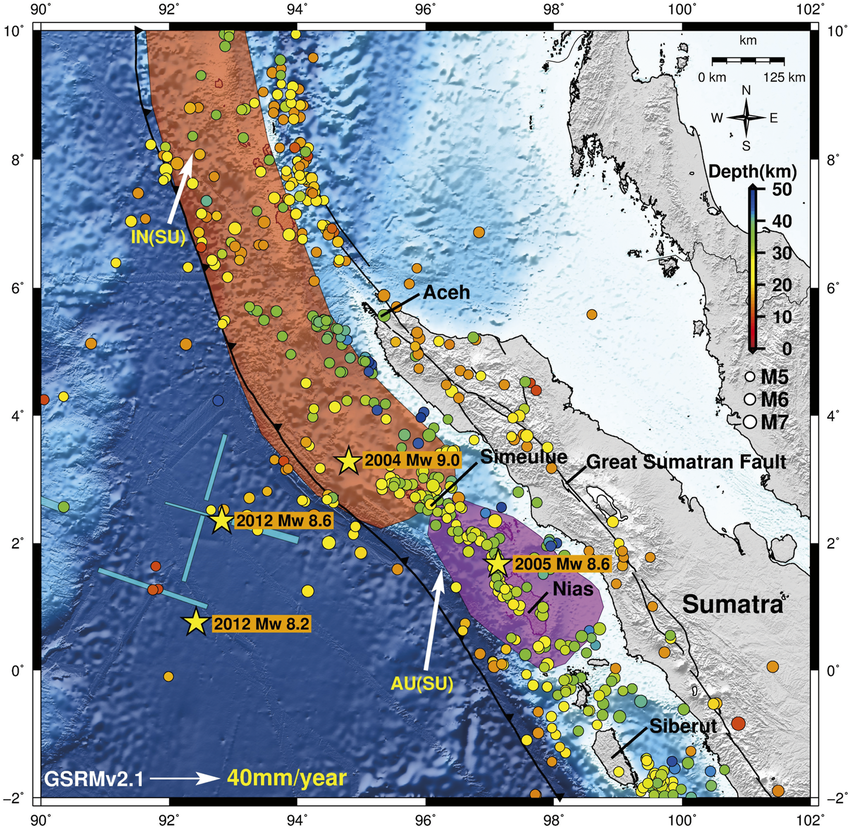
MAKASSAR, Indonesia May 22 2026 /GLOHAMOD/– More than two decades after two of the largest earthquakes ever recorded struck Sumatra, scientists are still uncovering the secrets buried deep beneath the ocean floor. The massive 2004 Sumatra-Andaman earthquake and the 2005 Nias-Simeulue earthquake not only caused devastating tsunamis and widespread destruction, but also permanently changed the stress patterns within one of Earth’s most dangerous tectonic zones.
Now, a new scientific study has revealed how these giant earthquakes reshaped underground pressure fields—offering critical lessons for future earthquake forecasting and disaster preparedness.
The study, titled Variations in Forearc Stress and Changes in Principal Stress Orientations Caused by the 2004–2005 Megathrust Earthquakes in Sumatra, Indonesia, published in Frontiers in Earth Science by Frontiers on August 2, 2021, examines how stress deep beneath the northern Sumatra subduction zone changed before and after the two catastrophic earthquakes.
Using 330 previously recorded focal mechanism datasets, researchers analyzed changes in underground stress orientation across three outer forearc segments along the Sumatra subduction system.
Their findings confirm that the 2004 and 2005 earthquakes significantly altered the direction of tectonic stress in the region. Before the earthquakes, the outer forearc experienced relatively low stress levels, suggesting that large amounts of accumulated pressure were suddenly released during these megathrust ruptures.
However, the study also discovered something even more important: stress changes were not evenly distributed.
The rupture zone of the 2005 earthquake showed lower pre-earthquake stress and smaller stress release compared to the larger 2004 rupture area. Meanwhile, the region beneath Simeulue Island—a known geological rupture barrier—displayed a unique stress pattern that may explain why some earthquake ruptures stop while others continue spreading.
This hidden stress barrier acts like a natural brake within the subduction zone, controlling how seismic energy travels during giant earthquakes.
These findings strongly support SDG 3: Good Health and Well-being, because understanding underground stress behavior directly contributes to reducing disaster-related deaths and injuries. Better earthquake knowledge allows for improved hazard mapping, evacuation planning, and safer infrastructure design.
The research also advances SDG 4: Quality Education by transforming highly technical tectonic science into practical knowledge that strengthens public understanding of earthquake risks.
Equally significant, the study supports SDG 17: Partnerships for the Goals, reflecting the importance of international scientific collaboration in improving earthquake monitoring and disaster mitigation strategies across vulnerable regions.
For Indonesia, one of the world’s most tectonically active nations, this research offers more than historical insight. It provides a roadmap for understanding how stress accumulates and releases beneath active megathrust systems.
By decoding the hidden forces beneath Sumatra’s coastline, scientists are helping communities prepare for the earthquakes of tomorrow—turning lessons from past disasters into tools for future resilience.
Reference:
DOI: https://doi.org/10.3389/feart.2021.712144
Article Title: Variations in Forearc Stress and Changes in Principle Stress Orientations Caused by the 2004–2005 Megathrust Earthquakes in Sumatra, Indonesia
Journal: Frontiers in Earth Science
Publisher: Frontiers
Publication Date: August 2, 2021
Contact:
Saaduddin, M. Sc., PhD
+62 8992890320
Saad@sci.unhas.ac.id