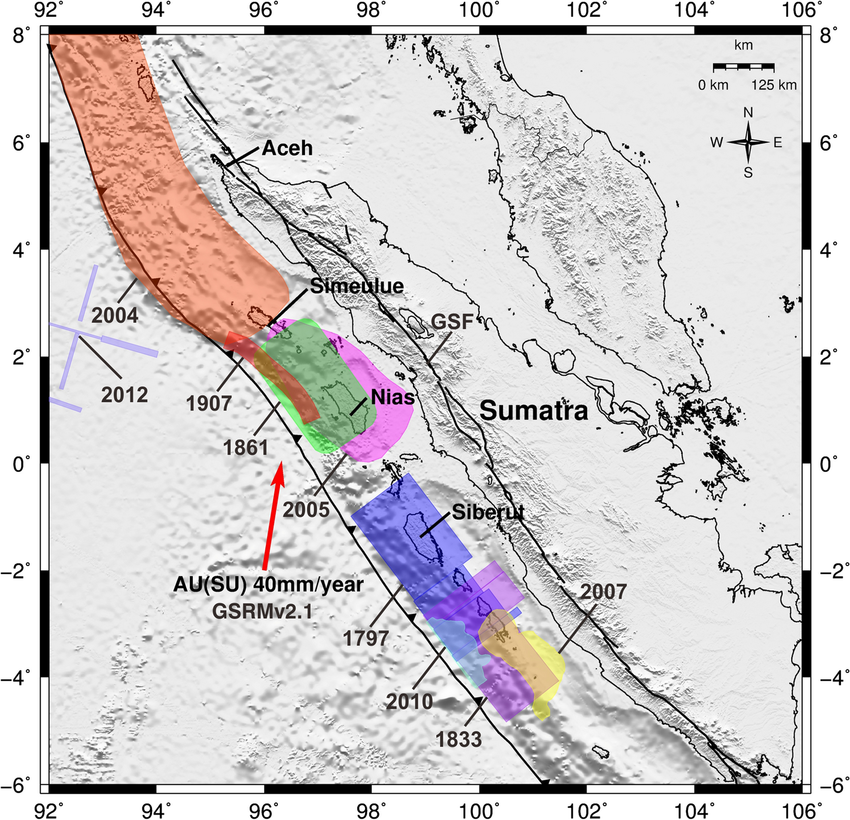

MAKASSAR, Indonesia May 22 2026 /GLOHAMOD/– Beneath the lush landscapes and densely populated communities of Sumatra lies one of Southeast Asia’s most dangerous geological systems—the Great Sumatran Fault. Stretching nearly 1,900 kilometers along the island, this massive fracture in the Earth’s crust silently stores tectonic energy that can be released without warning in devastating earthquakes.
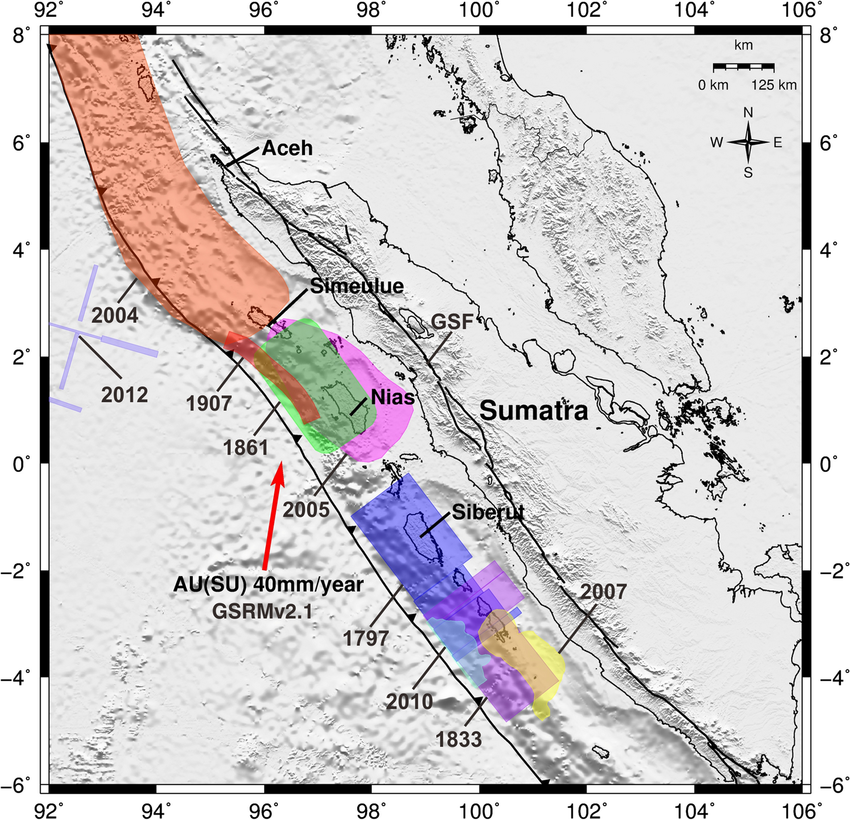
A new scientific study now reveals that some segments of this fault may once again be approaching critical stress levels, raising important questions about future earthquake risks in Indonesia.
The study, titled Stress Accumulation and Earthquake Activity on the Great Sumatran Fault, Indonesia, published in Natural Hazards by Springer on January 17, 2023, investigates how centuries of giant megathrust earthquakes have influenced stress buildup along the Great Sumatran Fault (GSF).
Researchers analyzed eight major megathrust earthquakes that occurred between 1797 and 2010, calculating how these events transferred underground stress to 18 segments of the fault. Their goal was to identify which areas may now face elevated seismic hazard.
The findings show that historical megathrust earthquakes significantly increased stress levels, particularly in the southern segments of the fault. This stress transfer was followed by four major fault earthquakes between 1890 and 1943, suggesting a strong connection between offshore megathrust ruptures and inland fault activity.
The study also examined two different tectonic scenarios. The first assumed no movement of Sumatra’s forearc sliver—a large crustal block moving parallel to the island’s coastline. Under this assumption, stress accumulated slowly, implying that megathrust earthquakes play the dominant role in triggering fault rupture.
However, when researchers included forearc sliver movement, the results changed dramatically. Stress accumulation rates became much faster, consistent with observed fault slip rates of 15 to 16 millimeters per year. This suggests that many fault segments may rupture in cycles of just 100 to 200 years.
Several segments—including Tripa North, Tripa South, Angkola, Musi, and Manna—appear to have returned to stress levels similar to those before past historical earthquakes. This means these areas may once again be capable of generating major seismic events.
These findings strongly support SDG 3: Good Health and Well-being, as understanding earthquake stress accumulation helps reduce disaster-related injuries and fatalities through better preparedness and stronger infrastructure planning.
The study also advances SDG 4: Quality Education, transforming highly technical seismic analysis into practical knowledge that improves public awareness of long-term earthquake hazards.
Equally important, this research supports SDG 17: Partnerships for the Goals, demonstrating the importance of collaboration between geoscientists, disaster agencies, and policymakers to strengthen Indonesia’s resilience.
For Sumatra, this research is more than scientific analysis—it is an early warning system written in geological time.
By understanding how hidden tectonic stress evolves beneath the island, scientists are helping Indonesia prepare for the next chapter in one of Earth’s most active seismic regions.
Reference:
DOI: https://doi.org/10.1007/s11069-023-05816-2
Article Title: Stress Accumulation and Earthquake Activity on the Great Sumatran Fault, Indonesia
Journal: Natural Hazards
Publisher: Springer
Publication Date: January 17, 2023
Contact:
Saaduddin, M. Sc., PhD
+62 8992890320
Saad@sci.unhas.ac.id