
Makassar, South Sulawesi, Indonesia/29-12-2025/FORTREMIC –
Healthy crops are essential for food security, but farmers around the world continue to face challenges from plant diseases. One of the most damaging threats is caused by Fusarium spp., a soil-borne fungus that can infect important horticultural crops such as chili, tomatoes, and onions. This pathogen can reduce crop productivity and create significant economic losses for farmers.
A recent study from Hasanuddin University explored a natural solution by combining bioactive compounds from two familiar plants: soursop leaves (Annona muricata L.) and turmeric rhizomes (Curcuma longa L.). The research investigated whether a combination of acetogenin from soursop and curcumin from turmeric could inhibit the growth of Fusarium spp. in laboratory conditions.
This research supports Sustainable Development Goal (SDG) 15: Life on Land, which focuses on protecting terrestrial ecosystems, conserving biodiversity, and promoting sustainable management of natural resources. Sustainable agriculture is an important part of protecting land ecosystems because excessive chemical use can negatively affect soil health and surrounding environments.
Currently, many agricultural systems depend heavily on synthetic fungicides to control plant diseases. Although effective, continuous use of chemical fungicides may contribute to pathogen resistance and environmental problems. Therefore, scientists are searching for safer alternatives derived from natural resources.
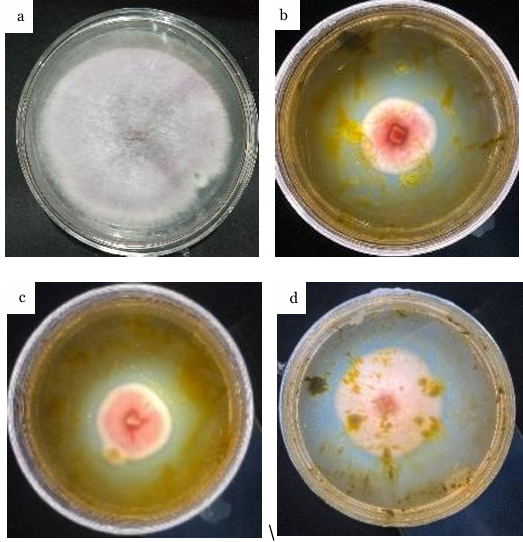
The study found that the combination of acetogenin and curcumin showed promising antifungal activity. Among the tested formulations, the mixture containing 60% acetogenin and 40% curcumin produced the strongest inhibition effect, reducing fungal colony growth by up to 84% compared with the control treatment.
The effectiveness of this natural combination comes from the different ways these plant compounds interact with fungal cells. Acetogenin compounds from soursop leaves can interfere with fungal cell processes, while curcumin from turmeric has antifungal properties that may disrupt important cellular functions. Together, these natural compounds provide a potential alternative approach for controlling plant diseases.
Although the results are promising, researchers emphasize that this study is still at an early stage. The experiments were conducted under laboratory conditions, and further studies with repeated trials, greenhouse testing, and field applications are needed before practical use in agriculture.
This research also contributes to other global sustainability goals. SDG 1: No Poverty is related because protecting crops can support farmers’ incomes. SDG 3: Good Health and Well-being is connected through reducing dependence on potentially harmful chemical residues. SDG 4: Quality Education is supported by increasing knowledge about sustainable agricultural practices. SDG 14: Life Below Water is indirectly related because reducing chemical pollution can help protect aquatic ecosystems. SDG 15: Life on Land is the main focus because the study promotes environmentally friendly crop protection. SDG 17: Partnerships for the Goals highlights the importance of collaboration between scientists, universities, and agricultural communities.
The message from this research is clear: nature itself provides valuable solutions. By exploring the power of plants such as soursop and turmeric, agriculture can move toward safer, more sustainable, and environmentally responsible practices.
Reference:
https://doi.org/10.31849/jip.v22i3.29777
Contact:
Iswanto
082112270072
eiswanto11@gmail.com