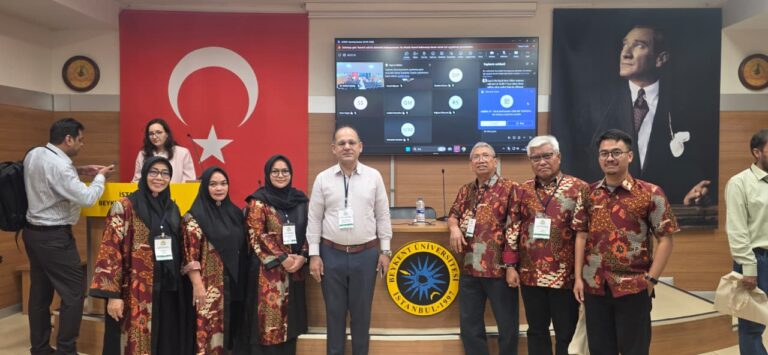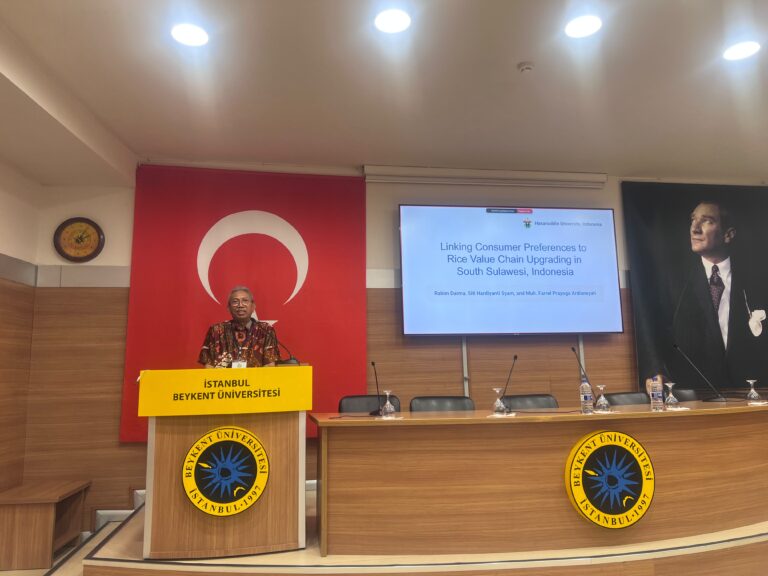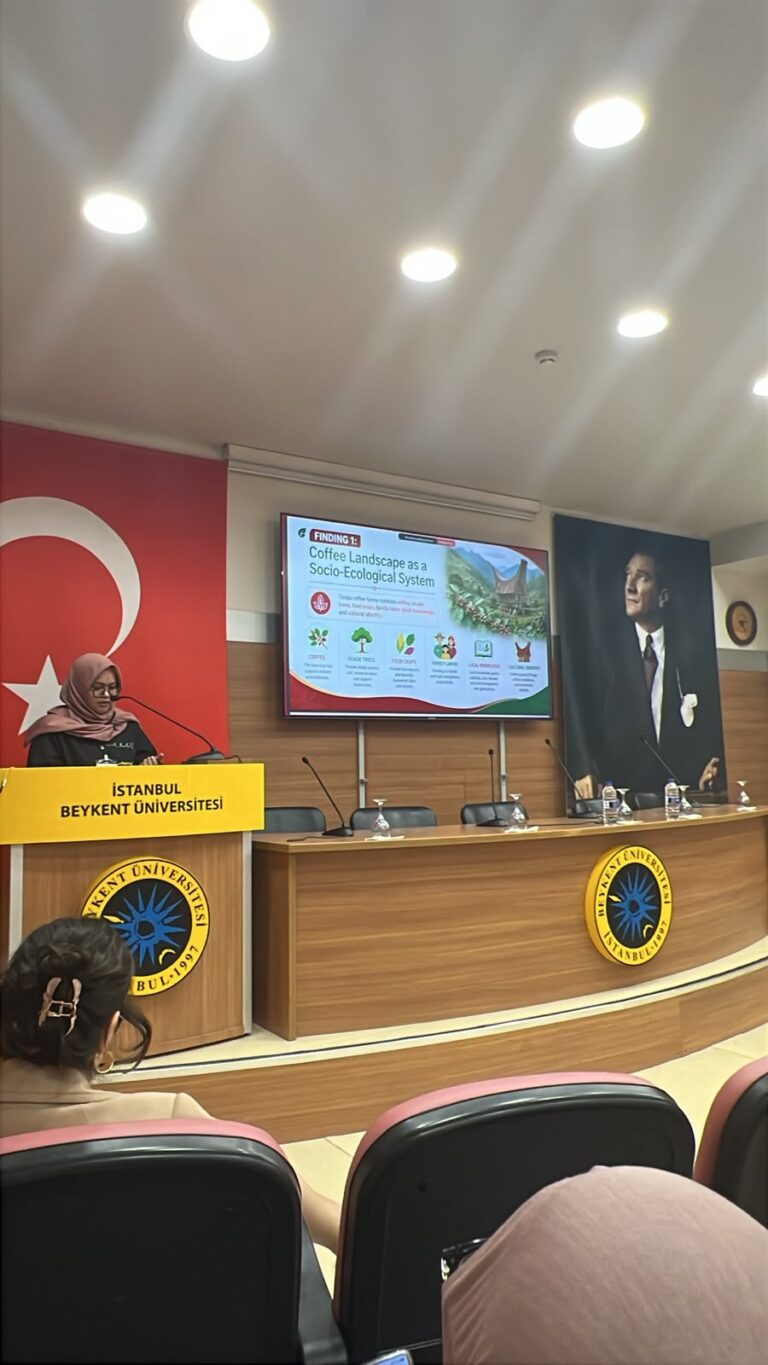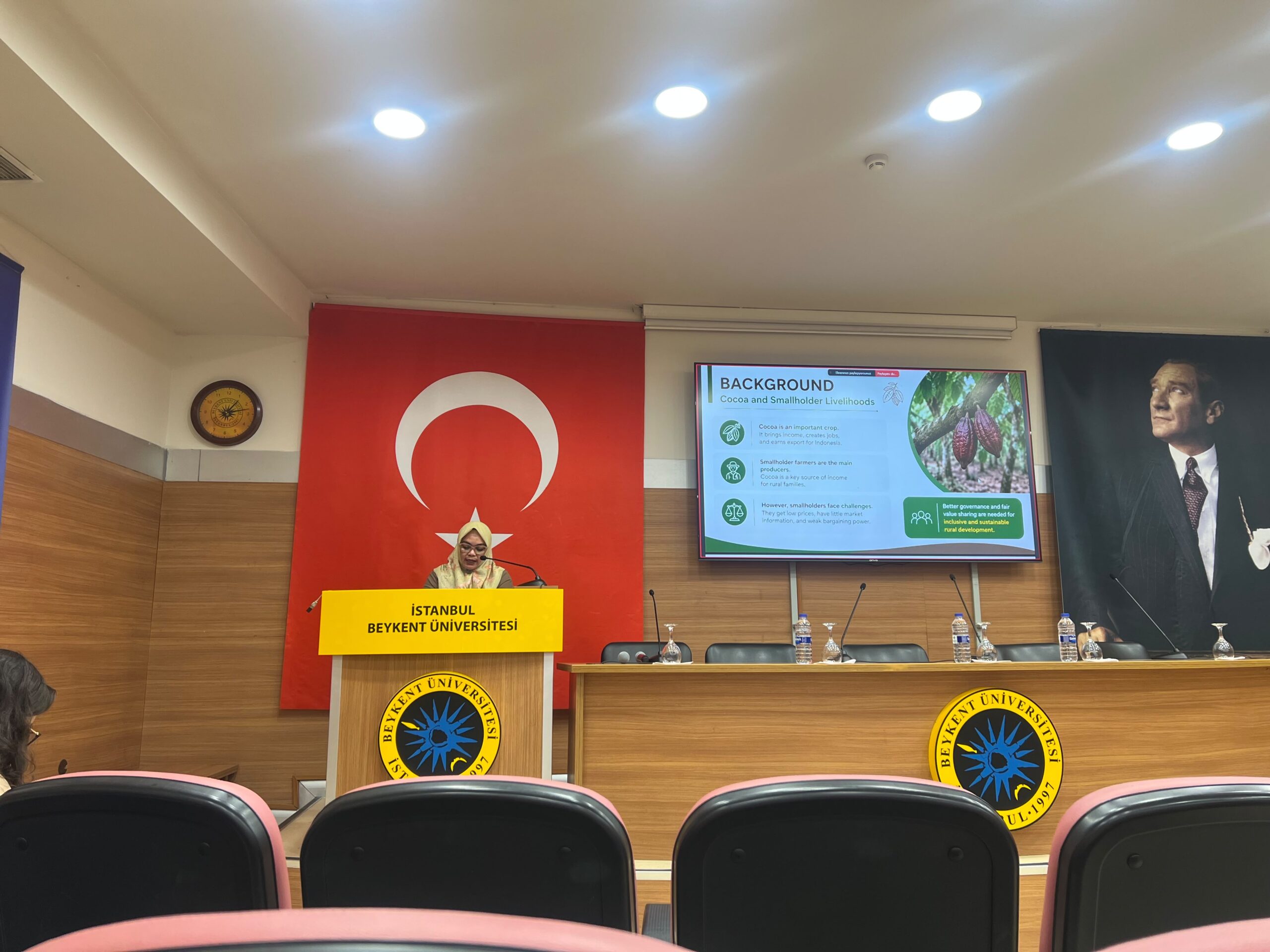

Two research studies of the Food Crops Value Chain Research Group on cocoa value chain governance, institutional coordination, and smallholder farmer welfare were presented at the VIII International Agricultural, Biological and Life Sciences Conference (AGBIOL 2026), held on 6–9 September 2026 in Istanbul, Türkiye. The presentations examined institutional and market challenges affecting cocoa farmers in South Sulawesi and West Sulawesi, Indonesia, contributing evidence to international discussions on agricultural development, rural livelihoods, and inclusive value chain transformation.
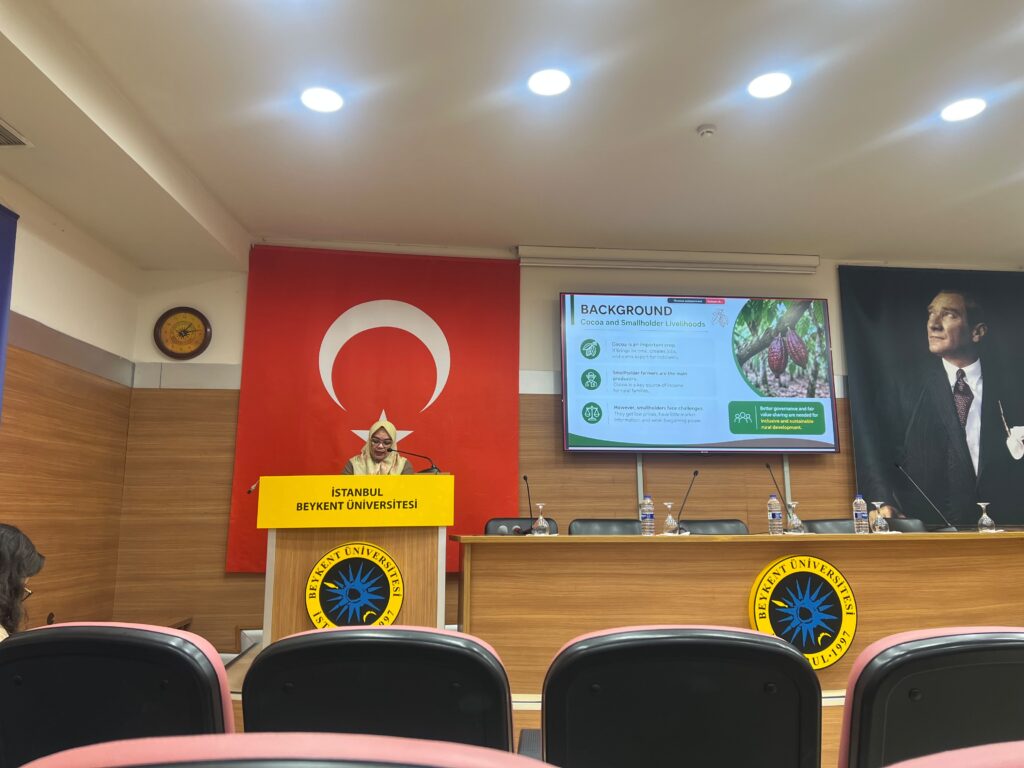
Organized by the International Researcher Association, Istanbul Beykent University, and Trakya University, AGBIOL 2026 provided an international platform for scientific presentations and academic exchange across agricultural, biological, and life sciences. The sessions brought together researchers from various academic backgrounds and countries, creating opportunities to exchange perspectives, discuss research findings, and explore potential interdisciplinary collaboration. The two presentations applied qualitative approaches to investigate how institutional arrangements, stakeholder relationships, and governance mechanisms shape the functioning and outcomes of Indonesia’s cocoa value chains.
Dr. Letty Fudjaja presented the paper “Institutional Arrangements and Farmer Welfare in Cocoa Value Chains: Evidence from Soppeng District, Indonesia.” Drawing on in-depth interviews and focus group discussions with farmers, local traders, cooperatives, private-sector firms, and government agencies, the study examined how different institutional arrangements influence farmers’ participation and welfare. The findings indicate that informal marketing systems provide relatively broad market access and flexibility, but can limit opportunities for value addition and long-term income growth. More formal arrangements, including cooperatives and private partnerships, offer potential improvements in productivity, product quality, and market access, although institutional requirements may restrict participation. The study highlights the importance of balancing efficiency, equity, and inclusiveness when designing institutional interventions for smallholder farmers.
Prof. Dr. A. Nixia presented “Governance and Coordination Failures in Cocoa Value Chains: Institutional Constraints and Stakeholder Dynamics in Polman District, Indonesia.” Grounded in New Institutional Economics, the study investigated governance structures, transaction costs, stakeholder relationships, and value distribution in the cocoa value chain in Polewali Mandar District, West Sulawesi. The findings identify fragmented coordination, weak farmer organizations, limited market information, and unequal bargaining power as major institutional constraints. Local collectors facilitate market access and provide informal credit, yet farmers’ dependence on these relationships can reinforce information asymmetries and constrain their capacity to capture greater value. The research underscores the need for institutional strengthening alongside technical and productivity-oriented interventions.
Together, the studies demonstrate the relevance of institutional and value chain analysis for agricultural policy and sustainable rural development. Their findings support efforts to strengthen farmer organizations, improve market transparency, enhance coordination among value chain actors, and expand equitable access to market opportunities. The activity also contributes to the United Nations Sustainable Development Goals, particularly SDG 1: No Poverty, through its focus on smallholder livelihoods and income opportunities; SDG 4: Quality Education, by facilitating international research dissemination, academic knowledge exchange, and opportunities for researchers from diverse backgrounds to learn from evidence-based studies; and SDG 17: Partnerships for the Goals, by encouraging international academic networking and future interdisciplinary collaboration.
Participation in AGBIOL 2026 provides a foundation for further scholarly engagement and collaboration on agricultural governance and sustainable value chains. Future initiatives may include joint research, interdisciplinary publications, and the development of evidence-based recommendations for policymakers, development organizations, and private-sector stakeholders. Through these efforts, the research aims to contribute to more inclusive cocoa value chains and improved livelihood opportunities for smallholder farming communities in Indonesia.