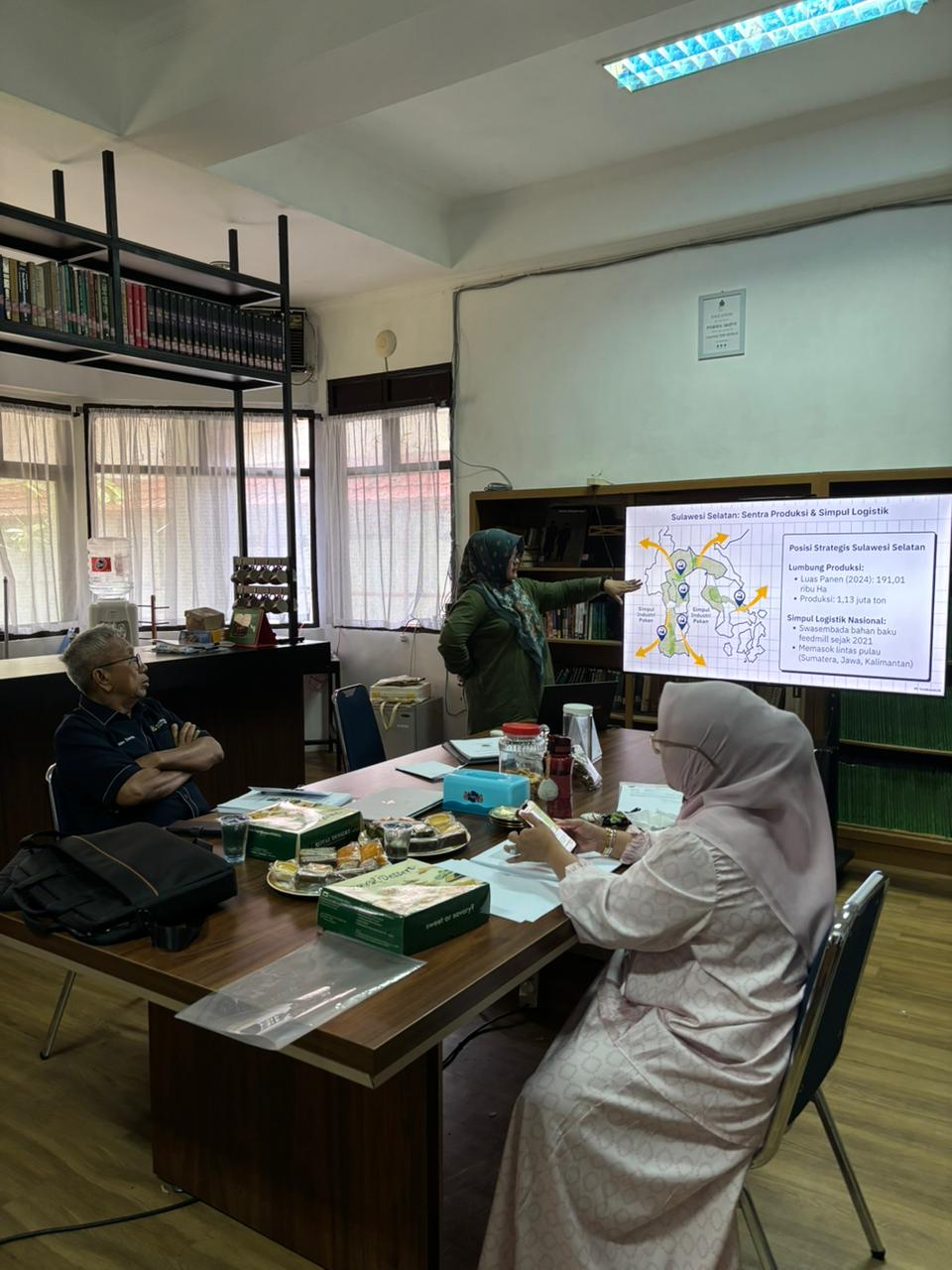

The Food Crops Value Chain Research Group organized a discussion on the current condition of the corn supply chain in South Sulawesi on 20 May 2026 at the Department of Agricultural Socioeconomics, Faculty of Agriculture, Hasanuddin University. The activity brought together 5 participants, consisting of 3 lecturers, 1 researcher, and 1 student, to exchange insights and develop a broader understanding of the dynamics of maize distribution and marketing in the region. The discussion aimed to present an initial overview of the current corn supply chain system while identifying critical issues that require further investigation for future value chain research.
During the session, Ni Made Viantika, M.Agb served as the facilitator and delivered a presentation regarding the current condition of the corn supply chain in South Sulawesi, particularly in relation to the increasing national demand for maize as a raw material for the livestock and animal feed industry. The discussion was closely linked to the research group’s previous field visit to maize farmers in Soppeng Regency, where farmers explained their existing marketing channels and challenges in distribution. The discussion further enriched the group’s understanding of how maize moves through different logistical nodes before reaching feed industries and other buyers.
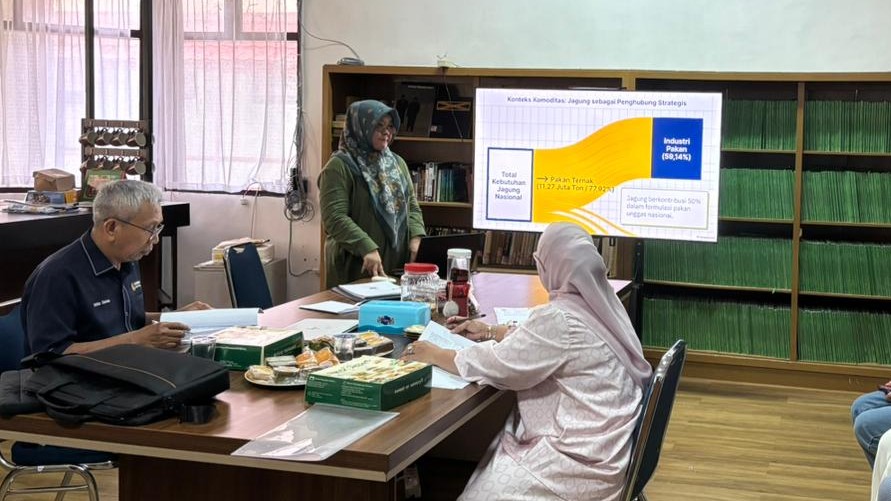
An important point highlighted during the presentation was the existence of inter-island maize trade involving South Sulawesi farmers, indicating that maize production plays a strategic role beyond local markets. Key findings from the session emphasized that supply chain performance is strongly shaped not only by production volume but also by distribution systems, market access, and the ability to maintain product quality throughout the trading process.
Meanwhile, Prof. Rahim Darma, as the Leader of the Food Crops Value Chain Research Group, explained that the discussion generated several new questions for future research and data collection. He particularly emphasized the importance of calculating labor costs in farm production systems, which may significantly influence both farm gate prices and maize quality. According to him, understanding labor dynamics is essential for analyzing production efficiency and identifying the economic pressures faced by maize farmers within the value chain.
Additional perspectives were also provided by Prof. A. Nixia Tenriawaru, who emphasized the need to explore other regions that have not yet been fully identified as maize suppliers. She explained that expanding research coverage could improve the mapping of the regional corn supply chain and provide a clearer understanding of each area’s role in supporting supply performance. This approach is expected to strengthen future analyses related to production concentration, distribution networks, and regional competitiveness.
The discussion also reflected the relevance of broader global development issues, particularly SDG 1 (No Poverty) through efforts to improve farmer welfare, SDG 12 (Responsible Consumption and Production) through more efficient supply chain management, and SDG 17 (Partnerships for the Goals) through collaboration among researchers, academic institutions, and agribusiness stakeholders. The activity concluded with a shared commitment to continue developing more comprehensive value chain research that can support sustainable agricultural development and evidence-based policymaking in Indonesia.