Makassar, Indonesia 17 December 2025/FCVC/-Toraja Arabica coffee is more than just a premium beverage—it is a story of culture, environment, and livelihood. Behind every cup lies a complex system connecting farmers, traders, institutions, and global consumers. However, sustaining this system is not easy. A recent study reveals both the opportunities and challenges in making Toraja coffee truly sustainable. This article is based on the research titled “Sustainability of the Toraja Arabica Coffee Value Chain in Indonesia: Economic, Cultural, Environmental, and Certification Dimensions,” published in Frontiers in Sustainability by Frontiers Media on 03 December 2025.
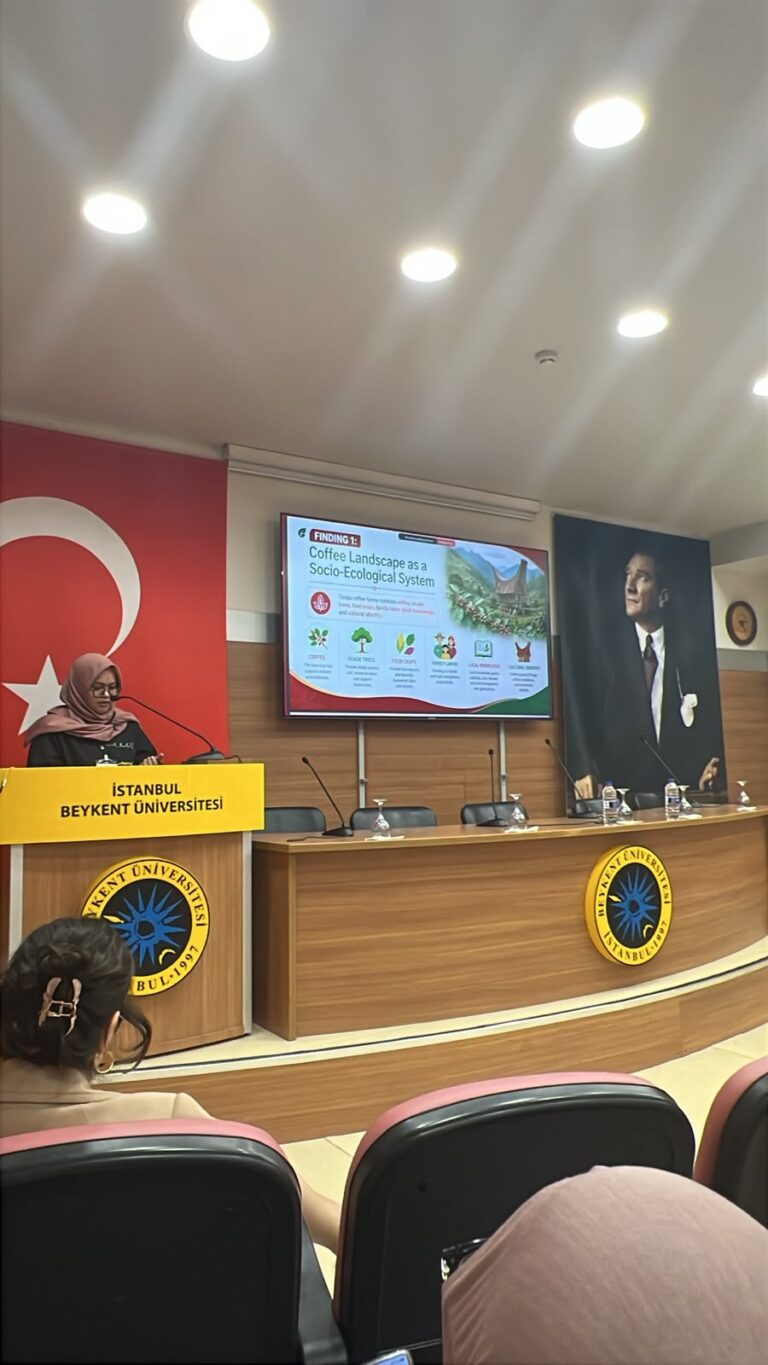
Toraja coffee is grown in highland areas using traditional agroforestry systems that combine coffee plants with shade trees to protect biodiversity, maintain soil fertility, and regulate water cycles. This directly supports SDG 15: Life on Land, as it promotes sustainable land use and environmental conservation. At the same time, coffee is deeply connected to Toraja culture, playing an important role in rituals such as Rambu Solo’ and Rambu Tuka’, symbolizing identity and community.
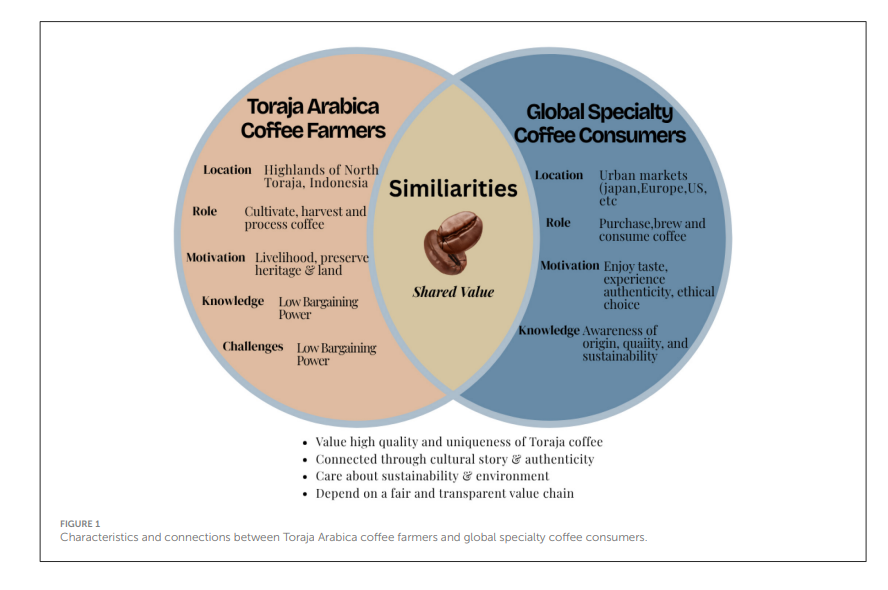
Economically, coffee is a key source of income for rural households. The study shows that global demand for Toraja coffee continues to grow, offering opportunities for farmers to improve their livelihoods. This aligns with SDG 8: Decent Work and Economic Growth, as it creates jobs and supports rural economies. However, many farmers have weak bargaining power and depend on middlemen, which limits their income. Price instability also makes it difficult for farmers to plan for the future. These challenges are closely linked to SDG 1: No Poverty. When farmers cannot access fair markets or stable prices, they remain vulnerable to poverty. The study highlights that strengthening cooperatives and improving market access can help farmers receive better prices and increase their income. Certification systems such as Geographical Indication (GI), organic, and fair trade can also help farmers reach premium markets and gain higher value for their products.
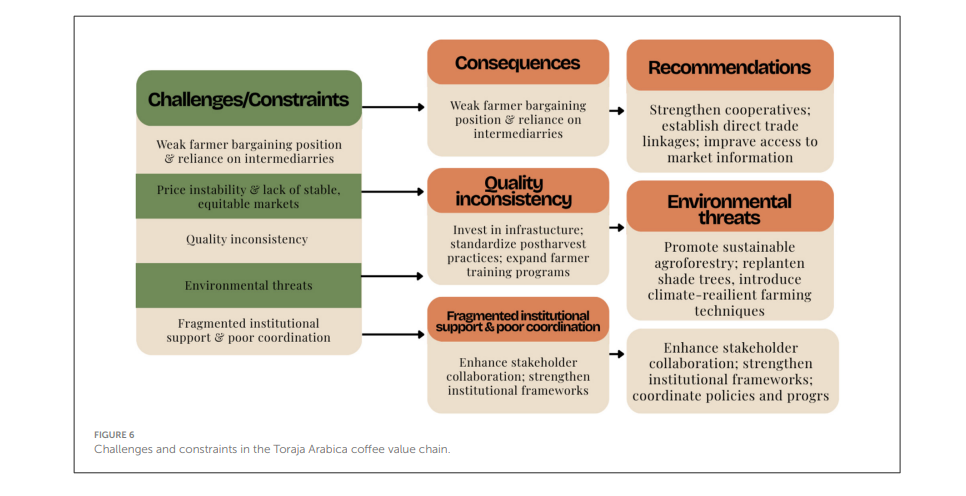
Strong institutions play a critical role in addressing these issues. The study emphasizes that better coordination between government, cooperatives, private companies, and other stakeholders is needed. This directly supports SDG 16: Peace, Justice, and Strong Institutions, which focuses on building effective and inclusive systems. Currently, institutional support is often fragmented, making it less effective in helping farmers. Another challenge is inconsistent post-harvest practices and limited infrastructure which reduce the overall quality of coffee and affects its competitiveness in global markets. Improving infrastructure, training, and technology adoption can help solve this problem.
Despite these challenges, the study highlights many opportunities. Expanding sustainable agroforestry, strengthening cooperatives, improving infrastructure, and promoting storytelling in marketing can increase the value of Toraja coffee. In conclusion, Toraja coffee represents a powerful example of how agriculture, culture, and environment are interconnected. By supporting SDG 1, SDG 8, SDG 15, and SDG 16, stakeholders can build a more inclusive and sustainable coffee value chain. The future of Toraja coffee depends not only on its unique flavor, but also on how well its system supports the people and environment behind it.
Reference:
DOI: https://doi.org/10.3389/frsus.2025.1691977
Contact:
Prof. Rahim Darma
+62 852-5564-6556
rdarma@unhas.ac.id