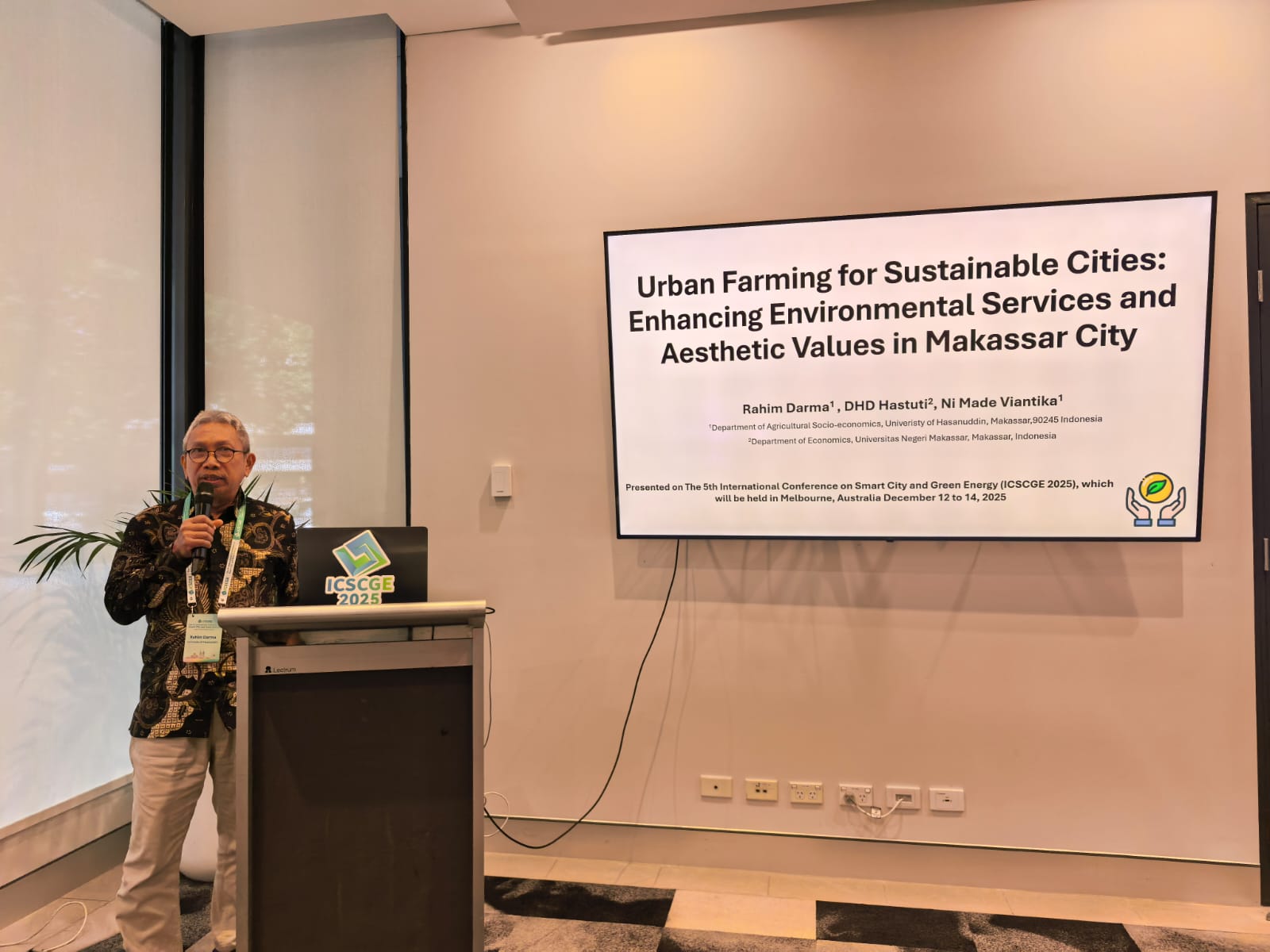

Makassar, Indonesia 27 December 2025/FCVC/-As cities continue to confront the pressures of rapid urbanization and climate change, the integration of food systems into urban planning is gaining increasing attention. In this context, a Presentation on the 5th International Conference on Smart City and Green Energy (ICSCGE 2025) held in Melbourne, Australia was delivered on December 13, 2025 in Melbourne, Australia, involving participants from various international affiliations. The session featured Prof. Rahim Darma as the key contributor, representing the Food Crops Value Chain Research Group. The main activity: Prof. Rahim Darma, leader of the Food Crops Value Chain Research Group, participated in The 5th International Conference on Smart City and Green Energy (ICSCGE 2025) held in Melbourne, Australia, in December 2025, where he presented a paper titled “Urban Farming for Sustainable Cities: Enhancing Environmental Services and Aesthetic Values in Makassar City” positioned agricultural research within the broader discourse on smart city and green energy development.
The conference served as a multidisciplinary platform where researchers, policymakers, and practitioners explored innovative approaches to sustainable urban systems. Within this setting, Prof. Rahim Darma contributed by connecting food crop value chain research with urban sustainability challenges. The presentation highlighted how urban farming can be integrated into city planning frameworks, complementing existing infrastructure and environmental strategies. Discussions during the conference emphasized the need for cross-sector collaboration, where agricultural practices are no longer viewed as separate from urban development but as an essential component of resilient and adaptive cities. This positioning reflects a growing recognition that sustainable cities require holistic solutions that combine environmental, social, and economic dimensions.
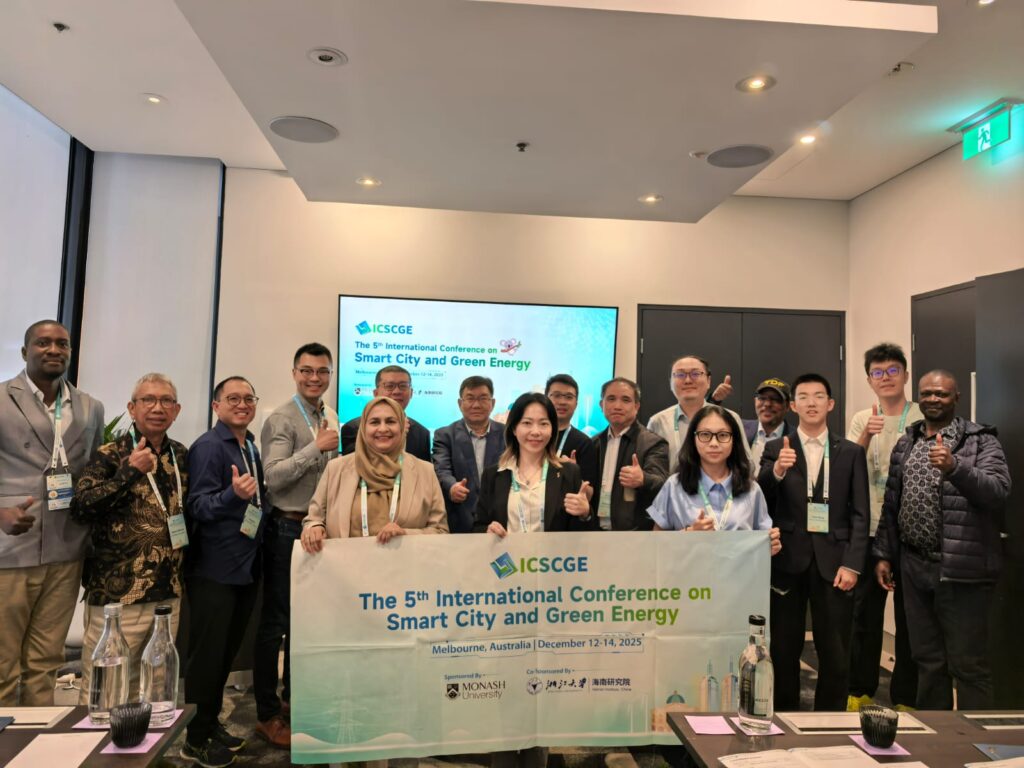
A key message from the presentation was that urban farming offers multiple benefits beyond food production. The study demonstrated that integrating agriculture into urban spaces can improve environmental quality through enhanced green coverage, support localized food systems, and contribute to the aesthetic value of cities. Using Makassar City as a case example, the research illustrated how urban farming initiatives can strengthen climate resilience while promoting community well-being. The findings also suggest that policy frameworks should incorporate urban agriculture as part of long-term development strategies, ensuring that land use planning, environmental management, and food systems are aligned. This approach reinforces the importance of interdisciplinary research in addressing complex urban challenges.
The participation in this conference contributes to SDG 4 (Quality Education) by advancing knowledge exchange in sustainable urban development, SDG 7 (Affordable and Clean Energy) through its alignment with green energy and environmental integration, and SDG 11 (Sustainable Cities and Communities) by promoting inclusive and resilient urban systems. The engagement highlights the growing relevance of food crop value chain research in global sustainability discussions and underscores the importance of integrating agriculture into smart city agendas. Moving forward, the insights generated are expected to support further research, inform policy development, and strengthen collaboration between academic and policy institutions in advancing sustainable urban futures.