Makassar, Indonesia 15 October 2025/FCVC/-What if farmers could grow more crops using less water? In today’s world, where climate change is making rainfall increasingly unpredictable, this question is more relevant than ever. For many smallholder farmers, especially in rainfed areas, water scarcity can mean the difference between success and crop failure. Fortunately, simple and affordable innovations are offering new hope. This article is based on the study titled “Development of a Semi-Automated Drip Irrigation System to Enhance Water Productivity and Tuber Yield of Gajah Cassava under Rainfed Conditions,” published in the Journal of Global Innovations in Agricultural Sciences on 3 October 2025.
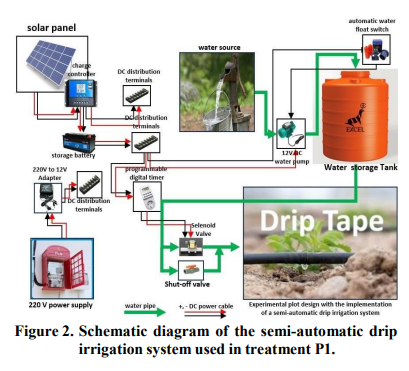
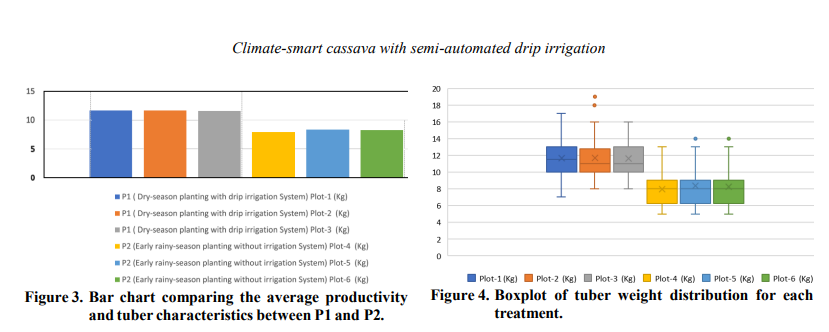
Cassava is a vital crop in many tropical regions. It serves as a staple food, livestock feed, and raw material for industry. However, its production is increasingly threatened by longer dry seasons and irregular rainfall patterns (page 1). To address this challenge, the study introduces a semi-automated drip irrigation system that delivers water directly to plant roots using simple components such as pipes, timers, and a solar-powered pump. The results are impressive: cassava yields increased by 42.4%, while water use efficiency improved by 34%, with only 2.84% additional water required. This innovation strongly contributes to SDG 2: Zero Hunger, as higher productivity helps ensure food availability and supports farmer livelihoods. It also aligns with SDG 6: Clean Water and Sanitation, since the system reduces water waste by applying water precisely where it is needed. This is particularly important in regions where water resources are limited.
Another key advantage is the use of solar energy. By powering the irrigation system with solar panels, farmers can reduce dependence on expensive and unreliable electricity sources. This directly supports SDG 7: Affordable and Clean Energy, making the technology both environmentally friendly and economically accessible. The system also promotes SDG 12: Responsible Consumption and Production. Efficient use of water and energy reduces waste and lowers production costs. Instead of over-irrigating crops, farmers can manage resources more carefully, leading to more sustainable agricultural practices.
However, adopting new technology requires more than just tools—it requires knowledge. The study emphasizes the importance of training and agricultural extension services (page 10). Farmers need to understand how to install, operate, and maintain the system effectively. This highlights the role of SDG 4: Quality Education, ensuring that farmers are equipped with the skills needed to benefit from innovation.
In conclusion, this research demonstrates that small-scale innovations can have a big impact. By improving productivity, conserving water, utilizing clean energy, and promoting sustainable practices, this irrigation system offers a practical solution to modern agricultural challenges. Supporting SDG 4, SDG 2, SDG 6, SDG 7, and SDG 12 is not just about achieving global targets—it is about empowering farmers to adapt, survive, and thrive in a changing climate.
Reference:
DOI: https://doi.org/10.22194/JGIAS/26.1824
Contact:
Prof. Rahim Darma
+62 852-5564-6556
rdarma@unhas.ac.id