Makassar, Indonesia 16 July 2025/FCVC/-Reliable value chain analysis begins with careful and structured data collection at the farm level, where production decisions directly influence market outcomes. In this context, a Cocoa Value Chain Analysis was conducted as a research activity on May 8, 2025 in Soppeng Regency, South Sulawesi Province, Indonesia, involving student researchers from the Food Crops Value Chain Research Group. The study was carried out by Awulyani Sumardi under the supervision of Dr. Letty Fudjaja, focusing on conducting field-based interviews with cocoa farmers to collect primary data on production practices, input use, and value chain linkages as part of cocoa value chain mapping.
The data collection process was centered on direct engagement with 7 cocoa farmers through structured and semi-structured interviews. This approach allowed to gather detailed and context-specific information from farmers regarding their day-to-day production practices and decision-making processes. The interviews were conducted using purposive and snowball sampling techniques to ensure that selected informants represented relevant actors within the cocoa value chain. The interviews revealed important variations in cocoa planting systems among farmers, particularly between agroforestry and monoculture approaches. Some farmers adopt agroforestry systems by integrating cocoa with shade trees, which can support ecological sustainability and reduce environmental risks. Others rely on monoculture systems to maximize production output, reflecting different priorities in managing land and resources. These choices are closely related to farmers’ access to knowledge, land conditions, and market orientation. The findings highlight that planting methods are not only technical decisions but are also shaped by economic considerations and value chain demands.
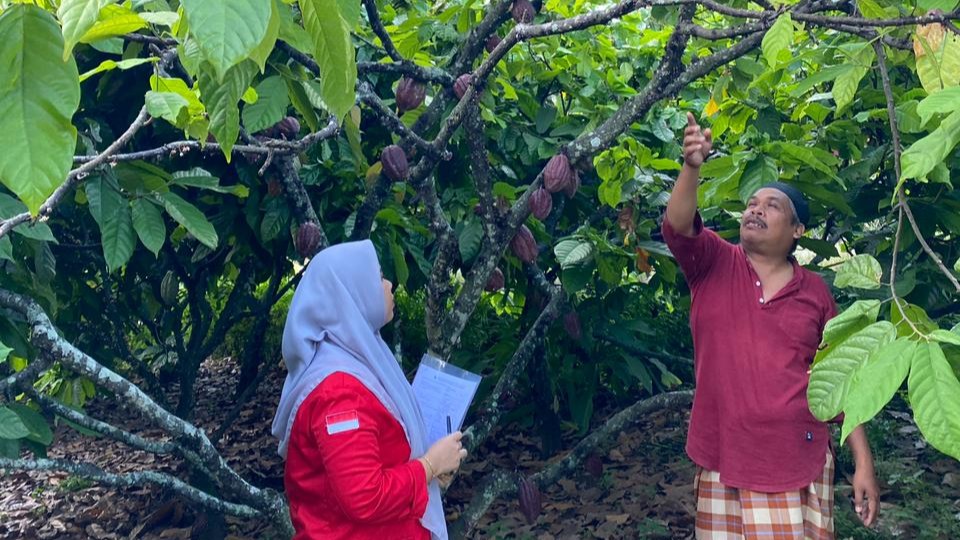
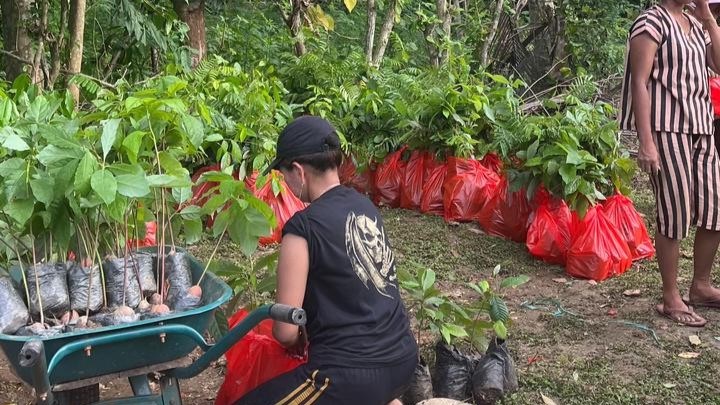
Further insights from the interviews focused on the selection of cocoa seeds and clones, which play a critical role in determining both productivity and product quality. Farmers reported that their choice of planting material is often influenced by the requirements of their business partners, including quality standards expected in downstream markets. The source of seeds also varies, with some farmers relying on their own production while others obtain seeds through partnerships with companies such as Barry Callebaut. This indicates a direct connection between upstream input decisions and downstream value chain expectations. In addition, the interviews captured farmers’ knowledge and practices related to identifying plant diseases, highlighting the importance of technical capacity in maintaining crop health and meeting quality requirements. These aspects co
This research activity contributes to SDG 4 (Quality Education) by strengthening student capacity in field-based research methods, SDG 8 (Decent Work and Economic Growth) by supporting knowledge that can improve farm-level productivity and market participation, and SDG 17 (Partnerships for the Goals) by emphasizing collaboration between farmers, researchers, and agribusiness actors. The focus on detailed data collection ensures that subsequent analysis is grounded in real conditions, increasing the relevance of research outputs for policy and practice. Moving forward, the information gathered through these interviews will serve as a critical foundation for developing more accurate value chain assessments and informing strategies to enhance the sustainability and competitiveness of the cocoa sector in South Sulawesi.