Makassar, Indonesia 02 April 2025/FCVC/-In many rural coastal areas, survival depends on creativity, cooperation, and opportunity. A recent study reveals how combining men’s and women’s roles in small businesses can transform entire communities. By integrating gender equality into local economic systems, villages can grow stronger, smarter, and more sustainable. This article is based on the research titled “Gender, Empowerment, and Rural Sustainable Development: A Case Study of Crab Business Integration,” published in the journal Open Agriculture by De Gruyter Brill on 26 March 2025. The study focuses on Ampekale Village in Indonesia, where crab fishing and processing businesses are managed collaboratively by men and women.
One key finding is that men and women contribute differently—but equally importantly—to the local economy. Men are mostly involved in catching crabs, while women handle processing, packaging, and marketing (page 5). This teamwork creates a complete value chain that increases income and productivity. It directly supports SDG 8: Decent Work and Economic Growth, as it generates jobs and improves livelihoods for rural families. Education also plays a crucial role. The study shows that local economic organizations (LEOs) provide training programs, including basic literacy and business skills for women (page 6). These opportunities empower women to participate more actively in business and decision-making. This aligns with SDG 4: Quality Education, as access to learning improves both individual capacity and community development.
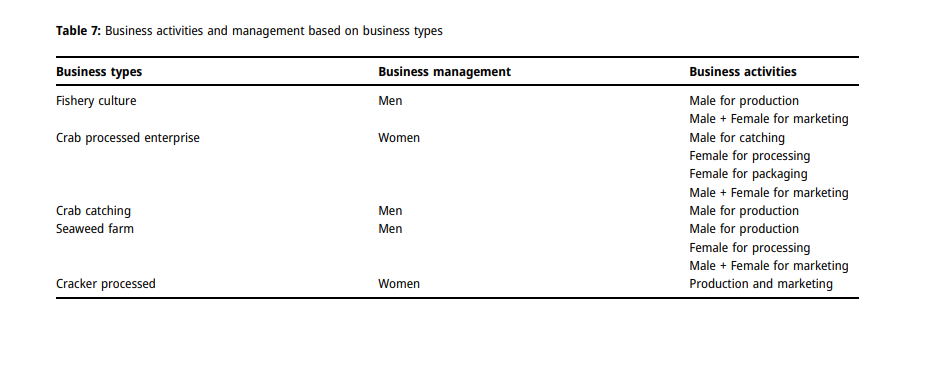
Interestingly, women often have a deeper understanding of how these organizations work. As noted on page 5, women’s knowledge of marketing, innovation, and financial systems is rated “good” to “very good,” while men’s understanding is often lower. This highlights the importance of empowering women, not just as workers but as leaders. It strongly connects to SDG 5: Gender Equality, emphasizing equal opportunities and recognition for women’s contributions. The study also highlights how strong institutions help communities succeed. LEOs act as platforms for cooperation, training, financial support, and decision-making. They allow community members to share ideas, solve problems, and grow together. This reflects SDG 16: Peace, Justice, and Strong Institutions, as inclusive and transparent organizations build trust and long-term stability. Beyond economics, the impact reaches everyday life. Women’s income from crab processing—ranging from IDR 600,000 to 3,500,000 per month (page 7)—helps families pay for education, food, and housing. Meanwhile, men benefit from stable fishing systems and reduced dependence on exploitative middlemen (page 13). Together, these changes improve overall well-being and reduce inequality.
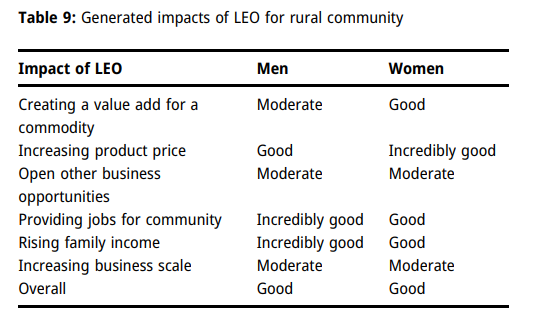
However, challenges remain. The study notes that miscommunication about financial systems and unequal access to resources can limit the effectiveness of these programs (page 8). Addressing these issues requires better communication, stronger policies, and continued support for inclusive development.
In conclusion, this research shows that when men and women work together equally, rural communities can thrive. By promoting SDG 4, SDG 5, SDG 8, and SDG 16, gender-inclusive business models not only boost income but also build stronger, more resilient societies. The story of Ampekale Village proves that sustainable development is not just about resources—it’s about people working together.
Reference:
DOI: https://doi.org/10.1515/opag-2025-0416
Contact:
Prof. Rahim Darma
+62 852-5564-6556
rdarma@unhas.ac.id