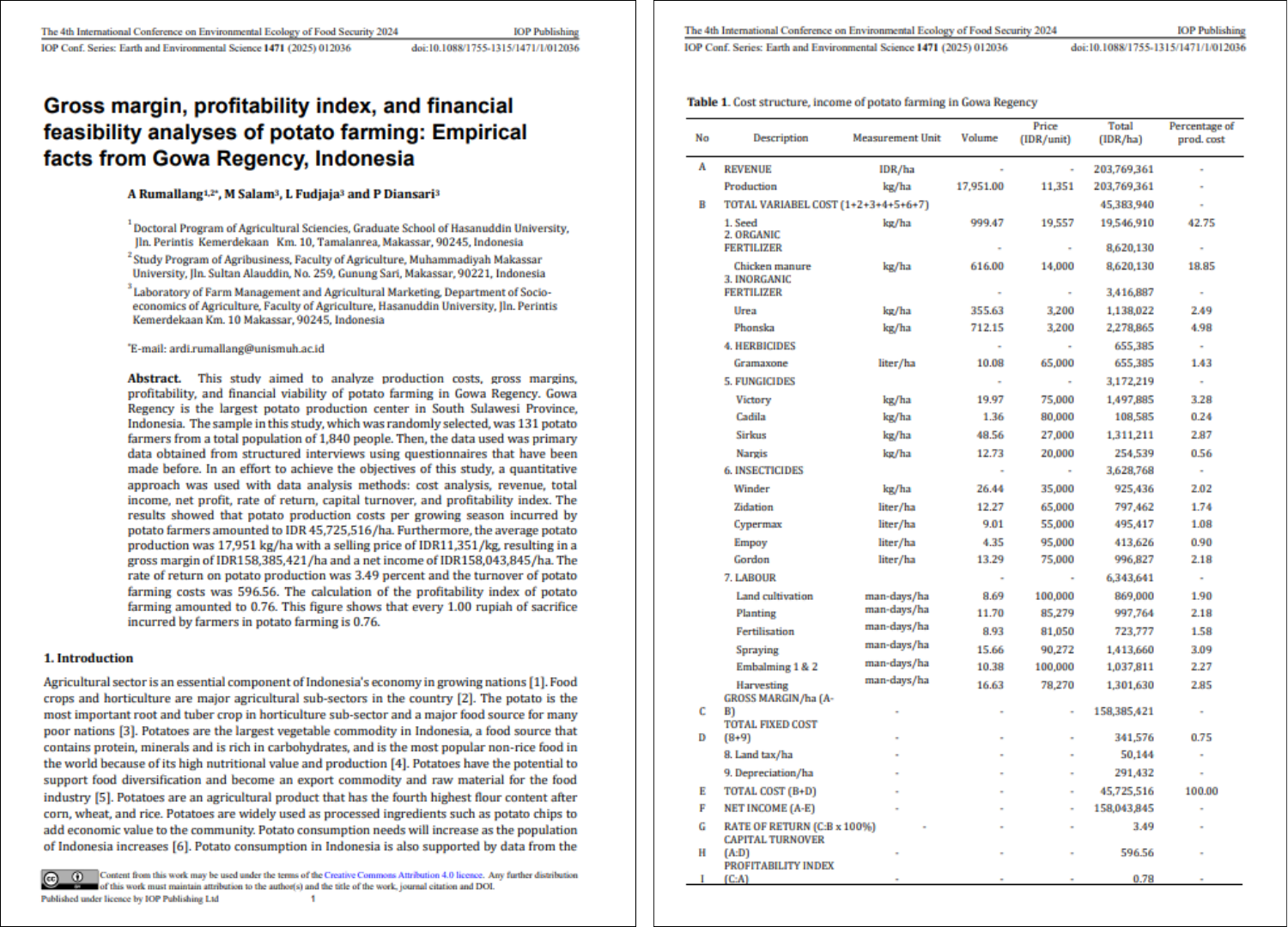

Makassar, Indonesia 04 April 2025/FCVC/-Potatoes may look like simple crops, but for many farmers in Indonesia, they represent a valuable opportunity to improve income and build a better future. In Gowa Regency, South Sulawesi, potato farming has become one of the most important agricultural activities. But how profitable is it, and can it truly support sustainable development?. This question is explored in the study titled “Gross Margin, Profitability Index, and Financial Feasibility Analyses of Potato Farming: Empirical Facts from Gowa Regency, Indonesia,” published in IOP Conference Series: Earth and Environmental Science 1471 on 25 March 2025.
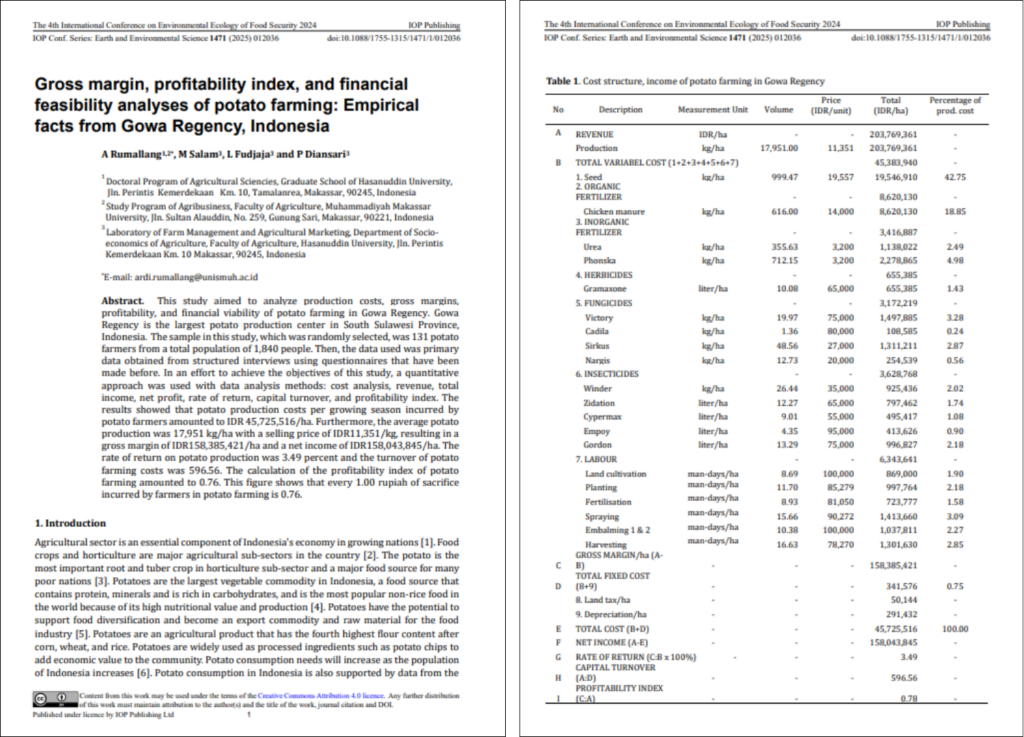
The research shows that potato farming in Gowa is not only productive but also financially promising. Farmers produce an average of 17,951 kg per hectare, with a selling price of 11,351 IDR/Kg. This generates total revenue of about 203 million IDR/ha. After covering production costs of around IDR 45.7 million, farmers earn a net income of approximately 158 million IDR/ha. These numbers clearly show that potato farming is a profitable business. This directly supports SDG 1: No Poverty. When farming becomes profitable, it helps reduce poverty and improve living standards. The study highlights that farmers’ income depends on production levels and market prices, making efficiency and good management essential.
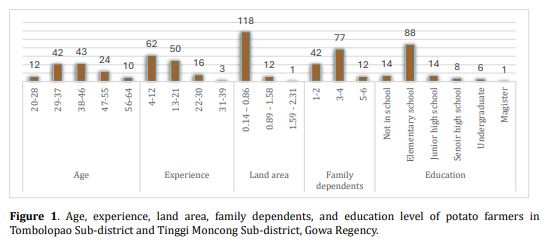
Potato farming also contributes to SDG 2: Zero Hunger. Potatoes are a highly nutritious food, rich in carbohydrates, protein, and minerals. It also an important alternative to rice, helping diversify food sources and strengthen food security. Increasing production means more food availability for populations. Another important aspect is knowledge and education. The study shows that many farmers have limited formal education, with a large number not completing school. However, experience and practical knowledge play a key role in improving productivity. This highlights the importance of training and extension services, which align with SDG 4: Quality Education. The economic impact of potato farming also connects to SDG 8: Decent Work and Economic Growth. Farming activities create jobs not only in production but also in transportation, processing, and marketing. The study shows a rate of return of 3.49, meaning that every unit of cost generates multiple returns, and a high capital turnover of 596.56, indicating efficient use of resources (page 8). These figures confirm that potato farming is a strong driver of local economic growth.
However, the study also identifies challenges. One of the biggest costs comes from seed potatoes, which account for more than 42% of total production costs (page 8). Limited access to high-quality seeds and fluctuating prices can affect profitability. Addressing these issues requires better support systems, including access to inputs, financing, and market information. In conclusion, potato farming in Gowa Regency shows great potential to improve livelihoods, strengthen food security, and support economic growth. By advancing SDG 1, SDG 2, SDG 4, and SDG 8, this sector can become a powerful tool for sustainable development. With the right support and innovation, small farmers can turn simple crops into meaningful opportunities for a better future.
Reference:
DOI: https://doi.org/10.1088/1755-1315/1471/1/012036
Contact:
Prof. Rahim Darma
+62 852-5564-6556
rdarma@unhas.ac.id