Makassar, Indonesia 26 March 2026/FCVC/-The COVID-19 pandemic did not only threaten health—it also disrupted how people access food. In countries like Indonesia, this crisis exposed serious weaknesses in food systems, from production to distribution. But it also showed one important truth: strong institutions and collaboration can protect people from hunger. This article is based on the study titled “An Institutional Framework for Enhanced Food Security Amidst the COVID-19 Pandemic: Strategic Implementation and Outcomes,” published in the Journal of Agriculture and Food Research by Elsevier on 20 March 2025.
The research highlights how food security depends on three key elements: availability, access, and stability. During the pandemic, these elements were under pressure. Supply chains were disrupted, food prices increased, and many people lost their income, making it harder to buy nutritious food (see discussion on page 2). These challenges directly relate to SDG 2: Zero Hunger, which aims to end hunger and ensure access to safe and nutritious food for all. One of the most important findings of the study is the role of government institutions such as the Ministry of Finance, BAPPENAS, and the national parliament. These institutions are responsible for planning, budgeting, and policy-making. Their coordination determines how effectively resources are distributed and how quickly policies respond to crises. This reflects SDG 16: Peace, Justice, and Strong Institutions, emphasizing the importance of transparent, accountable, and effective governance.
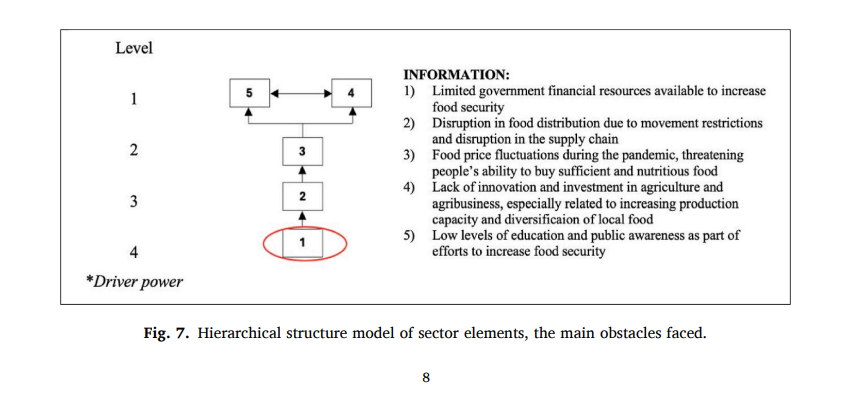
Food security is also closely linked to public health. When people cannot access nutritious food, their health becomes more vulnerable. The study explains that the pandemic increased risks not only of hunger but also of malnutrition and weakened immunity. Efforts such as promoting nutrition, supporting local food production, and ensuring stable food prices are essential steps toward SDG 3: Good Health and Well-being. However, the research also identifies several major challenges. Limited government budgets, lack of innovation in agriculture, and low public awareness all weaken food systems. Financial constraints are one of the biggest barriers to improving food security. Without sufficient funding, programs for farmers, infrastructure, and food distribution cannot run effectively.
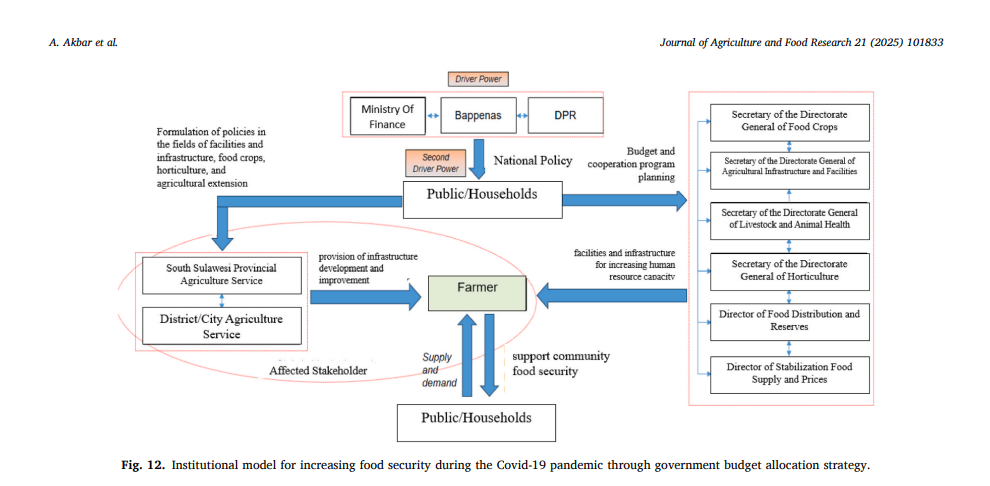
Despite these challenges, the study offers practical solutions. Strengthening collaboration between government, private sector, and communities is key. For example, partnerships can improve food logistics, support farmers, and encourage local food production. The research also highlights the importance of investing in modern agricultural technology and improving education about nutrition and sustainable farming. Another important point is the role of local communities. Farmers and households are active contributors to food security. Supporting farmers through financial aid, training, and better market access can significantly strengthen the food system.
In conclusion, the COVID-19 pandemic has taught us that food security is not just about producing food—it is about building strong systems that can survive crises. By advancing SDG 2 (Zero Hunger), SDG 3 (Good Health and Well-being), and SDG 16 (Strong Institutions), countries like Indonesia can create a more resilient and sustainable future where everyone has access to safe and nutritious food.
Reference:
DOI: https://doi.org/10.1016/j.jafr.2025.101833
Contact:
Prof. Rahim Darma
+62 852-5564-6556
rdarma@unhas.ac.id