Makassar, Indonesia 21 January 2026/FCVC/-Why do women still have limited voices in rural decision-making, even when they contribute so much to the economy? This question becomes very important when we look at rural communities in Indonesia, where men and women work side by side—but not always with equal power. This article is based on the research titled “Gender Dynamics in Local Organizations: Enhancing Community Participation for Sustainable Rural Development in Indonesia,” published in Frontiers in Sociology by Frontiers Media on 16 January 2026.
The study shows that gender roles strongly shape how people participate in local organizations and rural development. In Ampekale Village, South Sulawesi, men usually dominate leadership positions and decision-making processes. Women, on the other hand, are often involved in supportive roles such as food preparation, small-scale business, and social activities. According to the findings on page 1, women’s participation is often symbolic, meaning they are present but have limited influence. This situation is closely related to SDG 5 (Gender Equality). Even though women contribute significantly—especially in processing, marketing, and managing household economies—they still face barriers such as limited access to resources, education, and leadership opportunities. Cultural norms also play a big role in keeping women in traditional roles.
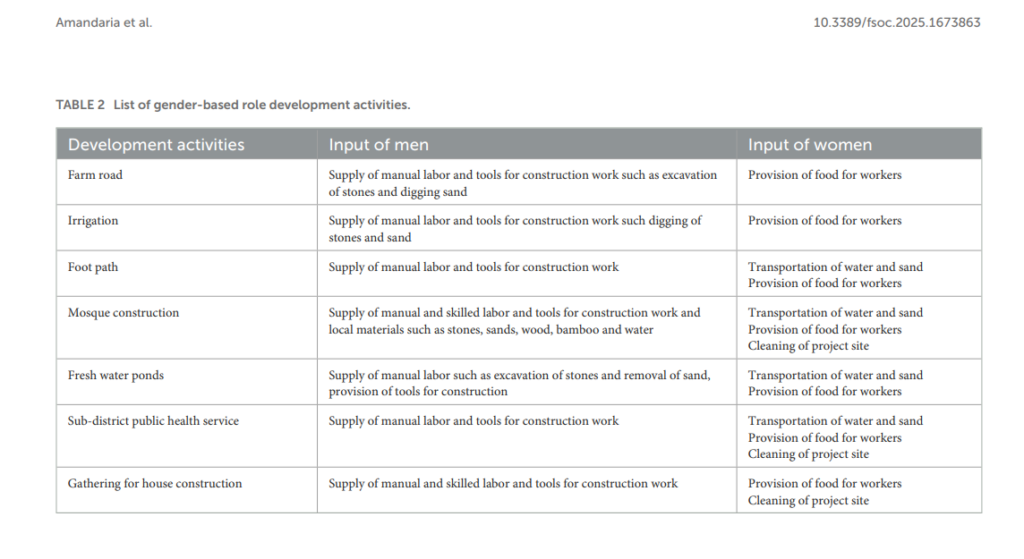
The issue also connects to SDG 10 (Reduced Inequalities). The research highlights that unequal access to resources and decision-making power creates a gap between men and women. As explained on page 2, structural inequalities and traditional expectations limit women’s ability to fully participate in governance and economic development. This means that development benefits are not shared equally.
However, there is hope. Women’s involvement in local economic organizations—such as crab processing and small businesses—has started to increase their visibility and influence. On page 5, the study explains that these activities improve women’s bargaining power within households and communities. This shows that when given opportunities, women can become key drivers of development. Strong institutions are also essential. This aligns with SDG 16 (Peace, Justice, and Strong Institutions). The research shows that local organizations, such as village councils, have the potential to promote inclusive participation. However, without gender-sensitive policies, these institutions often remain male-dominated. Strengthening policies like quotas, leadership training, and participatory budgeting can help ensure women’s voices are truly heard.
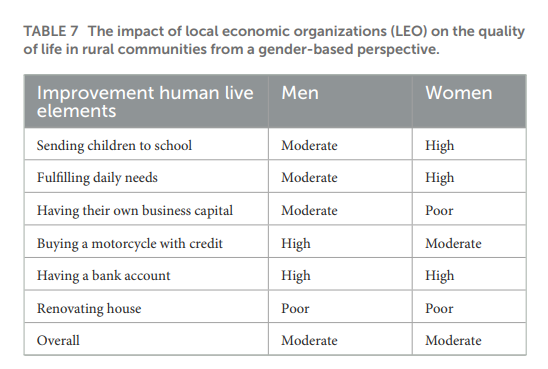
Collaboration is another important factor. The study emphasizes partnerships between local governments, NGOs, and communities. As mentioned on page 3, organizations like NGOs and development agencies play a key role in supporting rural initiatives. This reflects SDG 17 (Partnerships for the Goals), where cooperation helps provide training, funding, and access to resources. In conclusion, achieving sustainable rural development is not just about economic growth—it is about fairness and inclusion. When women are given equal opportunities to participate and lead, communities become stronger and more resilient. By advancing SDG 5, SDG 10, SDG 16, and SDG 17, rural development in Indonesia can move toward a more just and sustainable future.
Reference:
DOI: https://doi.org/10.3389/fsoc.2025.1673863
Contact:
Prof. Rahim Darma
+62 852-5564-6556
rdarma@unhas.ac.id