Makassar, Indonesia 13 May 2025/FCVC/-What does it take for a local specialty coffee to compete on the global stage? This question framed a field engagement conducted by the Food Crops Value Chain Research Group on March 18, 2025 in North Toraja, Indonesia, involving 9 participants from academia, government, and national policymakers. The session convened Prof. Rahim Darma as the Food Crops Value Chain Research Group Leader along with Muh. Farrel Prayoga Ardiansyah, Dr. Putra Astaman, and Dr. Yopi as the researchers, Mr. Rico Sia from DPR RI, and representatives from North Toraja Government Agency including Agriculture and Plantations Department, Industrial Department, and Tourism Department. This activity aimed to align multi-agency strategies and stakeholder perspectives in addressing the sustainability, supply continuity, and market expansion of North Toraja’s specialty coffee through integrated development approaches, including agro-tourism and value chain strengthening.
The discussion unfolded through sectoral contributions that highlighted distinct yet interconnected challenges. The agricultural and plantations department emphasized the difficulty of maintaining consistent supply and long-term sustainability of specialty coffee, particularly in meeting global market demand. While high commodity prices currently incentivize farmers, concerns were raised about farmer regeneration and the long-term continuity of production systems. At the same time, the industrial department outlined ongoing government programs aimed at strengthening local small and medium enterprises (SMEs), particularly through initiatives that promote local specialty coffee products and improve value addition at the processing level. These efforts reflect a growing policy emphasis on linking production with industrial development.
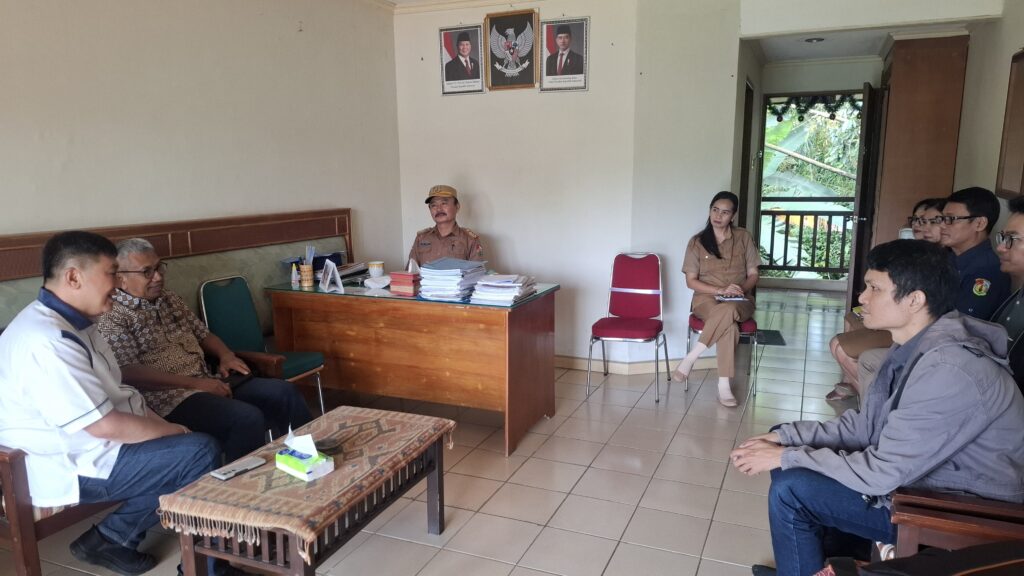
From a broader development perspective, the tourism department introduced initiatives designed to expand the visibility of North Toraja’s specialty coffee across local, regional, national, and international markets. These programs aim to integrate coffee into tourism experiences, thereby enhancing both market reach and community engagement. The discussion also highlighted the importance of combining agricultural production with tourism-based approaches to create diversified income opportunities. Prof. Rahim Darma along with researchers emphasized the need for more creative management of natural and human resources, particularly in developing agro-tourism that leverages local identity as a competitive advantage. In addition, Rico Sia underscored the importance of strengthening collaboration among government institutions, the private sector, and local communities to ensure that development initiatives are inclusive and sustainable.
This activity contributes to SDG 1 (No Poverty) by promoting income diversification and community empowerment, SDG 8 (Decent Work and Economic Growth) through the development of agro-tourism and local enterprises, SDG 12 (Responsible Consumption and Production) by supporting sustainable production and value addition, and SDG 17 (Partnerships for the Goals) by reinforcing multi-stakeholder collaboration. The engagement highlights that sustainable specialty coffee development requires coordinated action across sectors, supported by policies that integrate agriculture, industry, and tourism. Moving forward, the outcomes are expected to inform research initiatives, strengthen policy alignment, and support the development of a more resilient and competitive specialty coffee sector in North Toraja.