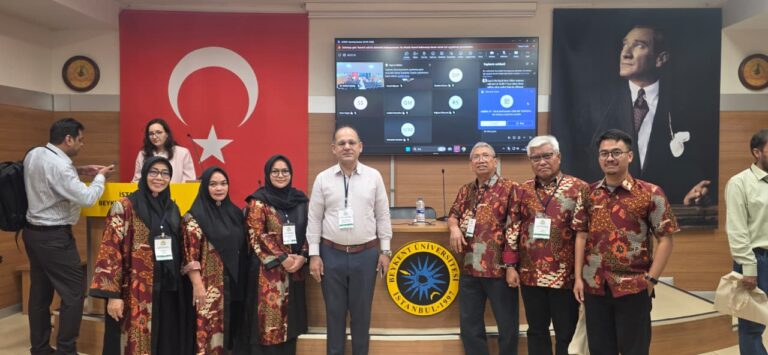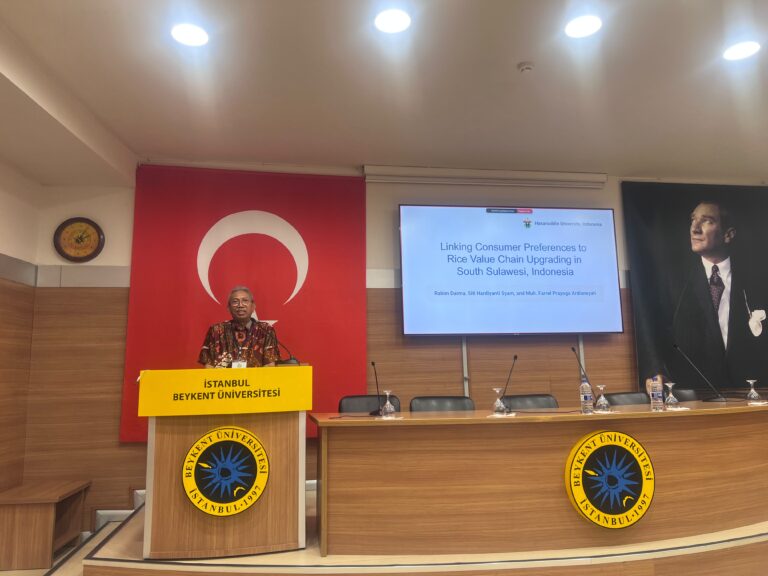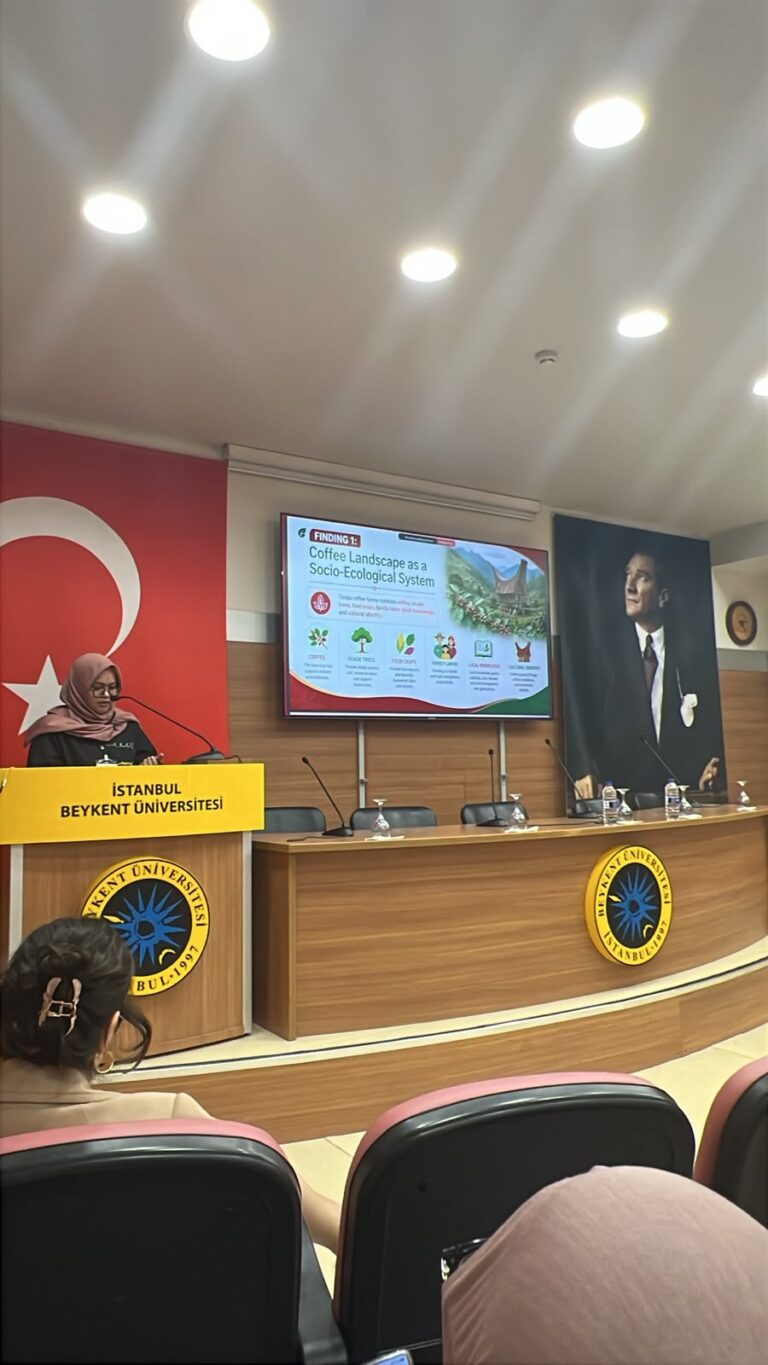

Makassar, Indonesia 29 January 2026/FCVC/The Food Crops Value Chain Research Group held an online discussion reviewing the findings of the value chain study in Soppeng Regency on January 19, 2026, bringing together 9 participants including Prof. Nixia Tenriawaru as lecturers, Muh. Farrel Prayoga Ardiansyah as researchers, Lily Febriyanti, Awulyani Sumardi, Dian Mustika, A. Riani, and Asdiana as master students in the research group. The session aimed to present and critically examine the latest findings from ongoing agricultural value chain research in South Sulawesi, with a particular focus on understanding structural inequality within the rice value chain and strengthening the analytical foundation for future publications.
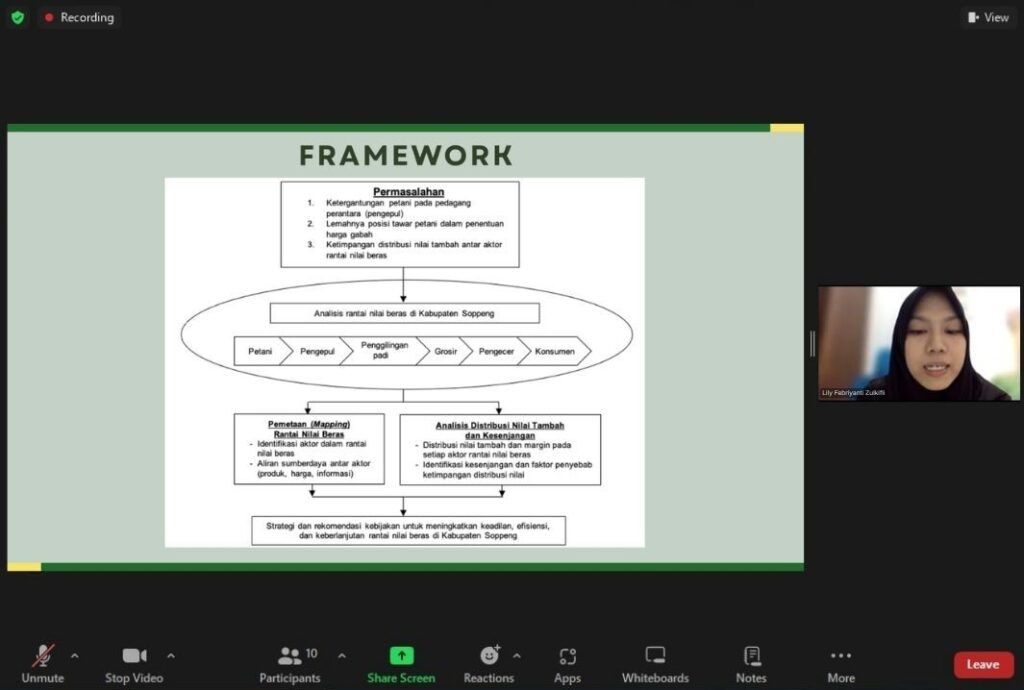
The discussion process was initiated by Lily Febriyanti, a master’s student, who presented the latest research progress in Soppeng Regency. She outlined the structure of the rice value chain, detailing the roles of key actors and how they interact across different stages, from production to distribution. The session then evolved into an in-depth academic exchange, where Prof. Rahim Darma as the Leader of the Food Crops Value Chain Research Group, emphasized the importance of calculating value added to better understand how economic benefits are generated and distributed. He highlighted that value-added analysis is essential for identifying which actors capture the most benefits and where inefficiencies or imbalances may occur. Following this, Prof. A. Nixia Tenriawaru reinforced the need to complement value-added analysis with margin or profit calculations. Synchronizing these two approaches enables a more comprehensive assessment of disparities, allowing researchers to more accurately capture the extent of inequality among value chain actors.

Further enriching the discussion, Dr. Rida Akzar from The Centre for Global Food and Resources, Adelaide University, Australia provided a perspective by highlighting that economic value alone is insufficient to fully understand value chain dynamics. He addressed the importance of incorporating non-economic dimensions, particularly consumer preferences, into value chain analysis. He also noted that, in many cases, critical market information—such as quality preferences and consumption trends—is not effectively transmitted to farmers, limiting their ability to respond to market demands and capture higher value. These insights are highly relevant to broader issues in food systems, agricultural sustainability, and inclusive rural development, where improving value distribution remains a central challenge.
The activity aligns with several Sustainable Development Goals, including SDG 1 (No Poverty) by addressing income disparities among farmers, SDG 4 (Quality Education) through research-based learning and student engagement, and SDG 17 (Partnerships for the Goals) by fostering collaboration across institutions and countries. These linkages highlight the role of rigorous research and dialogue in advancing equitable and sustainable agricultural systems. Looking ahead, the outcomes of this discussion are expected to strengthen the robustness of research findings and support the development of high-quality academic publications. In addition, the insights generated will contribute to more informed policy recommendations aimed at reducing inequality within agricultural value chains. By integrating empirical evidence with interdisciplinary perspectives, the Food Crops Value Chain Research Group continues to advance its commitment to producing impactful, policy-relevant research that benefits farmers and the wider agricultural sector.