
Makassar/Indonesia/13-08-2026/PCD-RG —– Deep in Pohuwato District, Gorontalo, Indonesia, illegal gold mining has created a silent tug-of-war between local survival and ecological destruction. This complex socio-ecological reality is thoroughly unraveled in a research article titled “Adaptive Governance in Mining Environmental Governance in Pohuwato District,” published on August 13, 2026, in the International Journal of Special Education by publisher SPED Ltd. Conducted by researchers Mohamad Anugrah E.J Danial, Amril Hans, and Gita Susanti, the study sheds light on how informal community power struggles against rigid administrative barriers.
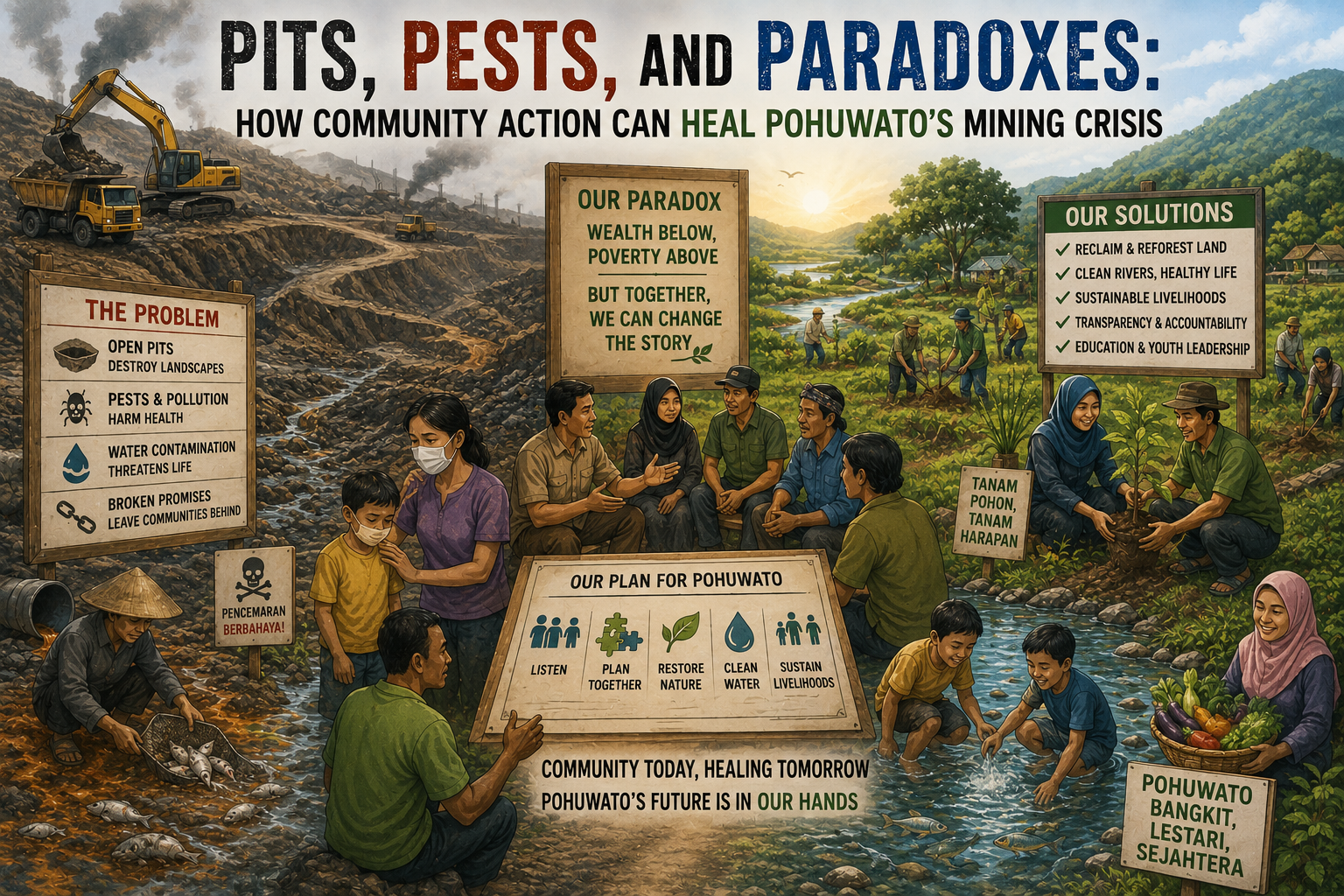
For over a decade, unauthorized gold mining in Pohuwato has driven severe deforestation, river pollution, and landscape destruction. Beyond ecological ruin, the crisis has triggered a dangerous public health threat: abandoned, water-filled mining pits have become prime breeding grounds for disease-carrying mosquitoes, leading to alarming malaria outbreaks. This dangerous connection directly undermines SDG 3: Good Health and Well-being, proving that environmental degradation is not merely an abstract ecological issue, but a direct threat to human life and community safety.
The study uncovers what the authors define as an “adaptive governance paradox”. On one hand, top-down governance in Indonesia has become increasingly centralized following recent national mining laws, stripping local district governments of formal legal authority to adapt policies to evolving ground realities. Official agencies suffer from fragmented coordination, overlapping regulations, and reactive enforcement that fails to address underlying causes. Consequently, formal policy learning remains static, leaving government institutions unable to respond flexibly to environmental degradation.
On the other hand, a remarkably resilient informal governance network thrives at the grassroots level. When floods or river sedimentation strike, local residents, village leaders, traditional figures, and informal miners voluntarily pool their resources. Miners regularly lend heavy machinery to clear blocked rivers and repair public infrastructure without waiting for government funds. Non-state actors, such as the Indonesian People’s Mining Association (APRI) and indigenous leaders, act as crucial mediators to maintain social harmony and coordinate local restoration. Furthermore, villagers actively practice household malaria prevention and voluntary pit rehabilitation driven by shared social capital and traditional wisdom.
Unfortunately, this rich local knowledge and community adaptive capacity rarely reach higher-level policy channels. To build true ecological resilience and protect public health, national decision-makers must bridge this governance divide. Decentralizing authority, integrating community-driven wisdom into formal environmental frameworks, and fostering genuine cross-actor collaboration are crucial steps forward. Only by empowering local social networks can governance transform from a rigid administrative system into an adaptive shield that safeguards both ecosystems and human health.
Reference:
DOI: –
Contact:
Prof. Dwia Aries Tina Pulubuhu
+62 87856272912 (PCD-RG)
dwiatn@unhas.ac.id