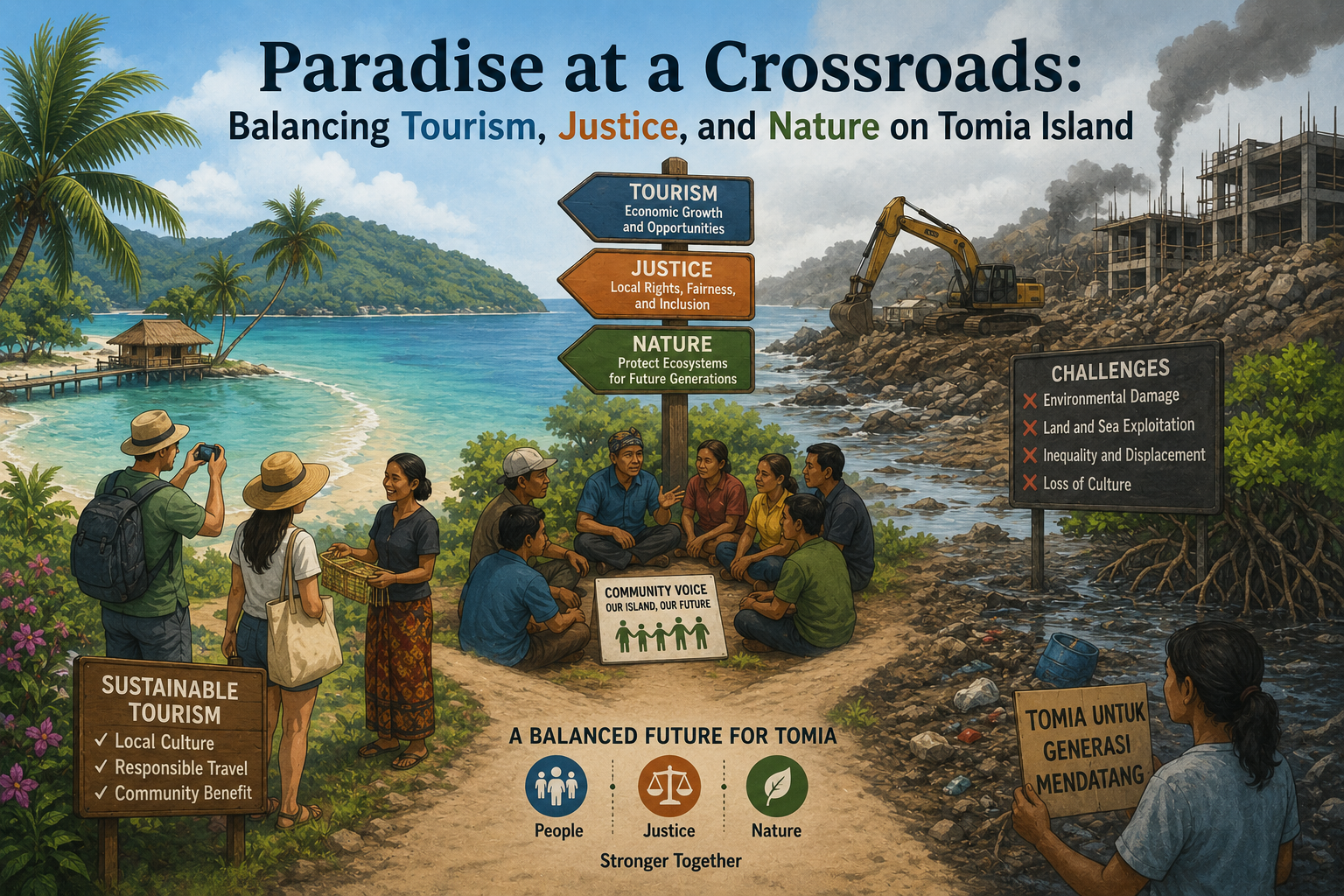

Makassar/Indonesia/15-01-2026/PCD-RG —– Wakatobi has long been celebrated across the world as a premier haven of marine biodiversity, drawing international travelers to its crystal-clear ocean waters and vibrant coral reef ecosystems. However, beneath the tranquil surface of Tomia Island lies a far more complex narrative regarding rapid economic growth, ecological protection, and social fairness. A landmark research article titled “Tourism, Social Justice, and Sustainability: The Impact of Tourism Policy on the Livelihoods of the Community on Tomia Island, Wakatobi,” published on January 15, 2026, in the Journal of Humanity and Social Justice by the Indonesian Social Justice Network (ISJN), offers an insightful deep dive into how top-down tourism policies directly shape the daily lives and livelihoods of coastal inhabitants.
On one hand, being officially designated as a priority destination within Indonesia’s national “10 New Balis” program has introduced undeniable economic momentum to Tomia Island. Local residents have actively embraced creative entrepreneurship, producing unique bamboo teasets in Kahianga Village, crafting aesthetic shell and wood carvings at Hengge Gallery, serving traditional culinary staples like kasoami, and running family-operated homestays. Additionally, foreign direct investment driven by entities such as PT Wakatobi Dive Resort has generated local employment opportunities and expanded state revenues. These positive outcomes directly align with SDG 14: Life Below Water, demonstrating how sustainable ocean resource utilization can unlock valuable livelihoods while raising marine conservation awareness.
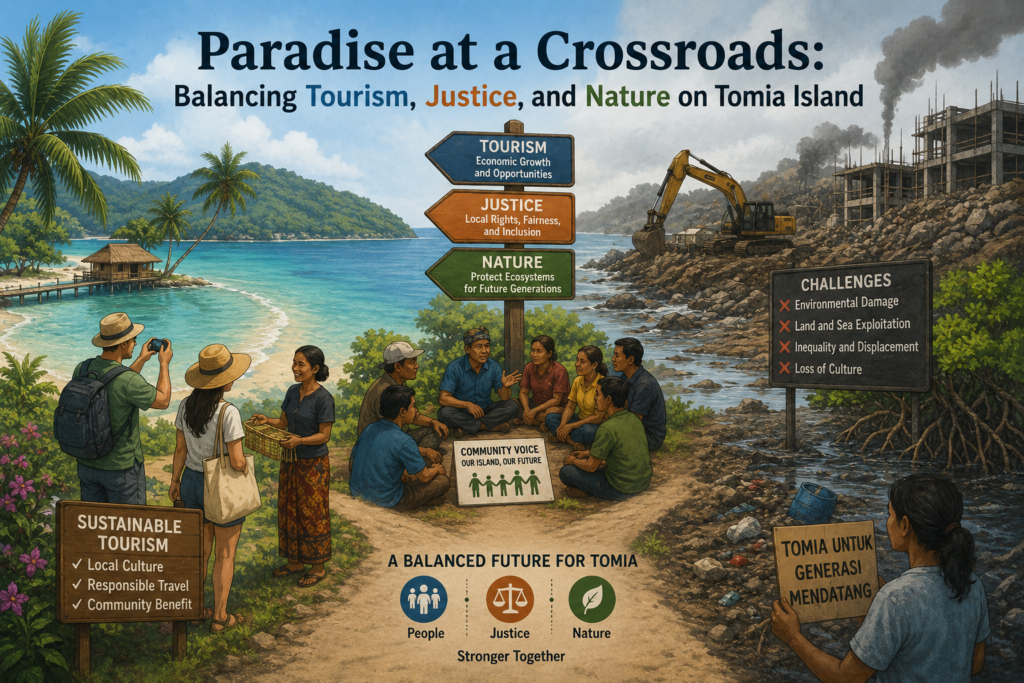
Yet, analyzed through a public media and social justice lens, the study reveals significant structural paradoxes. Economic benefits remain unevenly distributed, leaving local community members predominantly restricted to low-tier service labor while decision-making authority remains outside local hands. Rigid top-down zoning regulations within Wakatobi National Park have restricted traditional fishing grounds, triggering social conflicts with local fishers—particularly the indigenous maritime Bajo community—and threatening regional food security. Furthermore, unresolved land controversies around the private Maranggo Airport have displaced essential agricultural activities. Island women, despite upholding eco-friendly traditions such as Hekente fishing, face severe seasonal weather barriers and minimal systemic support. Meanwhile, cultural heritage like the Kadandio dance faces commercialization risks, turning living traditions into simple tourist commodities.
Overcoming these deep-seated inequalities requires a complete paradigm shift in public communication, local media outreach, and participatory governance. Genuine sustainability cannot be achieved when indigenous groups, women micro-entrepreneurs, and artisanal fishers are treated as mere passive spectators of development. Policy leaders must move away from top-down mandates toward inclusive, transparent dialogues that guarantee equitable wealth distribution, fair labor standards, and direct structural support for community enterprises. Only by weaving social justice together with environmental conservation can Tomia Island serve as an authentic global model for sustainable coastal tourism.
Reference:
DOI: https://doi.org/10.38026/jhsj.v8i1.89
Contact:
Prof. Dwia Aries Tina Pulubuhu
+62 87856272912 (PCD-RG)
dwiatn@unhas.ac.id