
Makassar/Indonesia/06-02-2026/PCD-RG —– When Mental health is an essential foundation of human well-being, yet silent psychological struggles like severe stress, anxiety, and depression continue to affect millions of young people across the globe. In Indonesia, Gorontalo Province has witnessed a deeply concerning upward trend in suicide attempts among adolescent females. Addressing this urgent public health crisis requires compassionate, community-wide action that directly aligns with SDG 3 (Good Health and Well-being), which emphasizes the promotion of mental health and the prevention of suicidal behavior. Traditional top-down healthcare approaches frequently fail to address the complex social pressures, gender discrimination, family dynamics, and cultural barriers faced by young girls. To build effective support systems, public health initiatives must pivot from simply treating symptoms to actively listening to the lived experiences of vulnerable adolescents.
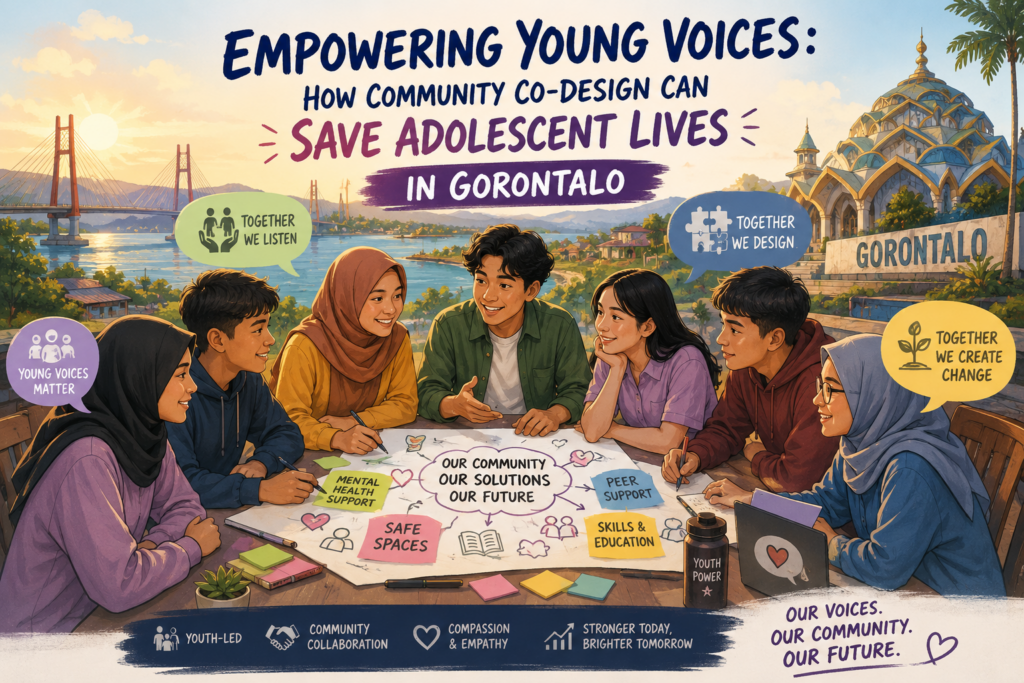
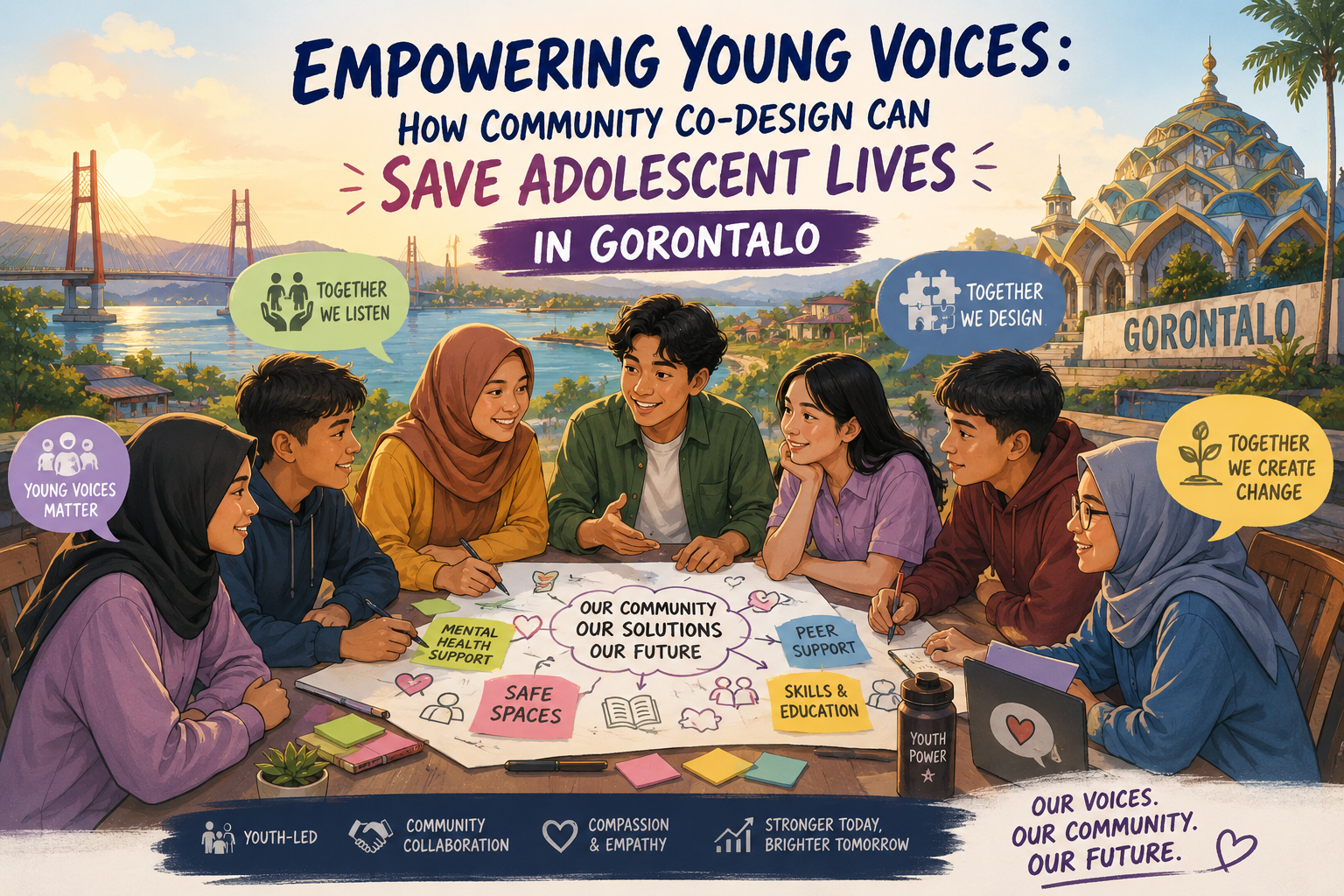
A landmark study published in the International Journal of Qualitative Methods by Sage Journal on February 6, 2026, provides a groundbreaking blueprint for localized action. Titled “Protocol for a Qualitative Study on the Co-Design and Co-Creation of a Community-Based Mental Health Intervention to Prevent Suicidal Behavior Among Adolescent Females in Gorontalo, Indonesia”, the research outlines an innovative qualitative methodology to combat youth suicide in low-resource settings. Rather than imposing generic clinical models, the research team utilizes a unique “Quadruple Helix” framework that unites four vital stakeholder groups: adolescent girls, local government health officers, university academics, and female micro-entrepreneurs. This collaborative structure guarantees that mental health solutions are culturally grounded and genuinely responsive to community needs.
At the heart of this initiative is the application of co-creation and co-design principles grounded in Participatory Action Research. Through in-depth interviews and focus group discussions, researchers systematically gather insights regarding emotional triggers, help-seeking barriers, and coping mechanisms. These findings directly feed into participatory workshops where stakeholders work side-by-side to co-create actionable intervention tools. These tools include youth peer-support pocketbooks, social media awareness guidelines, clear crisis referral pathways, and vocational skills training. The inclusion of local women entrepreneurs offers a unique advantage by integrating economic empowerment and mentorship, helping protect young girls against severe economic and social stressors. When solutions are co-designed, community ownership grows, stigma decreases, and sustainable care is established.
Ultimately, safeguarding adolescent mental health demands collective empathy, multisectoral collaboration, and shared responsibility. By treating young women as active co-designers of their own well-being rather than passive recipients of medical care, this study establishes a transformative pathway for community health promotion. Advancing inclusive models like this demonstrates how grassroots unity can drive meaningful progress toward global health targets. Protecting adolescent girls in Gorontalo does not merely prevent tragedy; it empowers the next generation to thrive with dignity, resilience, and hope.
Reference:
DOI: https://doi.org/10.21580/jsw.2025.9.2.20677
Contact:
Prof. Dwia Aries Tina Pulubuhu
+62 87856272912 (PCD-RG)
dwiatn@unhas.ac.id