
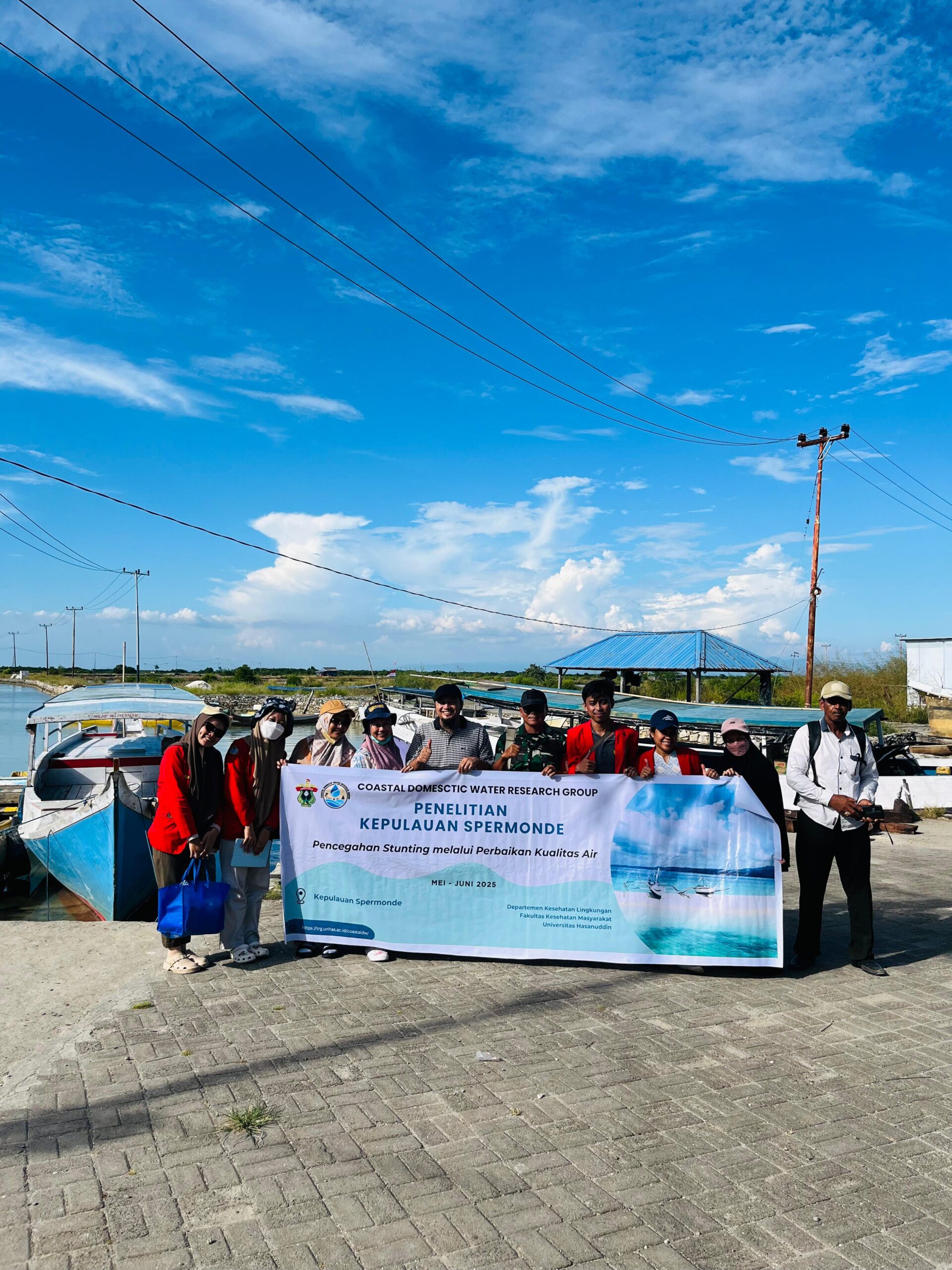

Takalar, Indonesia – June 17, 2025 — The Coastal Domestic Water Research Group has launched an innovative research initiative aimed at addressing the persistent issue of stunting in coastal communities, particularly in the Tanakeke Islands, Takalar Regency. The project, titled “Stunting Prevention through Water Quality Improvement in the Tanakeke Islands,” reflects a commitment to developing evidence-based, sustainable, and locally adapted solutions to one of Indonesia’s most pressing public health challenges.
The Tanakeke Islands were selected as the research site due to their distinctive coastal geography and limited access to safe drinking water. The majority of residents rely on rainwater harvesting and shallow groundwater sources, both of which are highly susceptible to microbiological contamination. This contamination contributes directly to the prevalence of waterborne diseases such as diarrhea and gastrointestinal infections, which significantly increase the risk of stunting among children.
Leading the research team, Dr. Ir. Agus Bintara Birawida, S.Kel., M.Kes., emphasized the integrative nature of the study. “Water quality improvement provides a strategic entry point to reduce stunting prevalence. By enhancing simple household water treatment systems and providing community-based education on hygiene and sanitation, we aim to break the cycle of infection that compromises nutrient absorption in children during critical stages of growth,” stated Dr. Birawida.
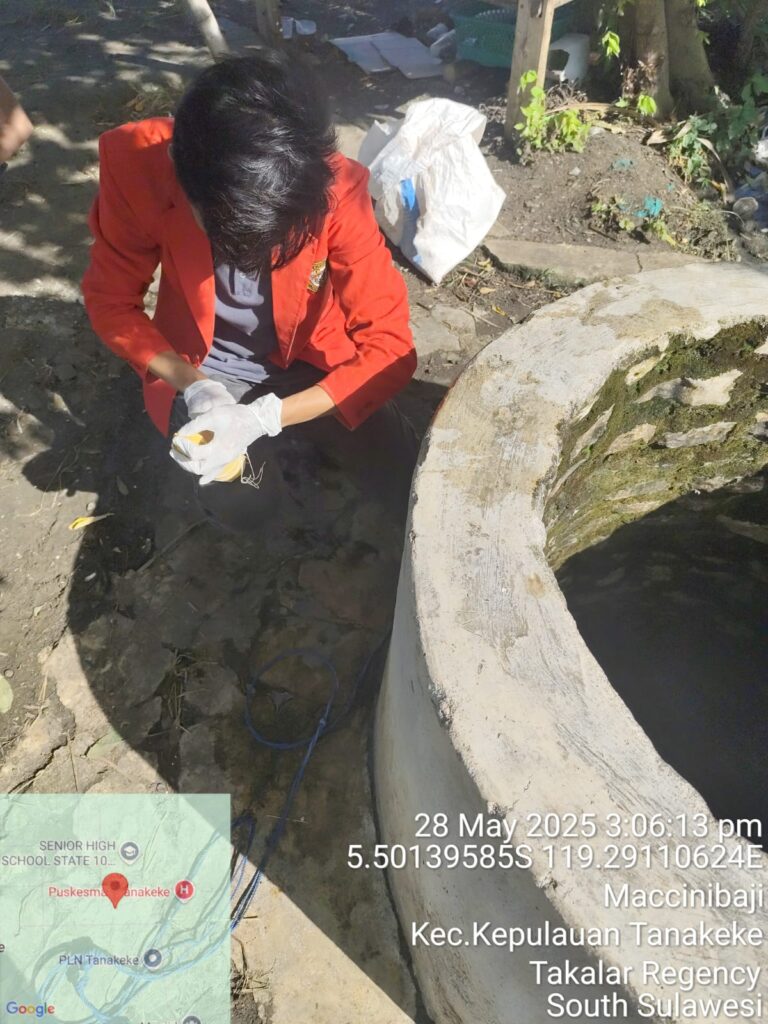
The research applies a multidisciplinary approach that incorporates environmental health assessments, community nutrition studies, and participatory capacity building for local residents. Initial findings have indicated a significant improvement in household water quality and a subsequent reduction in the incidence of waterborne illnesses. These improvements are expected to contribute positively to the overall nutritional status of children in the intervention areas.
This initiative has received strong support from local government authorities, public health offices, and the residents of the Tanakeke Islands. Through close collaboration with these stakeholders, the research team has developed a community-based model that ensures both scientific rigor and practical applicability in real-world settings.
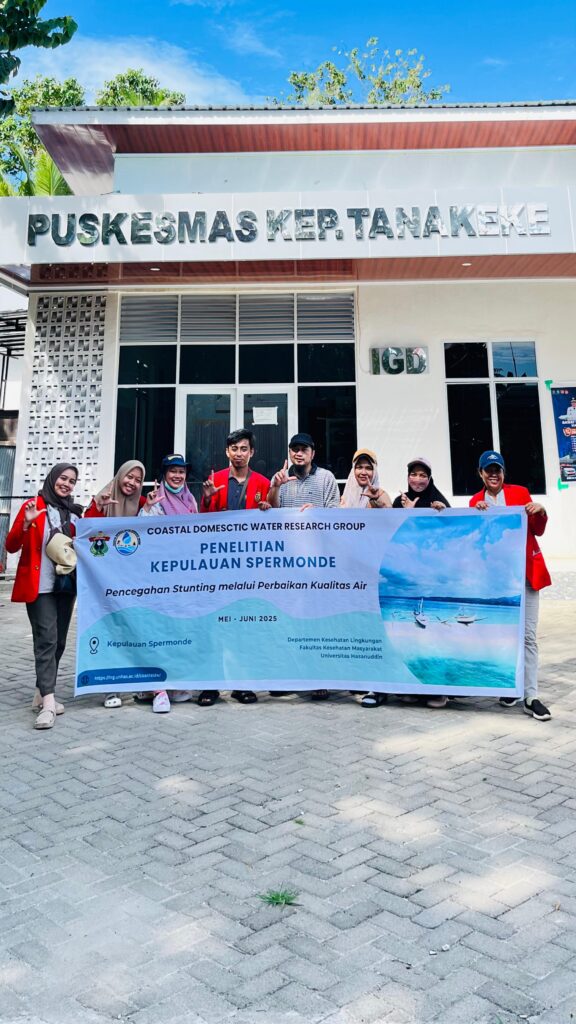
The Coastal Domestic Water Research Group’s work not only advances scientific knowledge but also delivers meaningful, long-term impacts for vulnerable coastal populations. This project aligns with the university’s broader mission of contributing to national development through research, education, and community engagement focused on improving public health outcomes.
For further information, please contact:
Coastal Domestic Water Research Group Secretariat
Faculty of Public Health, Universitas Hasanuddin
Email: cdwrgroup@unhas.ac.id


