
Topanda Village, Bulukumba Regency, Indonesia, June 27–29, 2026/BIONE/–A community engagement program was conducted through a collaboration between the Agricultural Extension Officer of Topanda Village and Lembaga Penelitian dan Pengabdian kepada Masyarakat (LPPM) Universitas Hasanuddin. The program aimed to support local farmer groups in adopting sustainable agricultural practices by reducing dependence on synthetic chemical pesticides through the utilization of organic compost and environmentally friendly biopesticides.
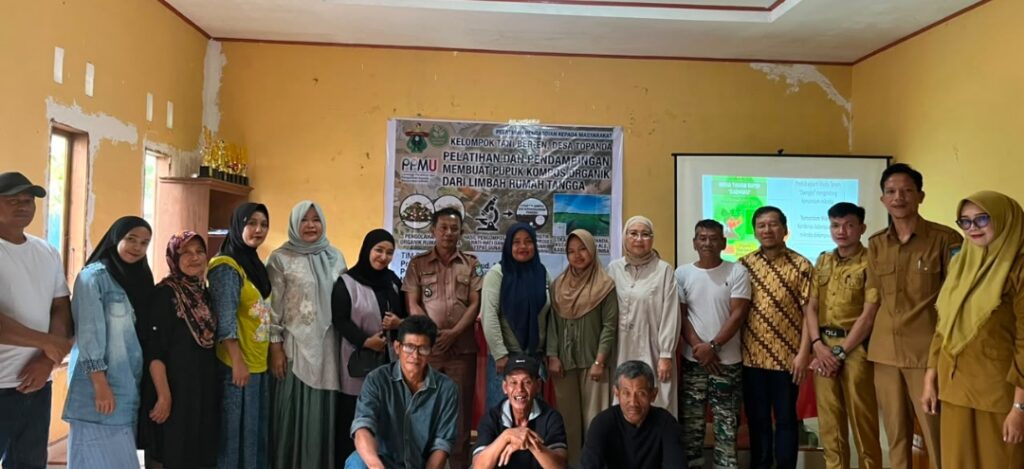
The LPPM Unhas team, consisting of Prof. Dr. Ir. Itji Diana Daud, M.S., Prof. Dr. Ir. Muh. Hatta, and Ir. Nuniek Widiayani, M.P., provided educational sessions and practical training to 28 participants, including members of the Ber-en Farmer Group, agricultural extension officers, and the Head of Topanda Village, Andi Jemma.
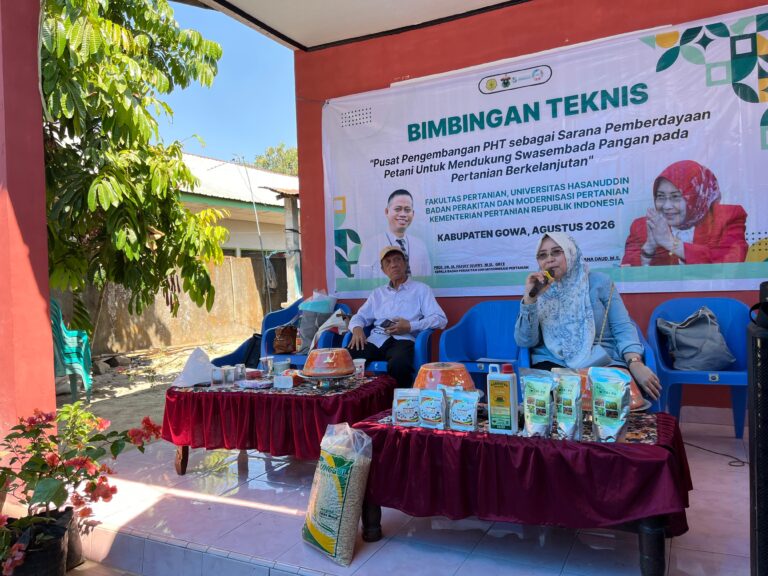
During the activity, Prof. Itji Diana Daud delivered a presentation on the environmental and economic impacts of excessive chemical pesticide use. She explained that prolonged and excessive pesticide application can contribute to declining soil quality, increased production costs, and risks to environmental health. The session encouraged farmers to adopt more sustainable pest management practices that support agricultural productivity while minimizing negative environmental impacts. Organic compost was introduced as an alternative for improving soil fertility, while biopesticides were presented as an environmentally friendly approach to managing agricultural pests.
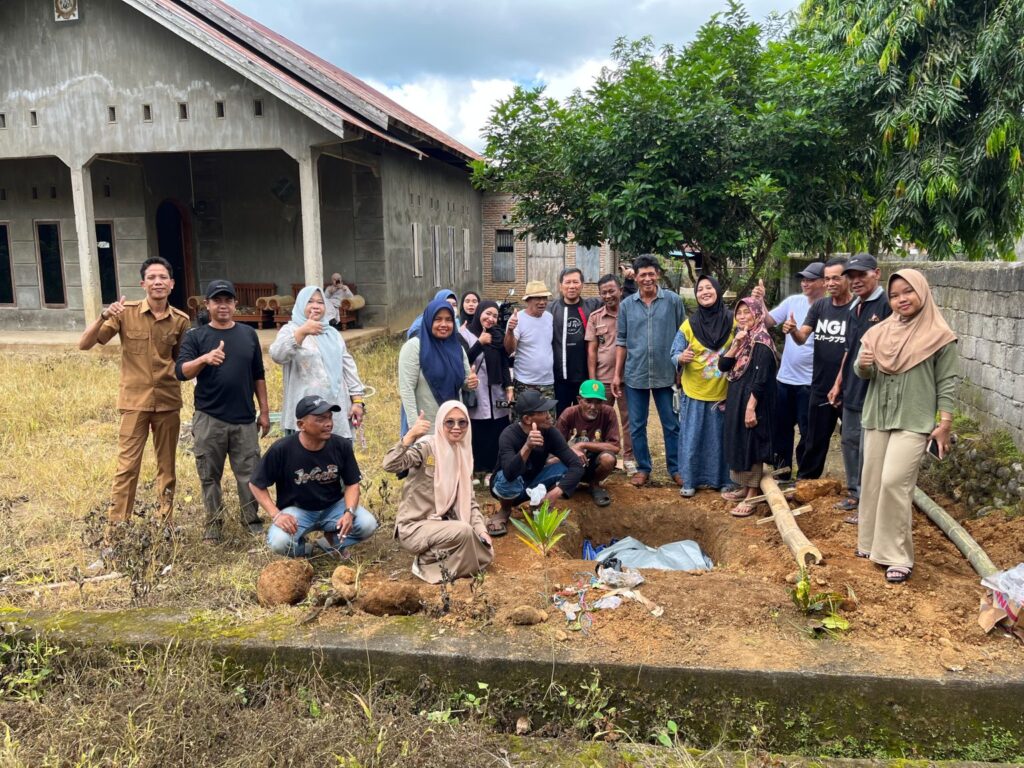
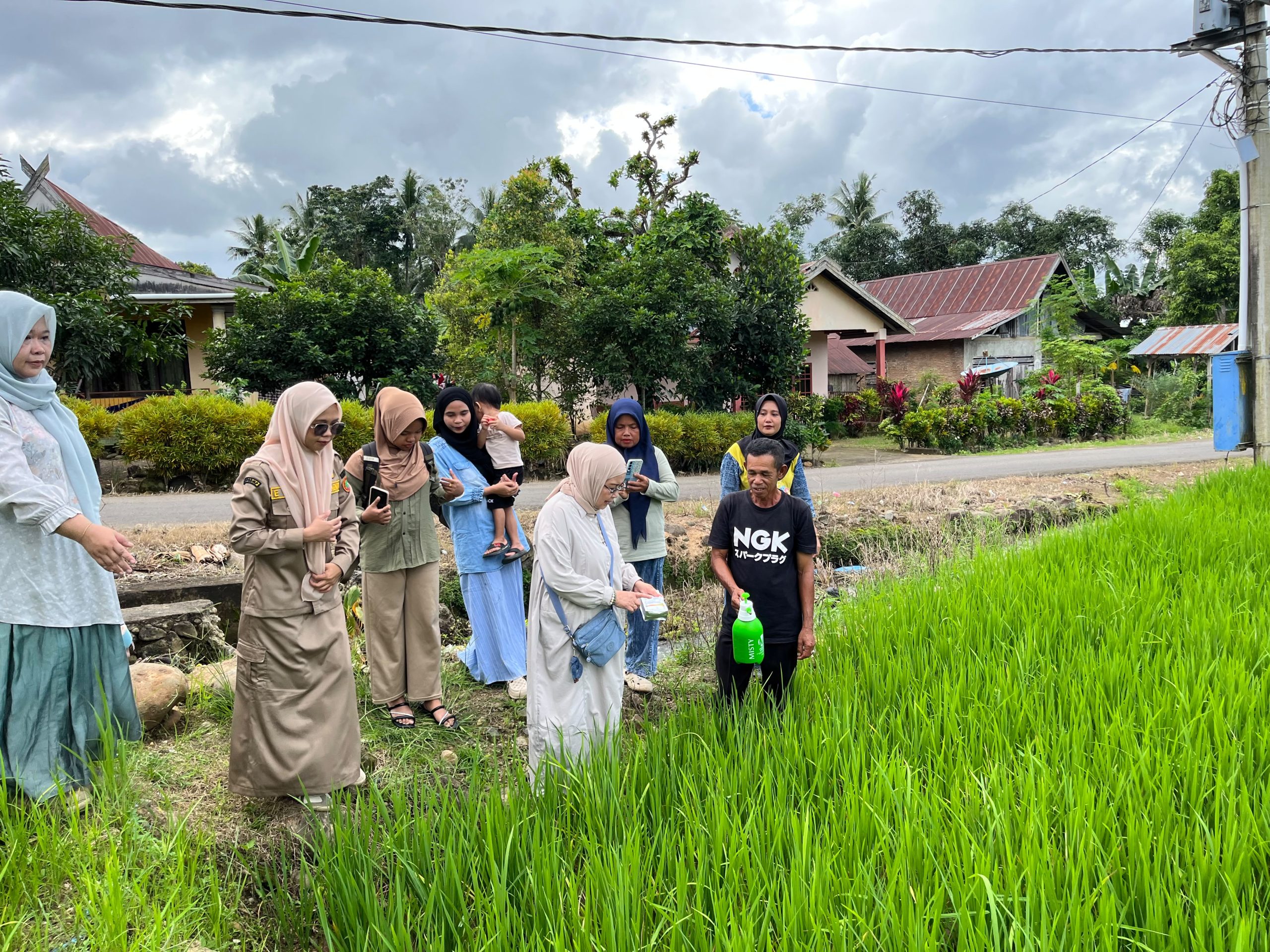
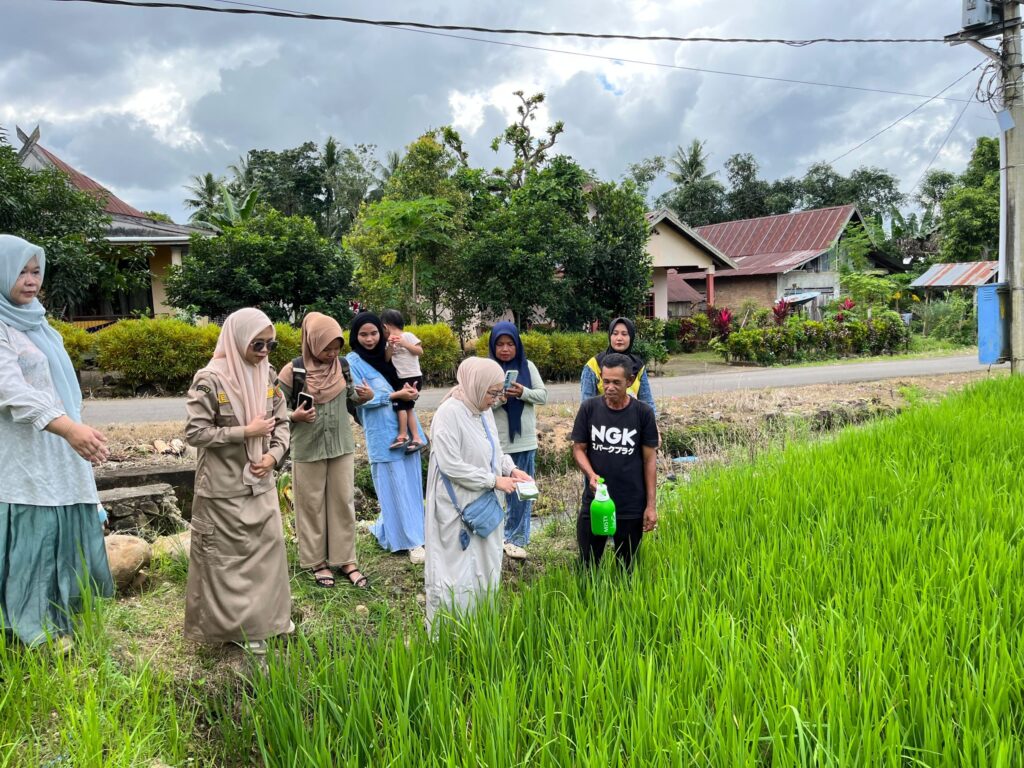
In addition to the educational sessions, participants received practical training on preparing and applying the entomopathogenic fungus Beauveria bassiana in wettable powder (WP) formulation. Farmers were taught how to dilute the biopesticide at a dosage of 20 grams per 10 liters of water and subsequently practiced spraying it directly in the farmer group’s demonstration plot. This hands-on activity provided participants with practical experience in preparing and applying biopesticides appropriately. The involvement of agricultural extension officers and village representatives also strengthened collaboration between researchers, local institutions, and farming communities in promoting the adoption of sustainable agricultural technologies.
This community engagement program represents an important effort to improve farmers’ knowledge and practical skills in environmentally responsible crop protection. By combining the use of organic compost with biological pest control, the program seeks to encourage sustainable farming practices, support soil health, and help farmers reduce their reliance on synthetic chemical pesticides. Collaboration between LPPM Unhas, agricultural extension officers, village authorities, and farmer groups also provides a foundation for continued knowledge exchange and the wider adoption of environmentally friendly agricultural practices in Topanda Village.
The initiative aligns with the Sustainable Development Goals (SDGs), particularly Goal 1 (No Poverty) by supporting sustainable farming practices that may help reduce production costs and improve farmers’ livelihoods; Goal 4 (Quality Education) by providing farmers with agricultural knowledge and practical skills through educational sessions and hands-on training; and Goal 17 (Partnerships for the Goals) by strengthening collaboration among Hasanuddin University, agricultural extension officers, village authorities, and local farmer groups to promote sustainable agricultural development.