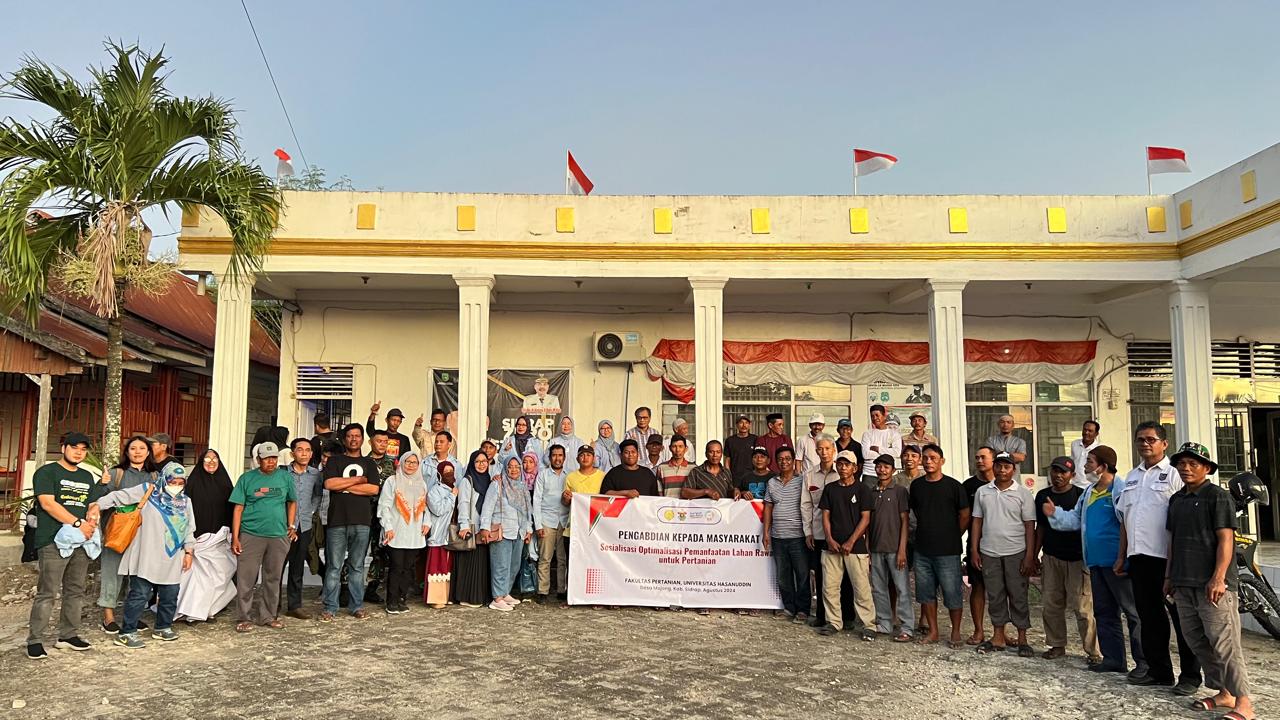

Sidenreng Rappang Regency, Indonesia, August 1, 2024/BIONE/–As part of its commitment to community engagement and sustainable agriculture, the Biopesticides and Natural Enemies Research Group (TRG BIONE) conducted a community outreach program focusing on the potential emergence of plant pests and diseases (OPT) in swamp agroecosystems. The activity took place in Mojong Village, Sidenreng Rappang Regency, an area characterized by wetland agricultural systems that present unique ecological conditions influencing pest dynamics.
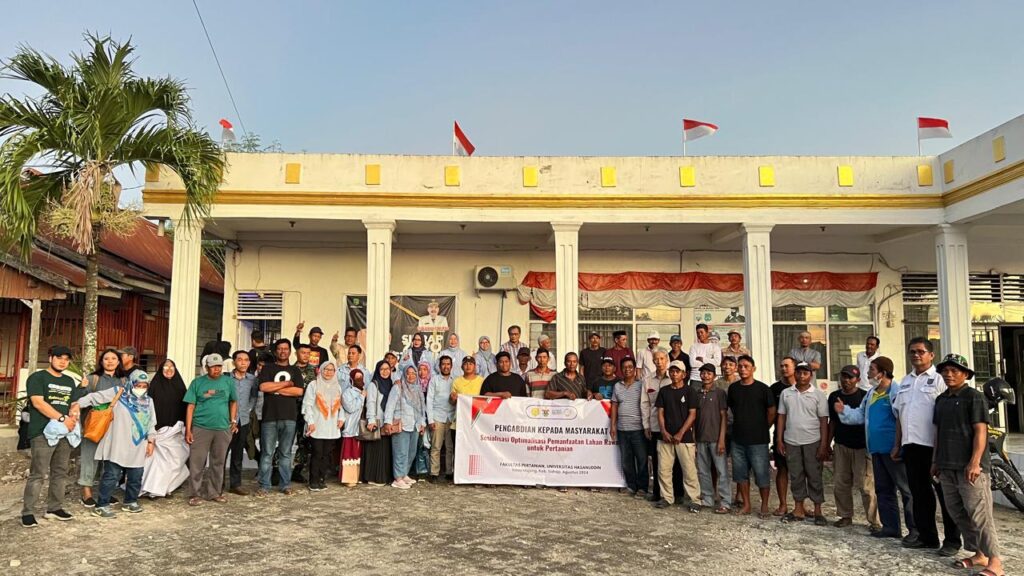
The program involved a total of 43 participants, consisting of 12 lecturers from the Department of Plant Pests and Diseases, Faculty of Agriculture, Hasanuddin University, 29 members of local farmer groups, Budy Gawa as the Head of Mojong Village, and one village staff member. The outreach activity served as an important platform for strengthening communication between academic experts, local government representatives, and the farming community, ensuring that scientific knowledge could be effectively translated into practical agricultural applications.
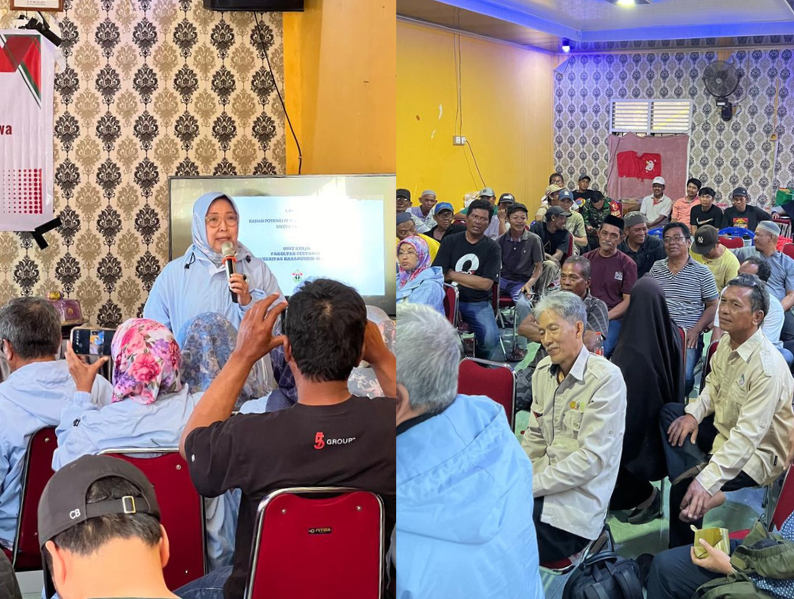
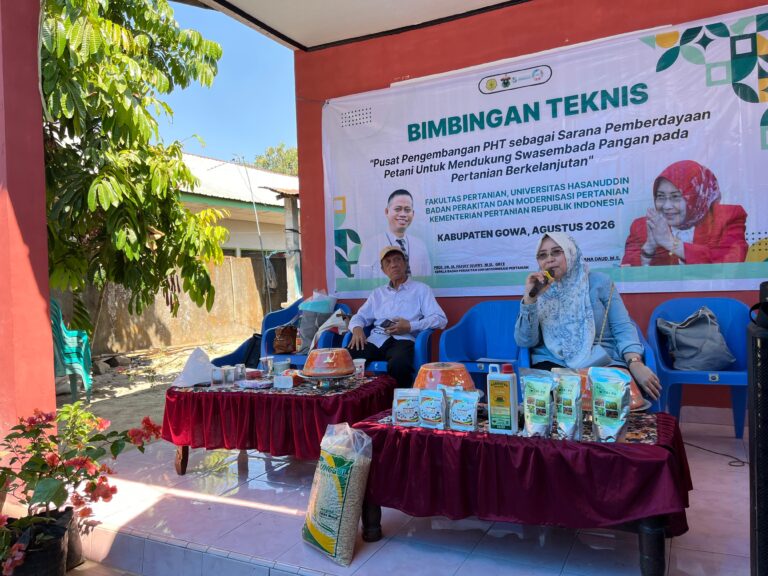
The session featured several expert speakers, including Prof. Dr. Ir. Itji Diana Daud, M.S., who delivered presentations on the characteristics of swamp ecosystems and their influence on the emergence and development of plant pests and diseases. Discussions highlighted how high moisture levels, fluctuating water conditions, and low oxygen availability can create favorable environments for certain pest populations and plant pathogens. Participants were introduced to early detection strategies and environmentally friendly pest management approaches, including the use of biological control agents and Integrated Pest Management (IPM) practices. The activity emphasized the importance of understanding local ecological conditions when designing effective pest management strategies that are both sustainable and adaptive to changing environmental conditions.
In addition to knowledge dissemination, the outreach program encouraged interactive discussions, allowing farmers to share their experiences and challenges related to pest problems in swamp-based farming systems. This exchange of knowledge helped bridge the gap between scientific research and field-level practices, fostering a more collaborative approach to agricultural problem-solving. The program represents an important effort to empower local farmers with knowledge and practical solutions while reinforcing the role of research institutions in supporting sustainable agricultural development in wetland ecosystems. The active participation of lecturers and farmers demonstrated the value of collaboration in addressing agricultural challenges and promoting environmentally responsible farming practices.
These initiatives are aligned with the Sustainable Development Goals (SDGs), particularly Goal 1 (No Poverty) through improving farmers’ livelihoods, Goal 4 (Quality Education) by enhancing knowledge transfer and capacity building, and Goal 17 (Partnerships for the Goals) through strengthened collaboration between researchers and local communities. In addition, the program supports Goal 2 (Zero Hunger) and Goal 12 (Responsible Consumption and Production) by promoting sustainable and environmentally responsible agricultural practices.