
Makassar, Indonesia. May 6, 2026 | BiMin – What if something as simple as fish bones often discarded as waste could help heal human bones? It may sound surprising, but recent scientific research is showing exactly that. By transforming fish bone waste into a valuable biomaterial, scientists are opening new doors in medicine while also supporting environmental sustainability.
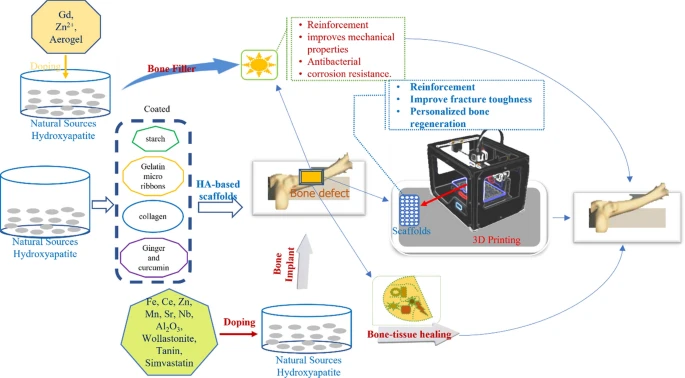
A study titled “Hydroxyapatite Extracted from Rabbitfish (Siganus sp.) Bones and Its Potential for Bone Tissue Engineering Applications”, published in the JOM Journal by Springer in July 2024, explores this innovative idea. The research focuses on extracting hydroxyapatite (HAp), a naturally occurring mineral that closely resembles the main component of human bone and teeth. This makes it highly useful for medical applications such as bone repair and tissue engineering.
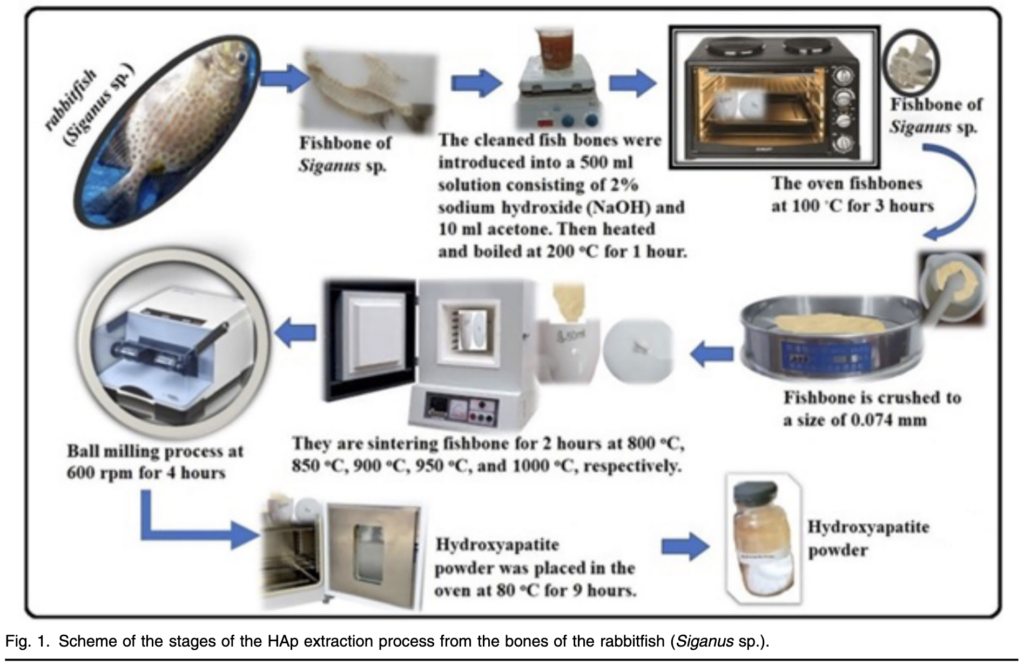
The process begins with rabbitfish bones, which are cleaned and subjected to high-temperature treatments. Through controlled heating (around 800–1000°C), the organic components are removed, leaving behind a purified mineral structure. Advanced testing methods such as X-ray diffraction and electron microscopy confirm that the resulting material has a structure and composition very similar to natural human bone.
What makes this discovery exciting is not just the science, but its broader impact. First, it offers a low-cost alternative to synthetic biomaterials, which are often expensive and resource-intensive to produce. Second, it promotes the use of marine waste, helping reduce environmental pollution. In many coastal communities, fish processing generates large amounts of waste, and this innovation turns that problem into an opportunity.
From a global perspective, this research directly supports SDG 3: Good Health and Well-being. By developing affordable and effective materials for bone repair, it contributes to better healthcare outcomes, especially in regions where access to advanced medical treatments is limited. Additionally, it aligns with SDG 14: Life Below Water, as it encourages more sustainable use of marine resources and reduces waste entering oceans.
Beyond its technical findings, the study also highlights a growing trend in science: combining sustainability with innovation. Instead of relying solely on synthetic solutions, researchers are increasingly looking to nature and even waste materials for answers. This approach not only reduces environmental impact but also makes technology more accessible.
In simple terms, this research shows that solutions to complex health challenges don’t always require complex resources. Sometimes, they can come from what we throw away. Fish bones, once considered useless, are now being reimagined as building blocks for healing.
As science continues to evolve, innovations like this remind us that sustainability and progress can go hand in hand. By supporting research that bridges these two areas, we move closer to a future where healthcare is not only more effective but also more equitable and environmentally responsible.
Reference : https://doi.org/10.1007/s11837-024-06760-7
Contact:
Prof. Dahlang Tahir
+62 853-9418-8647
dtahir@fmipa.unhas.ac.id