
Makassar, Indonesia. May 12, 2026 | BiMin – Every day, thousands of doctors, nurses, radiographers, and medical technicians work around X-ray machines to diagnose diseases and save lives. While X-rays are invaluable in modern healthcare, repeated exposure to radiation can pose health risks if proper protection is not used. For decades, heavy lead aprons have been the standard solution. They are effective, but they are also bulky, uncomfortable, and contain toxic materials that create environmental concerns.
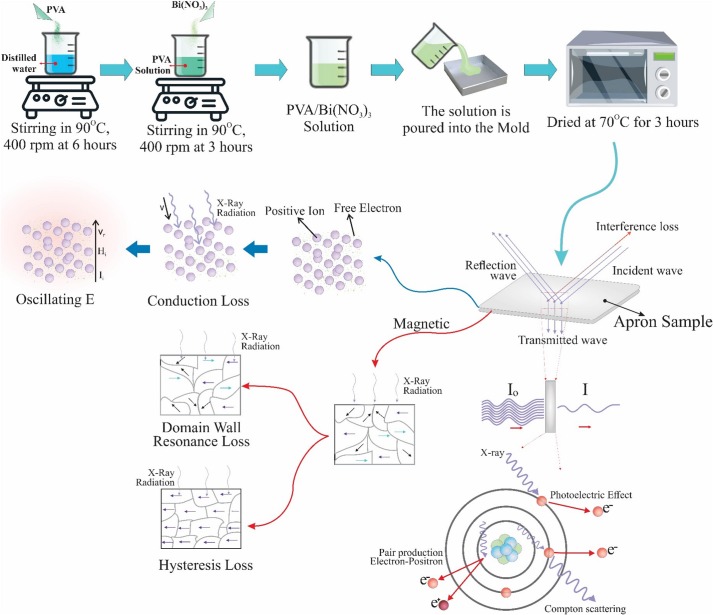
A team of researchers has introduced a promising alternative that could redefine radiation protection. Instead of relying on lead, they developed a lightweight shielding material by combining polyvinyl alcohol (PVA) with bismuth (III) nitrate, creating a flexible polymer composite capable of effectively blocking X-ray radiation without the disadvantages of conventional lead-based aprons.
The concept is surprisingly simple. Bismuth is a heavy metal with a high atomic number, allowing it to absorb X-ray photons efficiently. Unlike lead, however, bismuth is considered much safer for both humans and the environment. By dispersing different amounts of bismuth nitrate into a PVA polymer matrix, the researchers produced flexible apron materials that combine radiation protection with improved comfort and durability.
The study demonstrated that increasing the concentration of bismuth significantly improved the shielding performance. The composite containing 40% bismuth nitrate exhibited the highest radiation attenuation capability, successfully reducing X-ray transmission while maintaining acceptable mechanical properties. Meanwhile, the sample containing 30% bismuth nitrate achieved the highest tensile strength and flexibility, illustrating that engineering advanced materials often requires balancing multiple performance factors rather than optimizing only one property.
Beyond shielding efficiency, the researchers carefully investigated the material’s crystal structure, chemical bonding, and mechanical behavior using advanced characterization techniques. These analyses confirmed that the interaction between the polymer and bismuth particles created a stable composite capable of providing reliable radiation protection while remaining lighter and easier to wear than conventional lead aprons. For healthcare professionals who spend long hours in radiology departments, reducing the weight of protective equipment could improve comfort, reduce fatigue, and lower the risk of musculoskeletal injuries.
Perhaps the most exciting aspect of this innovation is its contribution to sustainable healthcare. Replacing toxic lead with environmentally friendlier materials represents an important step toward greener medical technology. As hospitals worldwide seek safer and more sustainable solutions, innovations like this demonstrate that high-performance protection does not have to come at the expense of environmental responsibility.
This research directly supports Sustainable Development Goal (SDG) 3: Good Health and Well-being by improving radiation safety for healthcare workers and patients. It also contributes to SDG 9: Industry, Innovation and Infrastructure through the development of advanced functional materials for medical applications. Furthermore, reducing dependence on toxic lead aligns with SDG 12: Responsible Consumption and Production, while the international collaboration among researchers from Indonesia, Saudi Arabia, and Malaysia reflects the spirit of SDG 17: Partnerships for the Goals, demonstrating how global scientific cooperation accelerates innovation that benefits society.
Reference : https://doi.org/10.1016/j.anucene.2025.111446
Contact:
Prof. Dahlang Tahir
+62 853-9418-8647
dtahir@fmipa.unhas.ac.id