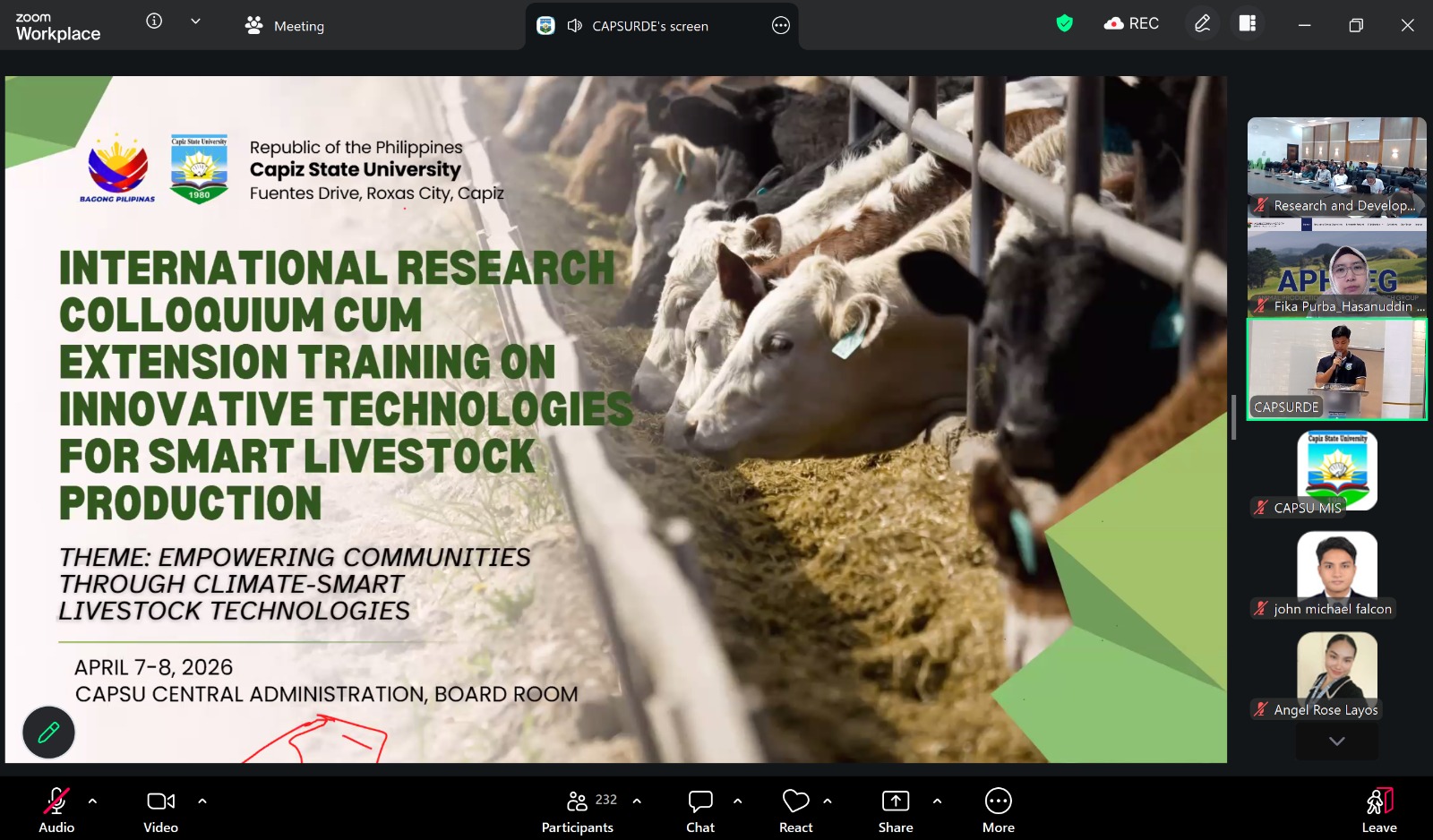

April 7, 2026. The global academic community gathered at the CAPSU Central Administration Board Room for the International Research Colloquium cum Extension Training on Innovative Technologies for Smart Livestock Production. This strategic event, themed “Empowering Communities through Climate-Smart Livestock Technologies,” provided a critical platform for addressing the multifaceted challenges of modern agriculture. Representing the Animal Production and Health Research Group (APHREG) from Hasanuddin University, Dr. Fika Yuliza Purba, DVM delivered a compelling presentation titled “The Role of Estrous Synchronization in Tropical Smallholder Cattle Farming”.
Dr. Fika’s presentation delved into the systemic bottlenecks facing smallholder ecosystems, where traditional management and environmental stressors often lead to reproductive inefficiencies. She highlighted that in these tropical systems, issues such as poor estrus detection and nutritional imbalances result in “Repeat Breeder Cows” (RBCs), which significantly drain farm revenue and disrupt operational timelines. By introducing estrous synchronization—a technique using hormones to align the reproductive cycles of females—Dr. Fika proposed a robust solution to bypass the “observational gap” and enhance pregnancy rates through precise timing and targeted interventions.
This initiative aligns seamlessly with SDG 4: Quality Education by disseminating specialized scientific knowledge and technical training to researchers and practitioners. Dr. Fika’s detailed breakdown of hormonal protocols and metabolic links to fertility ensures that the academic and farming communities are equipped with the literacy needed to implement high-tech solutions in local contexts. This educational outreach is vital for transitioning from traditional views to a new paradigm that treats reproductive failure as a combined hormonal and metabolic challenge.
Furthermore, the focus on increasing livestock profitability and efficiency directly supports SDG 1: No Poverty. By reducing the economic fallout of repeat breeding and shortening calving periods, these technologies protect the livelihoods of smallholder farmers who form the backbone of regional agriculture. Enhanced productivity ensures that livestock remain a viable asset for economic mobility, safeguarding digital and physical identities of researchers and farmers alike against resource-driven poverty.
The colloquium also exemplified SDG 17: Partnerships for the Goals, showcasing the strong international collaboration between Capiz State University (CAPSU) and Hasanuddin University (Unhas). This partnership facilitates the exchange of innovative technologies and field-ready implementation models, such as group-based synchronization programs. By bridging the gap between localized thematic research and international expertise, Unhas reaffirms its commitment to building a resilient technological framework that fosters global sustainable development.