
 Tondongkura Village in Pangkep Regency, South Sulawesi, possesses remarkable ecological richness that offers strong potential for the development of sustainable village-based ecotourism. To better understand and document this biodiversity potential, a field research activity was conducted from May to August 2025, focusing on the integration of plant diversity, bird diversity, and tarsius distribution data as scientific foundations for ecotourism planning and conservation strategies.
The primary objective of this research is to identify and analyze the biological resources that can support ecotourism development while ensuring environmental sustainability and biodiversity conservation. Specifically, the study examined three key components: plant diversity as a foundation for educational and nature-based tourism, tarsius distribution as a potential attraction for special interest tourism such as primate watching, and bird diversity as an asset for birdwatching tourism. By integrating these datasets, the research aims to provide evidence-based recommendations for local tourism development that balances economic opportunities with ecological protection.
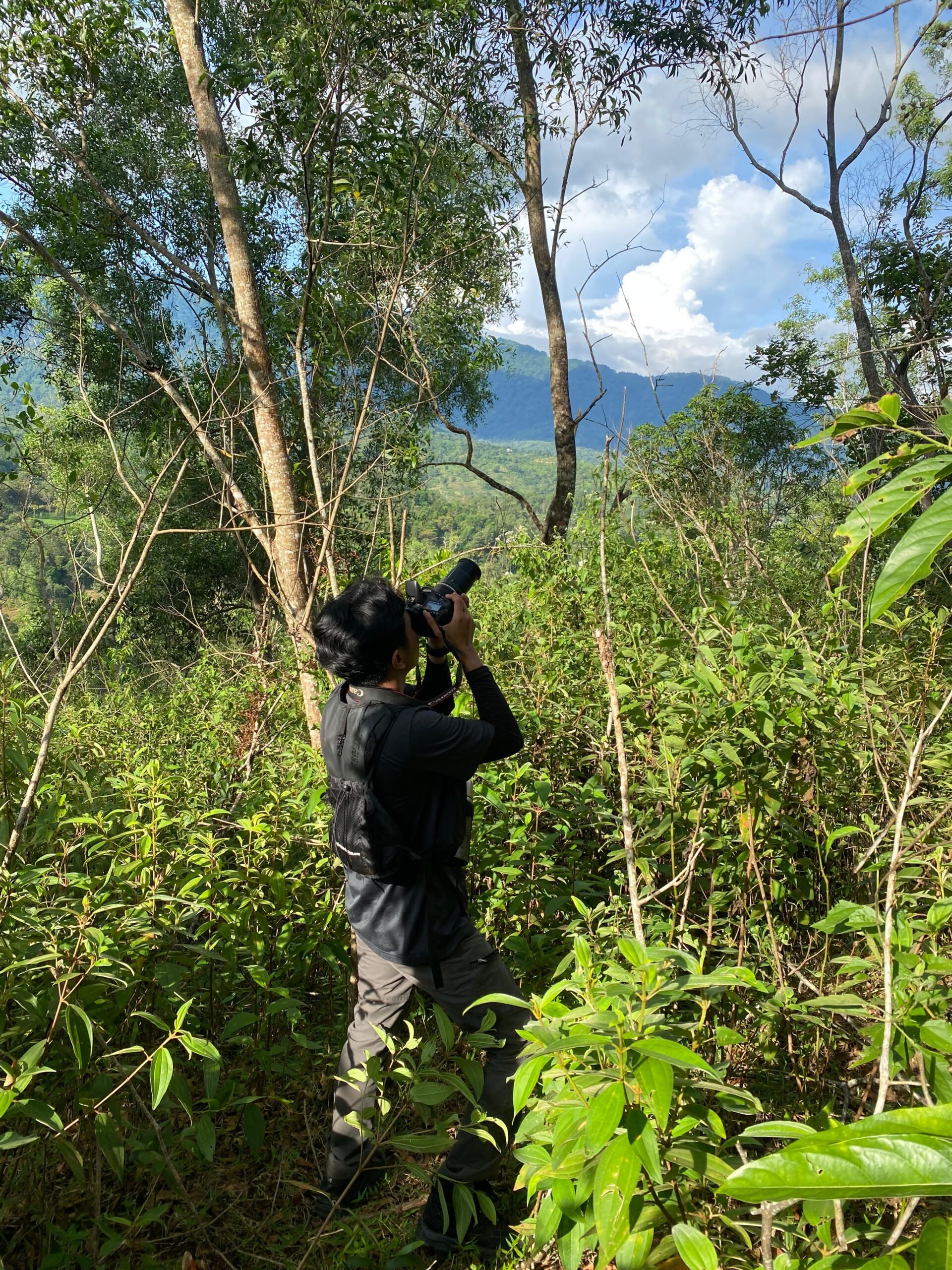
Field surveys conducted in Tondongkura Village recorded a total of 511 plant individuals representing 76 species, demonstrating a high level of botanical diversity. Several local endemic plants were documented, including Malaka and Dengeng, which add ecological and cultural value to the area. These plant resources can serve as important attractions for educational tourism, botanical interpretation, and habitat conservation initiatives.
 In addition to vegetation surveys, the study also explored the presence of tarsius, one of Sulawesi’s iconic nocturnal primates. Observations carried out at 11 designated points during active hours resulted in 7 direct encounters, indicating that the area has promising potential for special interest ecotourism centered on primate watching. This finding is particularly valuable as wildlife-based tourism can provide unique visitor experiences while promoting species conservation.
Bird diversity surveys further strengthened the ecotourism potential of the area. A total of 24 bird species were identified, including 7 species endemic to Sulawesi. Notable species recorded include the Sulawesi Serpent Eagle (Spilornis rufipectus) and the Makassar White-eye (Zosterops anomalus), both of which are of high interest to birdwatchers and conservationists. The presence of endemic bird species enhances the uniqueness of Tondongkura as a destination for birdwatching tourism and biodiversity education.
This research activity directly contributes to several Sustainable Development Goals (SDGs). It supports SDG 4 (Quality Education) by generating scientific knowledge and promoting field-based learning. It aligns with SDG 15 (Life on Land) by documenting biodiversity and strengthening conservation awareness of terrestrial ecosystems. Furthermore, the initiative reflects SDG 17 (Partnerships for the Goals) through collaboration between researchers, students, and local communities. Importantly, this activity also contributes to SDG 1 (No Poverty) by supporting the development of sustainable ecotourism opportunities that can enhance local livelihoods and village economic resilience.
This research activity involved 15 researchers and students and was conducted from May to August 2025 in Tondongkura Village, Pangkep Regency, South Sulawesi, Indonesia. Through this initiative, Tondongkura Village is positioned as a promising model for biodiversity-based ecotourism development that integrates conservation, education, and community empowerment.