The Laboratory of Forest Resource Conservation and Ecotourism (Lab. KSDHE), Faculty of Forestry, Universitas Hasanuddin, has developed a strong and sustained record of international collaborative research aimed at advancing knowledge in biodiversity conservation, forest ecology, and human–wildlife interactions. Through partnerships with leading global institutions, this initiative reflects a long-term commitment to producing high-quality scientific research while strengthening academic capacity at both national and international levels.
The primary objective of this collaborative activity is to generate scientific knowledge that supports sustainable forest management, wildlife conservation, and ecological understanding, particularly within Indonesia’s unique ecosystems. In addition, the collaboration aims to enhance research capacity, promote knowledge exchange, and provide opportunities for students and academic staff to engage in international research networks. These partnerships have enabled interdisciplinary approaches to complex environmental challenges, ranging from conservation policy to species-specific ecological studies.
The research collaborations span multiple locations, primarily centered in South Sulawesi, Indonesia, including forest ecosystems such as the Maros-Pangkep karst landscape and other biodiversity-rich areas. Since 1999, collaboration with the Center for International Forestry Research (CIFOR) has contributed to forestry and conservation policy research. Partnerships with San Diego State University, Georgia State University, Leipzig University, Lincoln University, and Portsmouth University have focused largely on wildlife ecology and conservation, particularly studies on the endemic moor macaque (Macaca maura). In addition, collaboration with Fauna & Flora International has supported broader conservation initiatives.
A significant component of Lab. KSDHE’s research since 2018 includes studies on Hopea celebica, a critically endangered endemic tree species locally known as “keeri.” Found primarily in the Maros-Pangkep karst ecosystem, this species is valued for its high-quality timber. Ongoing research explores its distribution, ecological characteristics, and conservation status, contributing to efforts aimed at protecting this unique component of Indonesia’s biodiversity.
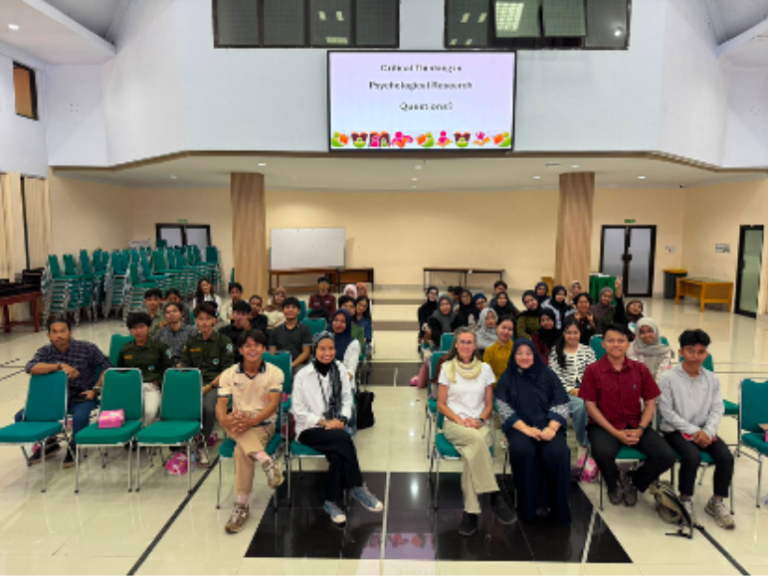
These collaborative efforts have produced numerous joint scientific publications, as well as academic activities such as public lectures, technical training, visiting scholar programs, and student exchanges. Such outcomes not only strengthen the academic reputation of the Faculty of Forestry and Universitas Hasanuddin but also create meaningful opportunities for students and researchers to engage in global scientific discourse.
This initiative strongly aligns with several Sustainable Development Goals (SDGs). It supports SDG 4 (Quality Education) by fostering research-based learning and international academic exchange. It contributes to SDG 15 (Life on Land) by advancing knowledge critical for biodiversity conservation and sustainable ecosystem management. Furthermore, it exemplifies SDG 17 (Partnerships for the Goals) through its extensive international collaborations. Indirectly, it also supports SDG 1 (No Poverty) by enhancing human resource capacity and creating opportunities for sustainable livelihoods through education and research.
This collaborative research initiative involved 9 academic staff members and multiple researchers and students and has been conducted continuously since 1999 to the present in South Sulawesi, Indonesia. The international partners involved include Center for International Forestry Research (CIFOR), San Diego State University (USA), Georgia State University (USA), Leipzig University (Germany), Lincoln University (UK), Portsmouth University (UK), and Fauna & Flora International.
Through these sustained collaborations, Lab. KSDHE continues to play a vital role in advancing conservation science while inviting new scholars, particularly PhD graduates in conservation, to contribute to its growing academic community.