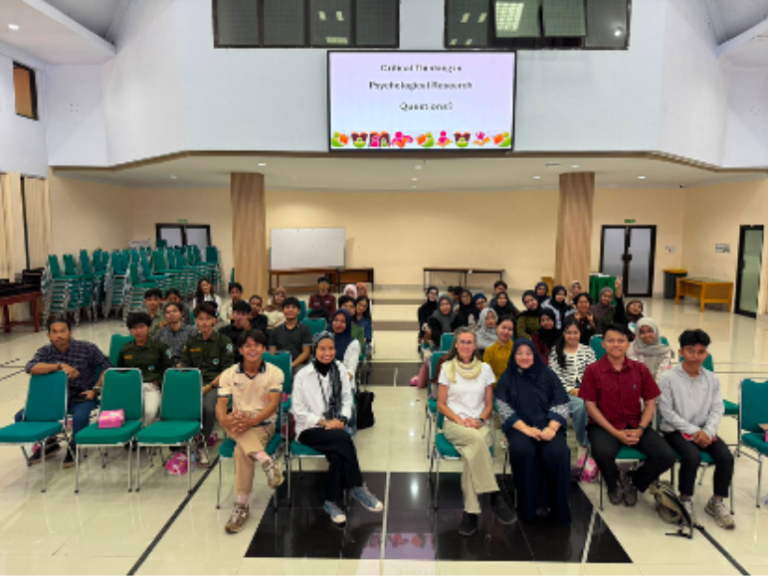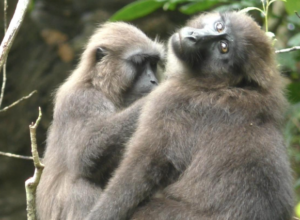
In South Sulawesi, Indonesia, Alejandro Magallanes Campos carried out a six-month field study on the social behavior of the endemic moor macaque (Macaca maura) in collaboration with the Wildlife Ecology and Conservation Research Group (WildEV RG) at Hasanuddin University. Location: South Sulawesi, Indonesia, in a landscape of secondary forest and human-influenced habitat. Purpose of the activity: to examine agonism, grooming, and co-feeding patterns in order to better understand social tolerance and behavioral ecology in a wild moor macaque group. Date of activity: six months of observation during the recent field research period. Number of participants: not specified in the provided information. International partners: Hasanuddin University (WildEV RG).
The study followed a wild group of 29 macaques using focal and scan sampling methods, allowing the researcher to observe day-to-day interactions in a natural setting with minimal disturbance. More than one hundred agonistic interactions were recorded, yet overall aggression levels remained relatively low. This pattern suggests that the group lives within a socially tolerant structure, where conflict does occur but does not dominate daily life. The findings also revealed an interesting difference between sexes: male macaques appeared to show higher social tolerance than females, while dominance hierarchies among females were more clearly defined. Such distinctions provide valuable insight into how social systems are organized in this species and how individuals negotiate access to resources and relationships.
Another important result concerned feeding behavior. Individuals with larger rank differences were often observed feeding in close proximity, suggesting that higher-ranking macaques may tolerate lower-ranking individuals during feeding events. This kind of social flexibility is important because it can reduce stress, support group cohesion, and improve the stability of the troop. In species that live near human-modified landscapes, such tolerance may also help them adapt to changing environmental conditions. At the same time, it highlights the need to protect the forests and habitats that allow these behaviors to persist.
This research contributes directly to SDG 15: Life on Land, because it expands scientific knowledge on an endemic primate species whose survival depends on healthy terrestrial ecosystems. It also supports SDG 4: Quality Education by strengthening student-led research and generating knowledge that can be shared with both academic and public audiences. In addition, the study reflects the spirit of SDG 17: Partnerships for the Goals, as it was carried out through collaboration within Hasanuddin University’s conservation research network.
By documenting how moor macaques interact, share space, and manage conflict, this study offers more than a description of animal behavior. It provides evidence that can inform conservation planning, improve understanding of primate social systems, and support long-term efforts to protect Sulawesi’s unique biodiversity.