

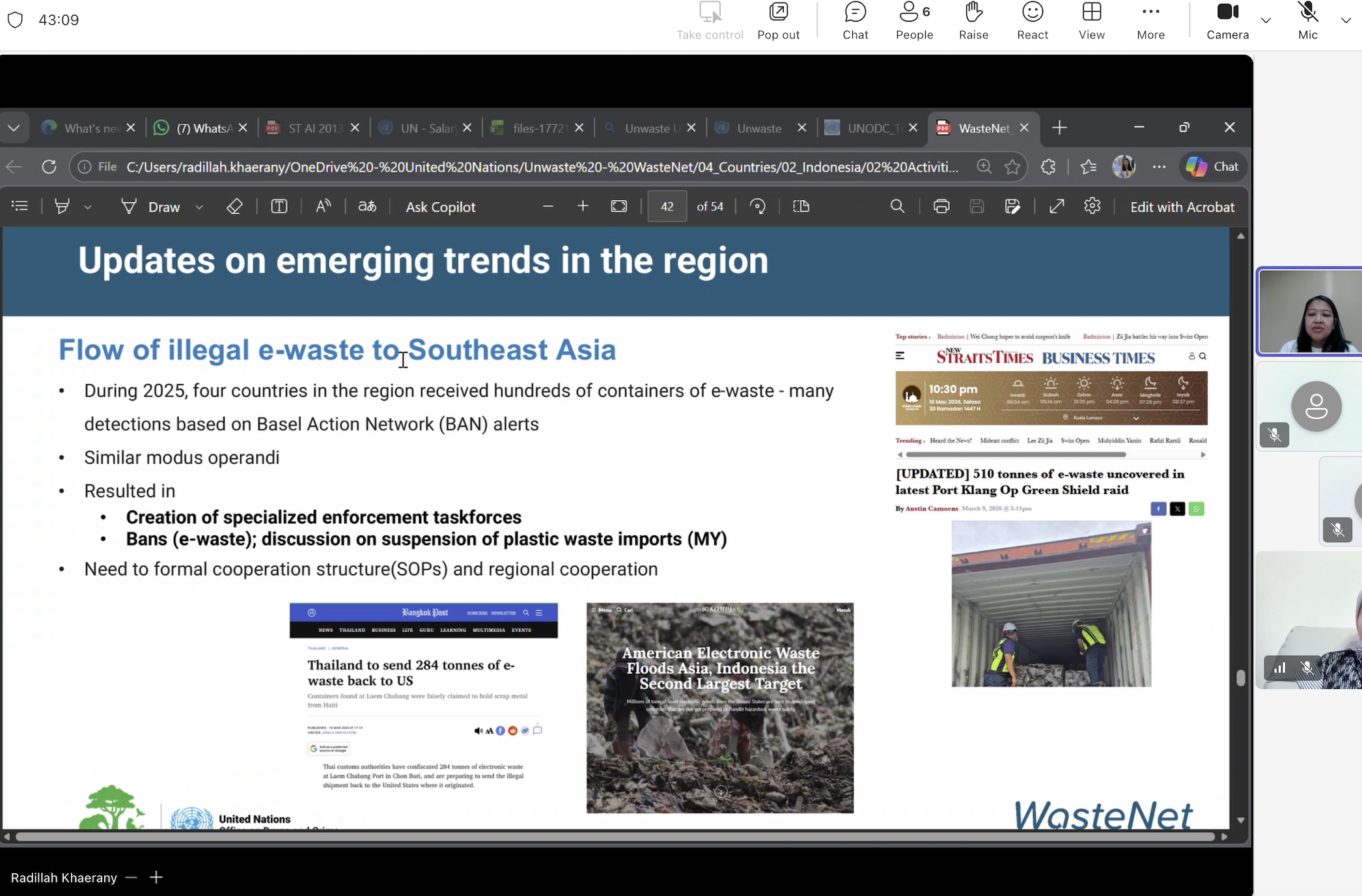

This scientific meeting, conducted via a Zoom Meeting platform, represents a strategic effort to strengthen environmental law studies, particularly in addressing the issue of waste crime. The session featured Radillah Khaerany, S.H., LL.M., in collaboration with representatives from the United Nations Office on Drugs and Crime (UNODC), and was further enriched through a Focus Group Discussion (FGD) involving a team of 9 members.
Held on April 16, 2026, the primary objective of this activity was to comprehensively examine various aspects of waste-related crimes, including patterns of legal violations, challenges in law enforcement, and opportunities for strengthening regulatory frameworks within the scope of the TRG Waste Management Law. This discussion is highly relevant in light of the increasing complexity of environmental crimes, which not only contribute to ecological degradation but also generate significant social and economic impacts on communities.
In the broader context of sustainable development, this activity directly aligns with several targets within the Sustainable Development Goals (SDGs). In particular, it contributes to SDG 1: No Poverty, by addressing the economic vulnerabilities caused by illegal waste management practices that often affect marginalized communities. Furthermore, the activity supports SDG 4: Quality Education, by enhancing participants’ knowledge and analytical capacity regarding environmental law and waste crime through a research-based and scientific approach. Equally important, this initiative reflects the implementation of SDG 17: Partnerships for the Goals, as demonstrated through the collaboration between academic actors and an international organization in developing more effective and responsive legal frameworks.
During the FGD sessions, participants actively engaged in exchanging ideas and conducting critical analyses of various case studies and international practices related to waste crime. The multidisciplinary approach adopted in this discussion enabled the development of comprehensive perspectives, both from a normative legal standpoint and from a practical implementation perspective. Collaboration with UNODC added significant value by providing global insights and best practices that can be adapted within the national legal context.
Moreover, this activity underscores the importance of synergy between academic research and international practice in addressing the growing challenges of environmental crime. Strengthening regulatory frameworks and institutional capacity remains essential to ensure that waste management practices are not only administratively compliant but also equitable and sustainable.
Ultimately, this meeting serves not only as an academic forum but also as a concrete step toward advancing environmental law reform that is more adaptive to global dynamics. It is expected that this activity will contribute significantly to the development of policies and practices in waste management, while reinforcing a shared commitment to achieving sustainable development goals.
