
Discussion with Malaysian Expert: Exploring Restorative Justice Practices in the Criminal Justice System
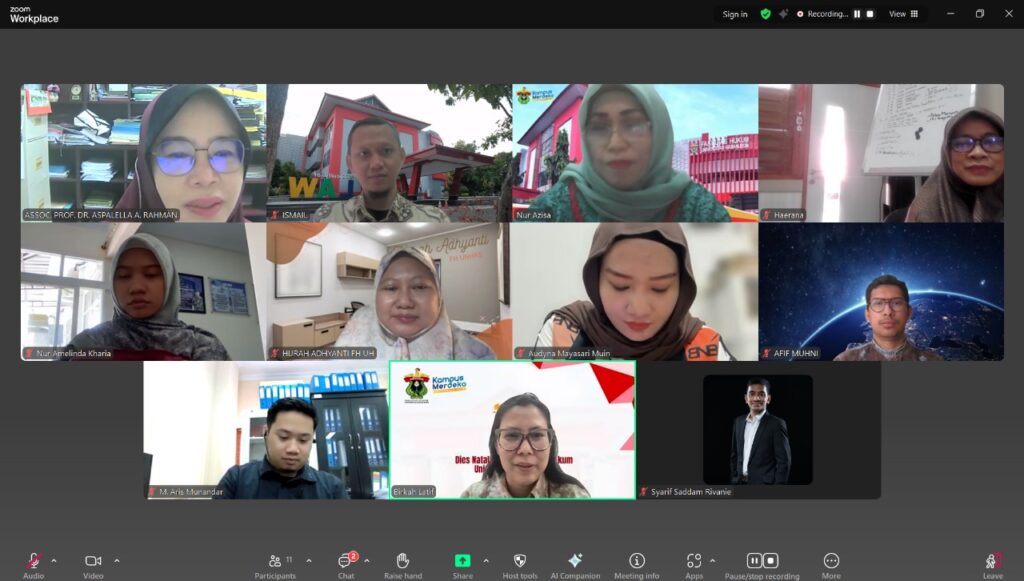
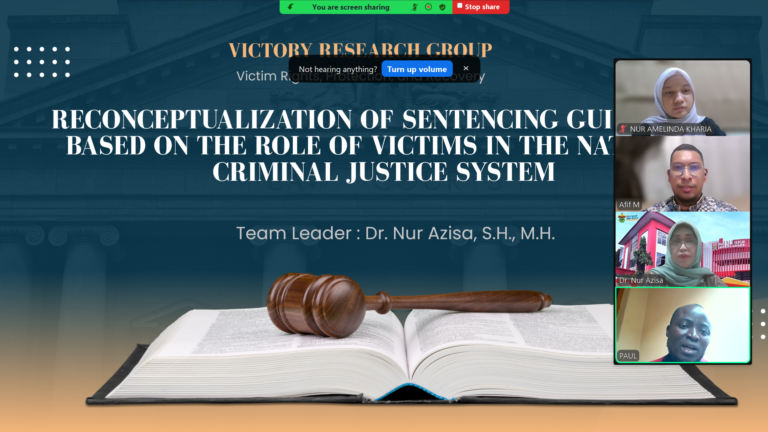
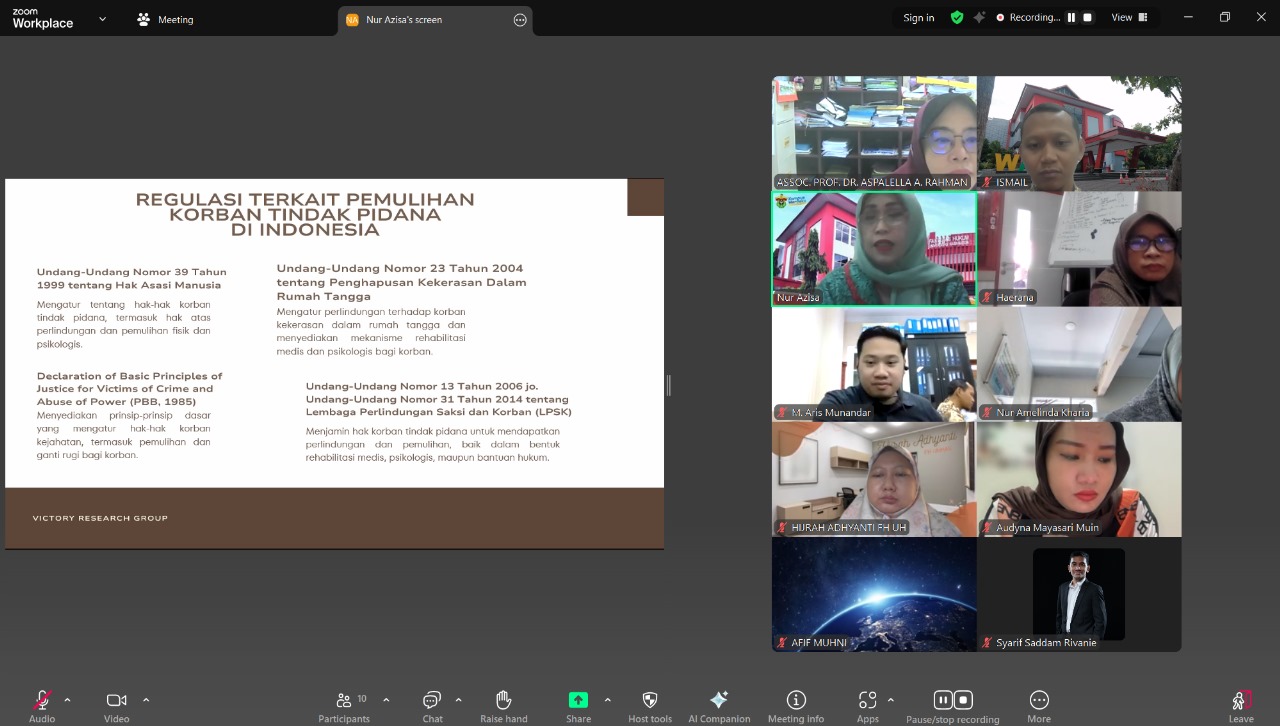
On 6 August 2025, the research team conducted an academic discussion entitled “Discussion with Malaysian Expert: Exploring Restorative Justice Practices in the Criminal Justice System.” The activity was held via Zoom Meeting and attended by 11 participants, consisting of one international partner, Associate Professor Dr. Aspalella A. Rahman from Universiti Utara Malaysia; nine lecturers from the Faculty of Law, Universitas Hasanuddin; and one student, Nur Amelinda Kharia. The discussion was organized to examine the development, legal foundations, and practical implementation of restorative justice within the Malaysian criminal justice system.
This activity formed part of the research team’s effort to enrich its comparative legal perspective and strengthen the substance of its ongoing research. By engaging directly with a Malaysian academic expert, the participants gained a clearer understanding of how restorative justice has developed in Malaysia, including the opportunities and institutional challenges influencing its implementation. The session also created an inclusive academic space in which lecturers, an international partner, and a student could exchange ideas and critically reflect on contemporary approaches to criminal justice.
During the discussion, Associate Professor Dr. Aspalella A. Rahman explained that Malaysia has established a sufficient legal foundation to support restorative justice practices, particularly through the Criminal Procedure Code 1994 and the Child Act 2001. These legal instruments provide important opportunities for approaches that emphasize rehabilitation, accountability, dialogue, and the restoration of harm. The Child Act 2001 is especially relevant because it encourages a more protective and rehabilitative response toward children involved in the justice process.
Nevertheless, the discussion also revealed that restorative justice has not yet been applied consistently across all categories of criminal offences in Malaysia. Its implementation may depend on the nature of the case, the parties involved, institutional readiness, available procedures, and the capacity of trained facilitators. This situation indicates that legal provisions alone are not sufficient. Effective implementation also requires clear policy direction, coordination among criminal justice institutions, professional capacity-building, and safeguards that protect victims while respecting the legal rights of offenders.
The discussion further emphasized that restorative justice should not be understood merely as an alternative to conventional punishment. Rather, it represents a justice-oriented approach that seeks to acknowledge victims’ needs, encourage offenders to accept responsibility, repair the consequences of criminal conduct, and rebuild relationships within affected communities.
This activity directly supported SDG 4: Quality Education by promoting research-based learning, international knowledge exchange, and student participation in an academic forum. It also contributed to SDG 17: Partnerships for the Goals by strengthening academic cooperation between Universitas Hasanuddin and Universiti Utara Malaysia. In addition, the discussion was relevant to SDG 1: No Poverty, as fair, accessible, and restorative justice mechanisms may help reduce the social and financial burdens experienced by economically vulnerable individuals and families involved in criminal proceedings.
Overall, the activity deepened participants’ understanding of restorative justice in Malaysia and highlighted the importance of sustained international collaboration in developing more humane, inclusive, and effective criminal justice policies.