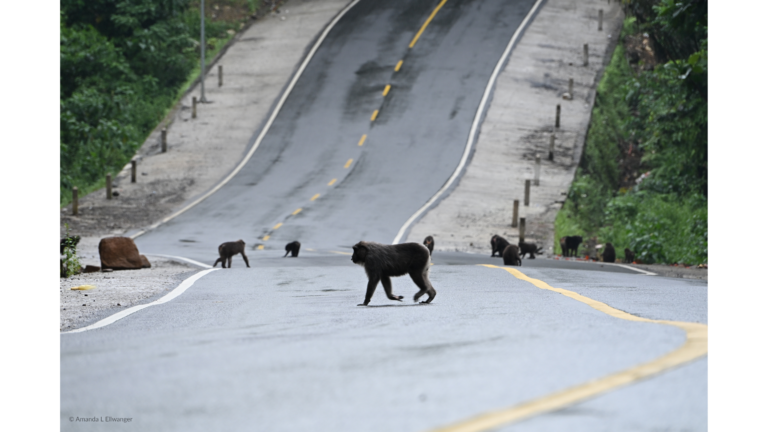

MAKASSAR, Indonesia, February 28, 2026 /TREDIC/ – Imagine driving through a national park and seeing a group of wild monkeys waiting calmly beside the road for passing vehicles. While this scene may appear entertaining, it reveals a much deeper story about how wildlife adapts to human activities and the hidden risks that come with it.
A recent study conducted in Bantimurung Bulusaraung National Park, South Sulawesi, Indonesia, by Erin P. Riley (San Diego State University), Joshua Trinidad (San Diego State University), Henry R. Scharf (University of Arizona), Ngakan Putu Oka (Hasanuddin University), examined the collective movement behavior of Sulawesi moor macaques (Macaca maura), an endangered primate species found only on the island of Sulawesi. The researchers investigated how these macaques make group decisions when choosing between remaining safely inside the forest or moving toward roads where tourists and motorists often provide food.
The study found that group movement decisions are not controlled by a single leader. Instead, leadership is shared among many individuals, demonstrating a flexible and cooperative decision-making process. However, when the destination involved greater risk, such as approaching roads where food was available, higher-ranking macaques were significantly more likely to lead the group. Adult males also initiated collective movements more frequently than adult females. These findings suggest that macaques carefully balance the potential reward of obtaining easy food with the danger posed by vehicles and increased human interaction.
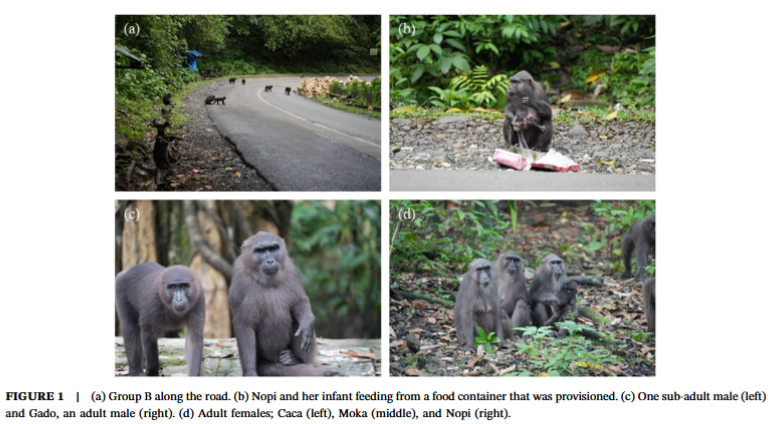
Although roadside feeding may seem harmless, it can fundamentally change natural animal behavior. Wildlife that becomes accustomed to receiving food from humans may spend less time searching for natural food sources, increase its exposure to traffic accidents, and experience more frequent conflicts with people. Over time, these behavioral changes can threaten both animal welfare and long-term conservation efforts.
The research highlights an important conservation message: protecting wildlife requires more than preserving forests. It also involves managing human behavior. Visitors to protected areas play an essential role by respecting wildlife, avoiding feeding animals, and allowing natural ecological processes to continue without unnecessary interference. Small individual actions can collectively make a significant difference for endangered species.
This study also contributes directly to several Sustainable Development Goals (SDGs). SDG 15: Life on Land emphasizes the conservation of terrestrial biodiversity and the protection of endangered species such as the Sulawesi moor macaque. SDG 12: Responsible Consumption and Production encourages responsible tourism practices that minimize negative impacts on ecosystems, including avoiding the provisioning of wild animals. Furthermore, SDG 11: Sustainable Cities and Communities supports improving interactions between people and wildlife by promoting safer and more sustainable management of human activities near protected areas.
Ultimately, the behavior of Sulawesi’s moor macaques reminds us that animals are remarkably adaptable. Yet adaptation does not always benefit their survival. As human activities continue to expand into natural habitats, conservation must focus not only on protecting landscapes but also on encouraging responsible human behavior. By giving wildlife the space to remain wild, we help preserve the natural behaviors that have allowed these remarkable primates to thrive for thousands of years.
Reference :
DOI : 10.1002/ajp.23727
Contact:
Putu Oka Ngakan
ngakan.po@unhas.ac.id