
Bintan, Riau Islands – A canopy bridge may look like a simple structure, but designing one for wildlife requires an understanding of animal behavior, habitat, engineering, and the environment in which the bridge will be installed. Following the initial planning of a wildlife canopy bridge in Karaenta Forest Reserve, Bantimurung-Bulusaraung National Park, a team from Balai Taman Nasional Bantimurung-Bulusaraung, Project SEED, and TRG TREDIC traveled to Bintan Island, Riau Islands, from July 29-31, 2026, to learn directly from an existing canopy bridge program for endemic primates.
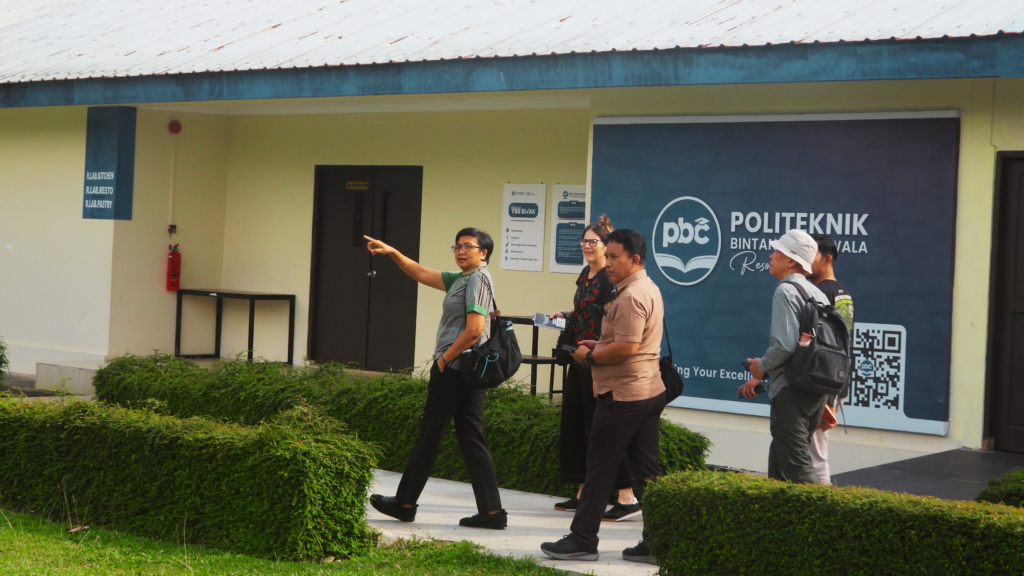
The visit brought the Sulawesi team to Politeknik Bintan Cakrawala (PBC), located within the PT Bintan Resort Cakrawala (BRC) area, where canopy bridges have been developed to provide safer crossings for primates, particularly the Bintan langur, as well as lutung and long-tailed macaques. The visit was also an opportunity to exchange experiences with the Javan Wildlife Institute (JAWI), an NGO based in Java that monitors and evaluates the canopy bridges in Bintan.
The activity contributes to SDG 15 – Life on Land, through practical efforts to reduce the impacts of habitat fragmentation and road mortality on wildlife; SDG 9 – Industry, Innovation and Infrastructure, through the development and improvement of wildlife-friendly infrastructure; SDG 11 – Sustainable Cities and Communities, by considering wildlife and public safety together with transportation infrastructure; and SDG 17 – Partnerships for the Goals, through collaboration among universities, conservation agencies, private-sector stakeholders, and international and national conservation organizations.
The seven-member Sulawesi delegation consisted of Abdul Rajab, Head of Bantimurung-Bulusaraung National Park, together with Tahari, Saiful Bachri, and one additional staff member representing the National Park Authority; Prof. Erin P. Riley from San Diego State University (SDSU) as a representative of Project SEED; and Prof. Dr. Ngakan Putu Oka and Putra Awaludding representing TRG TREDIC, Hasanuddin University.
Welcomed in Bintan
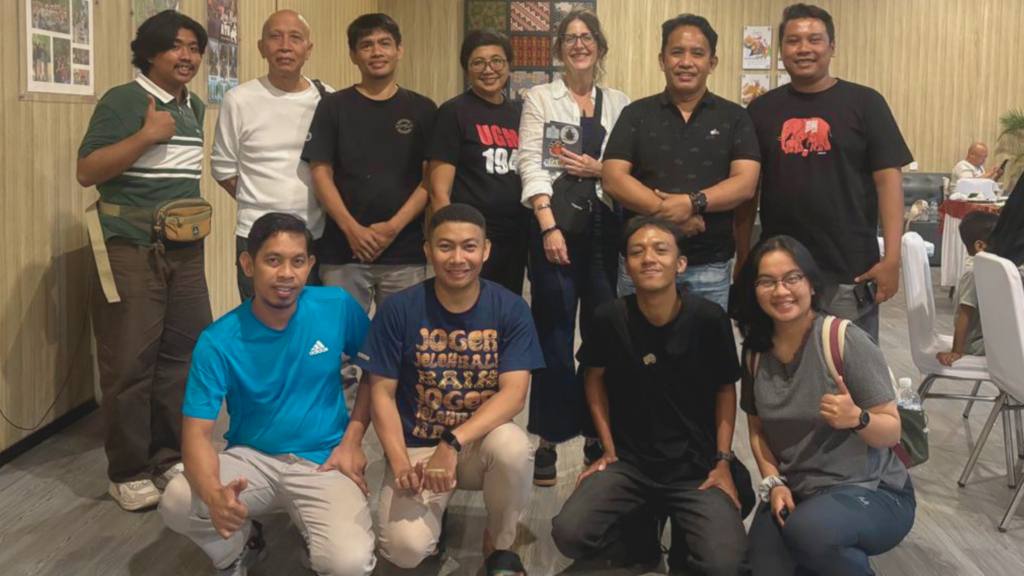
Upon arrival on July 29, the delegation was warmly welcomed by Emilia Ayu Dewi Karuniawati, Director of Politeknik Bintan Cakrawala. The team also met Dennis Albihad, Director of the Javan Wildlife Institute (JAWI), who happened to be in Bintan at the same time to conduct an evaluation of the existing canopy bridge together with his team, Dirga Priyambada and Giot Marganti Ito Simanullang.
The timing provided a valuable opportunity for the Sulawesi team to directly exchange knowledge with the JAWI team and observe the results of canopy bridge implementation in a different ecological and infrastructural setting.
Learning from Bintan’s Canopy Bridges
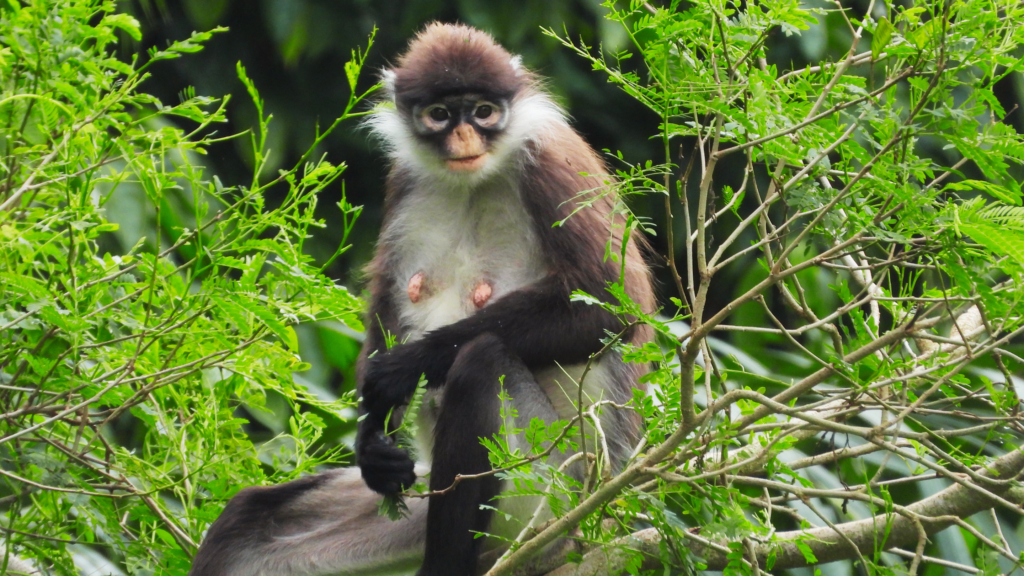
Bintan provides an important comparison for the planned canopy bridge in Karaenta. The island is home to the Bintan langur, an endemic primate whose habitat has become increasingly fragmented by roads and infrastructure. Road mortality has become one of the conservation concerns for these primates, making safe wildlife crossings an important part of conservation efforts.
According to observations by the JAWI team, the canopy bridges in Bintan can be used by two to five langurs at a time. The same crossing routes are also used by lutung and long-tailed macaques, demonstrating that a single wildlife crossing structure can potentially benefit several arboreal primate species.
An important finding from the monitoring was how quickly the animals responded to the new structures. Camera-trap observations showed that lutung were recorded crossing the canopy bridge one day after construction, followed by long-tailed macaques three days later. Bintan langurs were recorded approaching and using the bridge four days after construction, although their initial use was limited to reaching the middle of the bridge rather than crossing completely. This behavior suggests that the animals may initially inspect and assess a new structure before fully incorporating it into their movement routes.
The JAWI team also reported that canopy bridges generally became used within approximately two to three months after construction, particularly when they were positioned along routes already frequently used by primates.
Where Should a Canopy Bridge Be Built?
The Bintan experience demonstrated that simply installing a bridge is not enough. Location is one of the most important factors determining whether wildlife will use it.
Before installing the bridges, JAWI developed an occupancy map of Bintan langurs across Bintan Island. Canopy bridges were then prioritized at roadkill hotspots and locations where primates were already known to cross. The selection process also considered the location of sleeping trees, food trees, and water sources, helping ensure that the bridge was incorporated into the animals’ existing movement patterns rather than forcing them to adopt an entirely new route.
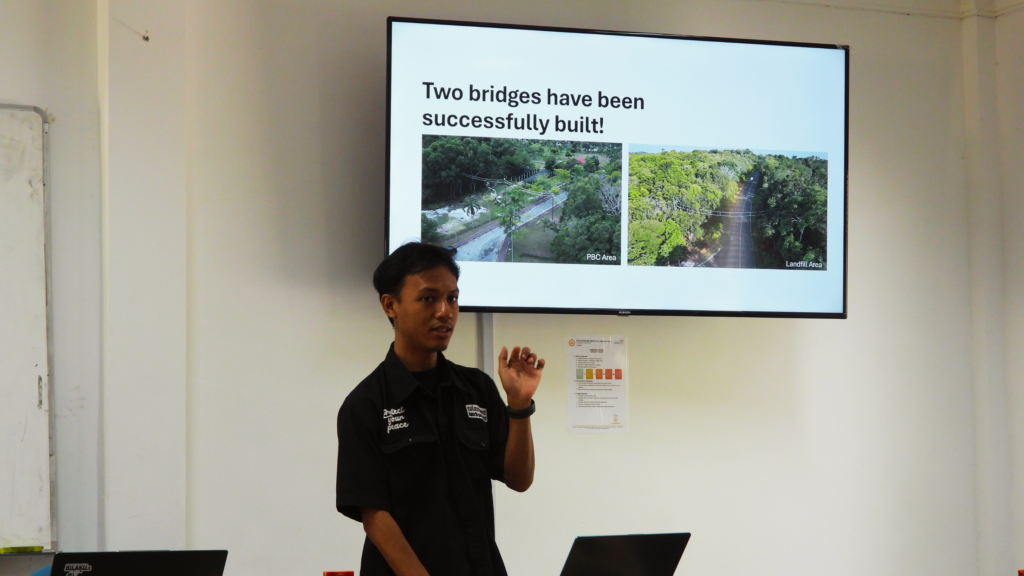
Currently, two canopy bridges have been installed within the resort area, with additional bridges planned in the future. Politeknik Bintan Cakrawala and JAWI will continue monitoring the existing structures before determining where additional bridges should be installed.
The bridges also span approximately 60 meters above the road, demonstrating that wildlife crossings may require substantial structures when forest patches are separated by wide transportation corridors.
Different Primates, Different Designs
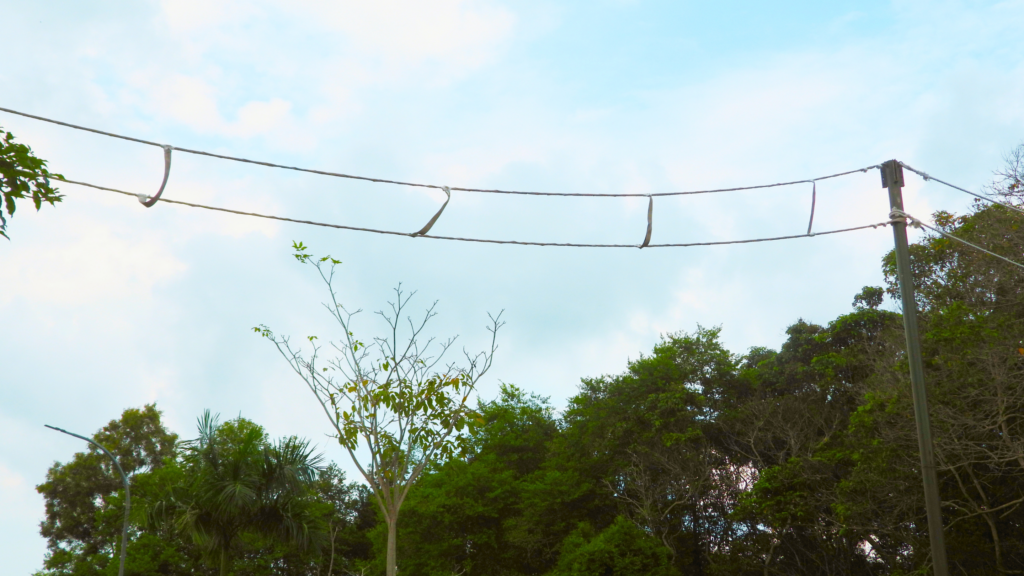
One of the key lessons from Bintan was that there is no single canopy bridge design that works for every species or every location.
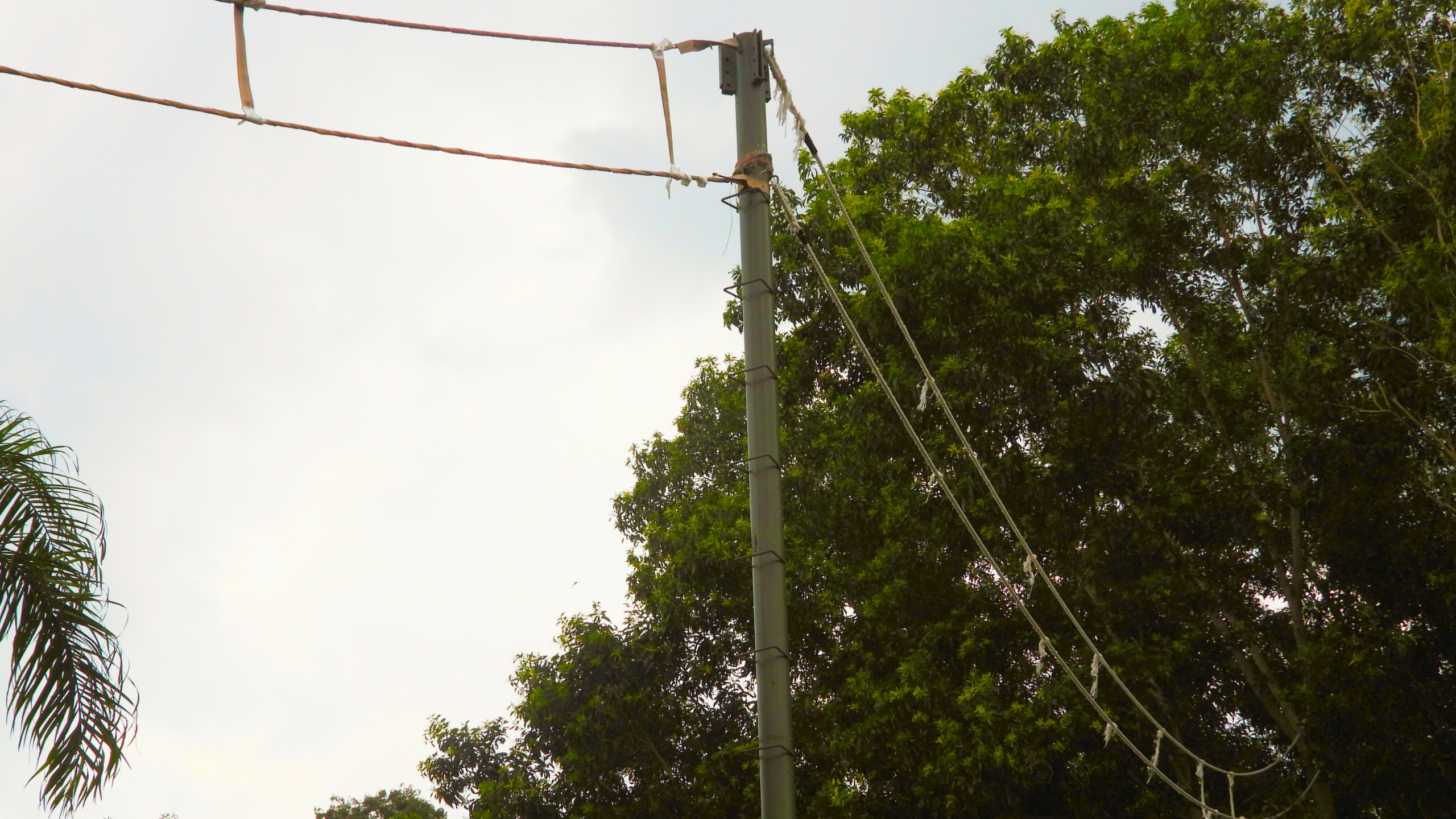
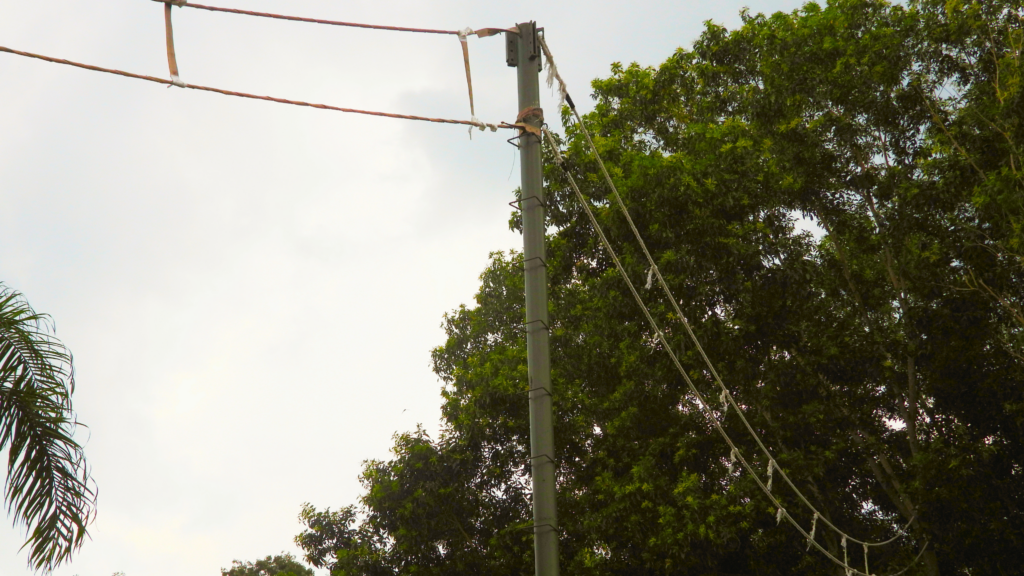
The existing structures include several designs, including single-rope bridges, ladder-style bridges, and combined designs. In Bintan, a single-rope design was considered unsuitable for the Bintan langur, leading to the use of a double-rope configuration with one rope above and another below.
The bridge design also incorporates access through support poles, which are equipped with ladders that allow primates to move between the ground and the elevated crossing.
These differences provide an important lesson for the Karaenta project. The bridge intended for Moor macaques (Macaca maura) cannot simply copy a structure developed for Bintan langurs. The design must consider the target species, its body size, behavior, movement patterns, and the physical characteristics of the surrounding forest.
Learning from What Did Not Work
The visit also provided an opportunity to learn from challenges encountered in Bintan.
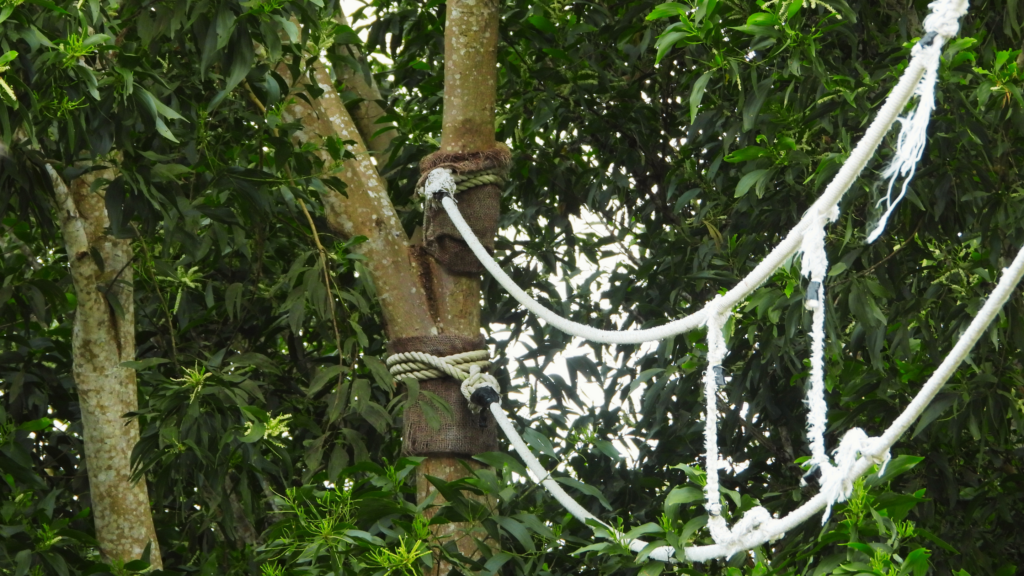
During the field observation, the team found a canopy bridge that had failed before reaching one year of use. According to Emilia Ayu Dewi Karuniawati, one possible cause was the movement of the supporting trees. Because the rope was attached directly to the trees, strong winds could cause the trees to move, placing repeated tension on the rope until it eventually broke.
For the Sulawesi team, this was an important lesson. Karaenta presents its own environmental conditions and microclimate, meaning that the durability of construction materials must be carefully considered before installation.
Based on discussions with JAWI, the team considered using steel cable covered with firehose canvas as an alternative to nylon rope. This combination is expected to provide greater strength and durability while protecting the cable from environmental exposure.
The lesson was clear: a canopy bridge must be designed not only for the animals that use it, but also for the environment in which it will stand.
Learning from the Bintan Resort
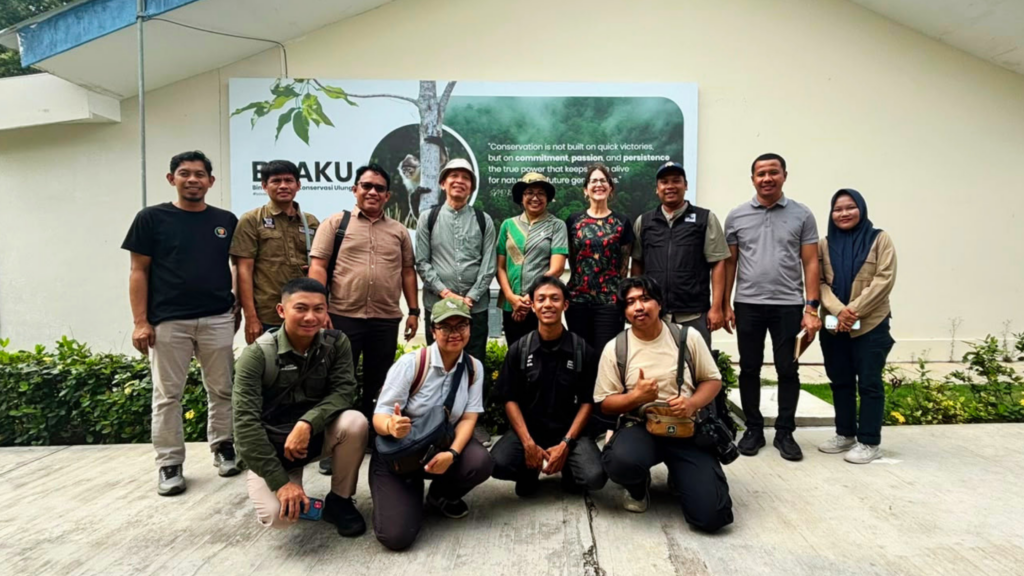
On July 30, the delegation visited Politeknik Bintan Cakrawala and observed the existing canopy bridge directly. The team also met Ray Manaek Sebastian Tobing, Head of the HSE & Fire Operations Department of PT Bintan Resort Cakrawala.
Mr. Ray explained that the resort area is managed by PT Bintan Resort Cakrawala, part of Gallant Venture Ltd., Singapore. The resort operates with several of its own supporting facilities, including an internal power supply, floating solar panels installed on a dam, a clean-water source, and its own port, which receives approximately five to six ferry services per day, with the majority of passengers arriving from Singapore.
The resort also has its own AMDAL team and has incorporated the Bintan langur as part of the identity and conservation image of the resort.
This approach demonstrates how wildlife conservation can become part of the identity and environmental responsibility of a private development. The resort’s conservation campaign has also helped raise awareness among surrounding communities about the existence and conservation importance of the Bintan langur.
Why Karaenta Needs a Canopy Bridge
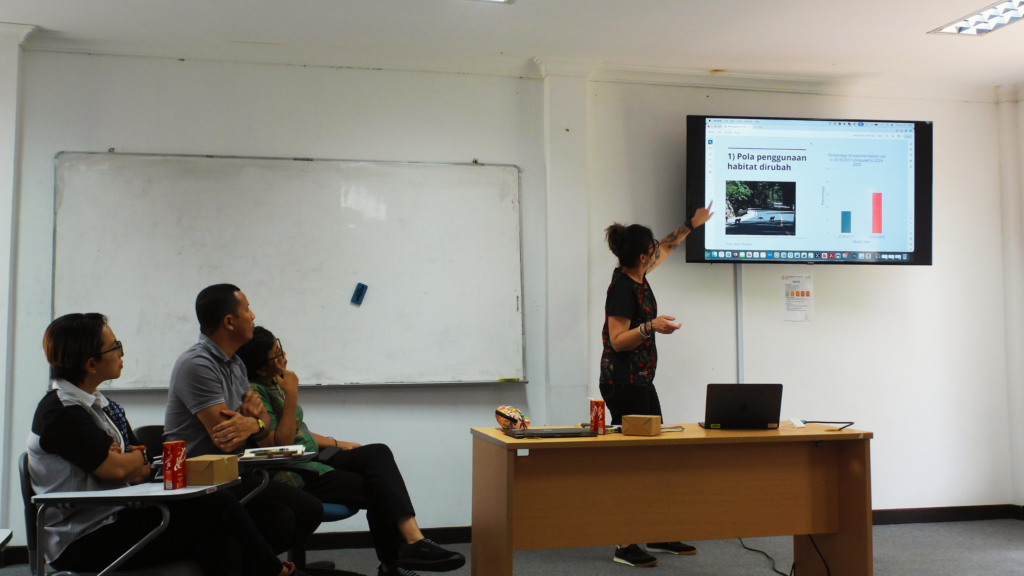
During the visit, Abdul Rajab, Head of Bantimurung-Bulusaraung National Park, explained the background behind the proposed canopy bridge in Karaenta.
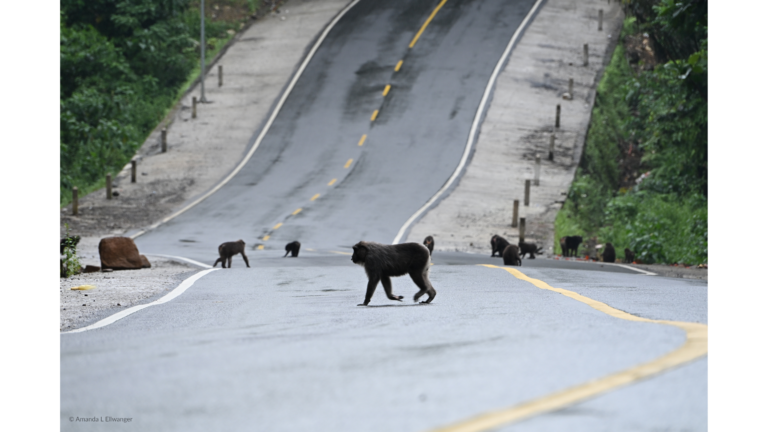
The original development plan for the Karaenta road included the construction of an elevated roadway that would have replaced the existing road passing through the forest. However, due to budget efficiency measures and the high cost of constructing an elevated road, the existing road was instead widened.
The road widening improved transportation infrastructure but also increased the separation between forest canopies. As a result, the canopy connections that previously allowed Moor macaques to move across the road were disrupted, making ground-level crossings more necessary.
Prof. Erin P. Riley, whose research has been conducted in the Karaenta area, confirmed that changes in macaque behavior observed in the area are consistent with these landscape changes.
This is why Balai Taman Nasional Bantimurung-Bulusaraung and BBPJN Sulawesi Selatan have committed to exploring a canopy bridge as a practical solution for Moor macaques in Karaenta. The objective is not simply to create a crossing, but to restore a safer connection between forest areas while maintaining the function of the road for people.
From Bintan Lessons to a Karaenta Design
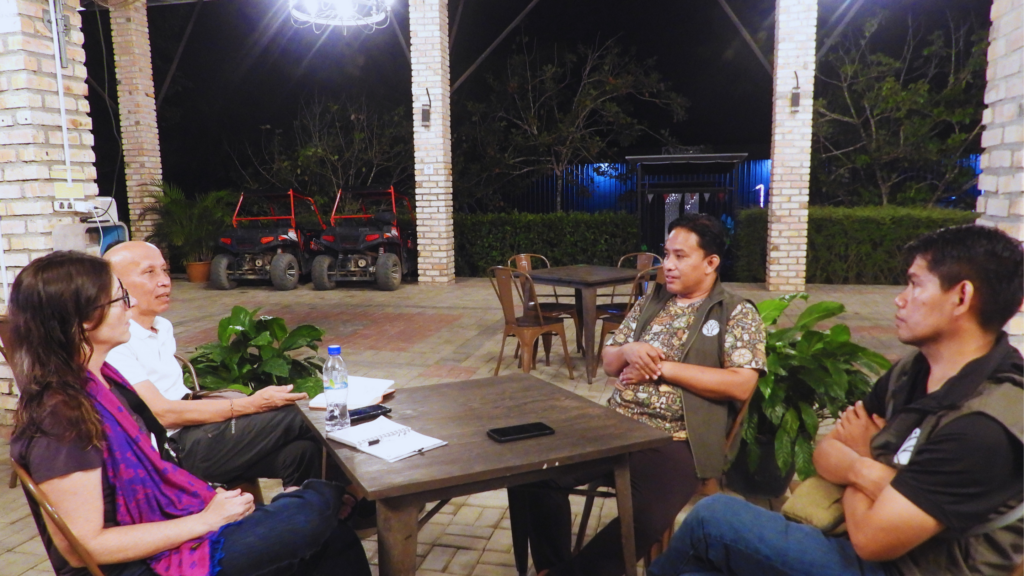
After observing the bridges and discussing their performance with JAWI and Politeknik Bintan Cakrawala, the Sulawesi team held a follow-up discussion to determine how the lessons from Bintan could be applied to Karaenta.
The team agreed that material durability should be a major consideration. The failure of a nylon-rope bridge in Bintan highlighted the importance of selecting materials capable of withstanding the environmental conditions and microclimate of Karaenta. Following JAWI’s recommendation, the team is considering steel cable protected with firehose canvas for the proposed structure.
For the initial Karaenta trial, the team is considering a ladder-style canopy bridge with mesh alongside a single-rope design, installed side by side. A T-shaped support pole is being considered to allow both designs to be installed next to each other, with a camera trap positioned at the center of the structure to document and compare wildlife use and potential design preferences.
The ladder on the support pole will only extend partway up the pole. This approach is intended to reduce the possibility of unauthorized human access while still allowing wildlife to reach the elevated crossing. It will also make camera-trap monitoring and maintenance more practical.
Rather than assuming which design will work best, the team plans to test different designs and allow the macaques’ behavior to provide the answer.
From Knowledge Exchange to Action
The Bintan visit strengthened the next phase of the Karaenta canopy bridge initiative by providing the Sulawesi team with practical lessons from an existing wildlife-crossing program. The experience demonstrated both the potential of canopy bridges and the challenges that must be anticipated, from material durability and structural movement to species-specific design and strategic site selection.
Following the visit, Balai Taman Nasional Bantimurung-Bulusaraung, Project SEED, and TRG TREDIC, will incorporate the observations and recommendations from Bintan into the detailed proposal for the Karaenta canopy bridge. The revised technical considerations will then be communicated to BBPJN Sulawesi Selatan for further engineering development.
The team hopes that the construction of the first canopy bridges in Karaenta can begin in 2027, subject to the availability of funding and completion of the technical design process. In preparation for this, the team is also considering installing a single-rope prototype using firehose-covered steel cable toward the end of 2026 to begin monitoring Moor macaque responses and preferences.
The journey from Karaenta to Bintan and back to Karaenta demonstrates that conservation solutions are rarely developed in isolation. By learning from another island, another primate species, and another canopy bridge program, the team can return to Sulawesi with practical knowledge that may help build a safer and more durable crossing for Moor macaques and other arboreal wildlife.
Ultimately, the goal is not simply to build a bridge. It is to reconnect fragmented habitats, reduce wildlife–vehicle interactions, support safer roads for people, and develop a conservation solution that is informed by both science and experience in the field.