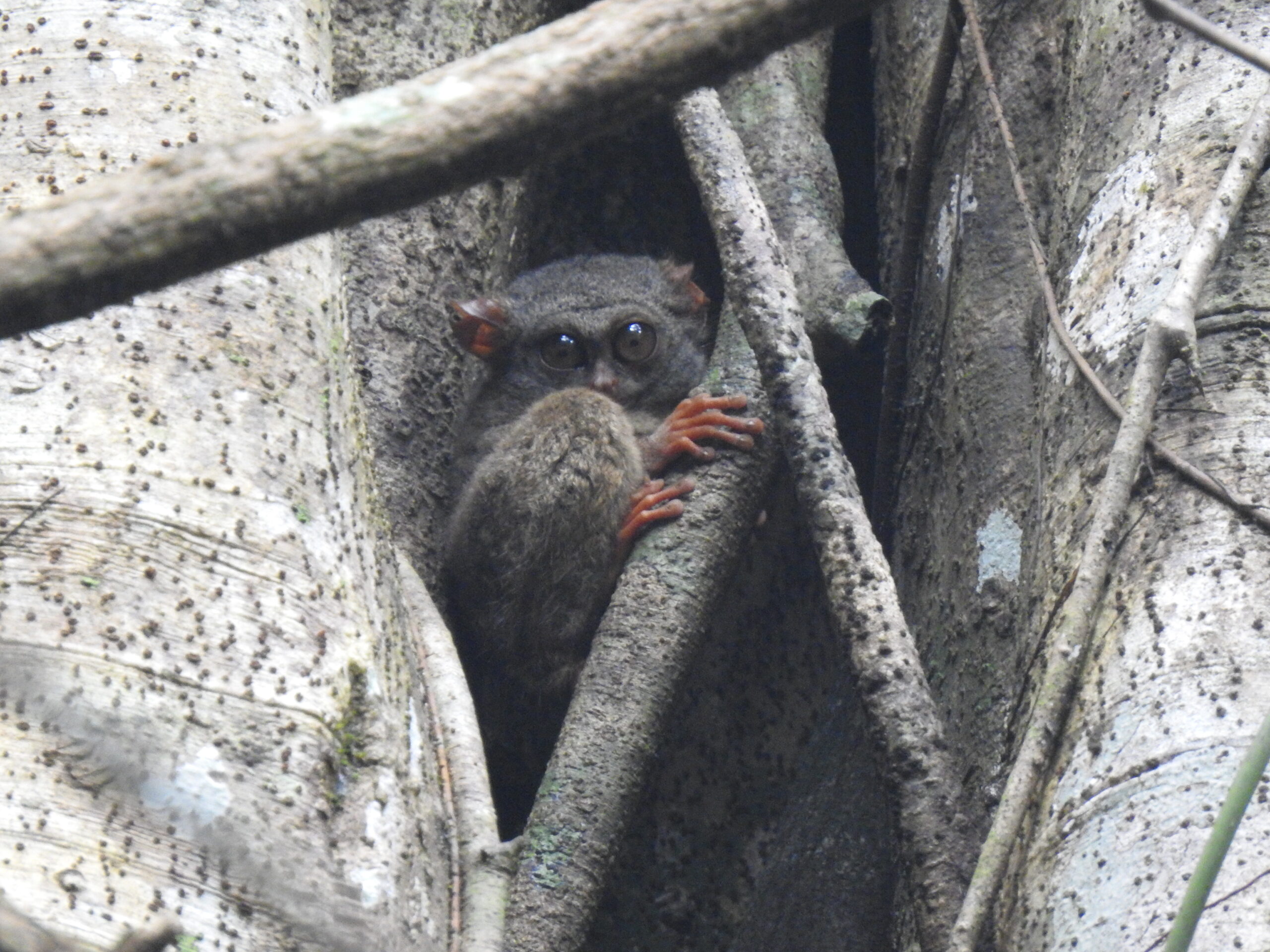

MAKASSAR, Indonesia, June 10, 2026 /TREDIC/ – Every evening, as daylight fades over the forest, Sulawesi tarsiers emerge from their hidden daytime shelters to begin another night of foraging. While much remains unknown about these elusive primates, understanding where they spend the day is a fundamental step toward protecting their populations. Following previous research on tarsier sleeping-site selection, a team from the Forest Conservation Study Program, Faculty of Forestry, Hasanuddin University, conducted a field expedition to locate, document, and monitor potential sleeping sites within the Hasanuddin University Teaching Forest in Maros.
The activity contributes to Sustainable Development Goal (SDG) 15 – Life on Land by supporting the conservation of endemic wildlife and their habitats, SDG 4 – Quality Education through experiential field learning for university students, and SDG 17 – Partnerships for the Goals by strengthening long-term ecological research within Hasanuddin University’s conservation network.
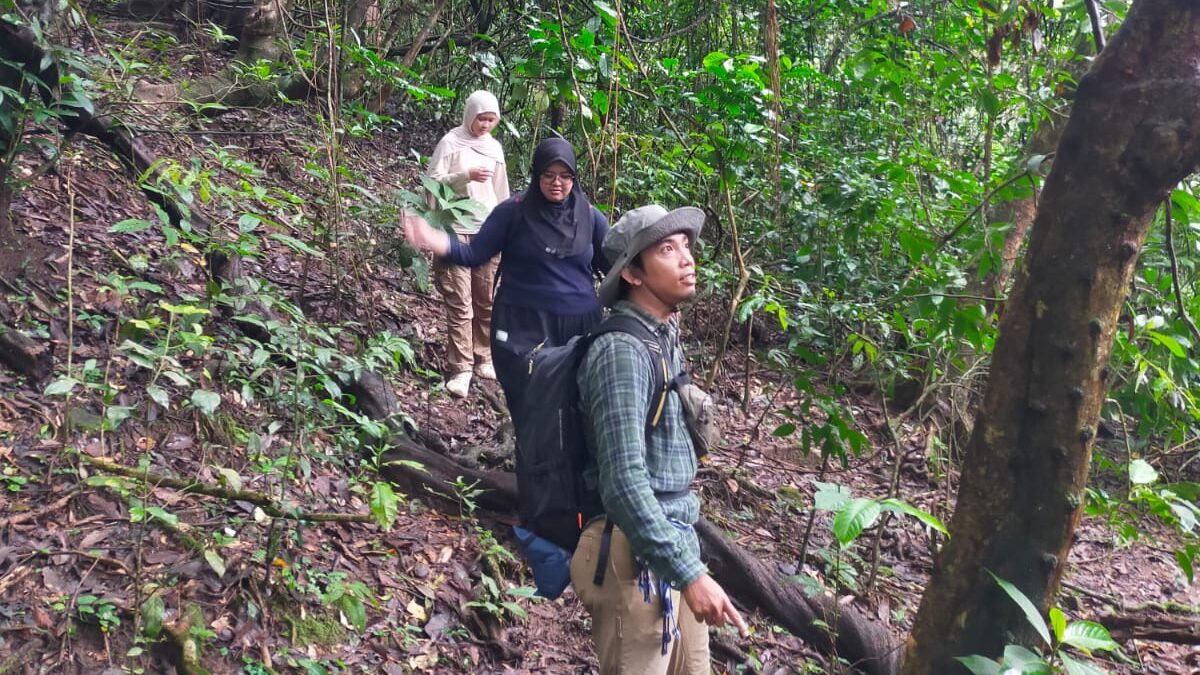
The survey was led by Andi Siady Hamzah and involved three undergraduate students from the Forest Conservation Study Program: Namirah, Fitria Rahmadani Ahmad, and Suci Sahriani. Together, the team explored various forest habitats to identify active and potential sleeping sites used by wild tarsiers.
Building on previous behavioral observations, this phase of the research focused on documenting the physical characteristics of sleeping habitats. Every confirmed or potential sleeping tree was georeferenced, tagged, and described to establish a long-term monitoring database. The team also recorded habitat variables such as vegetation structure, canopy cover, surrounding plant communities, and the type of natural shelter available.
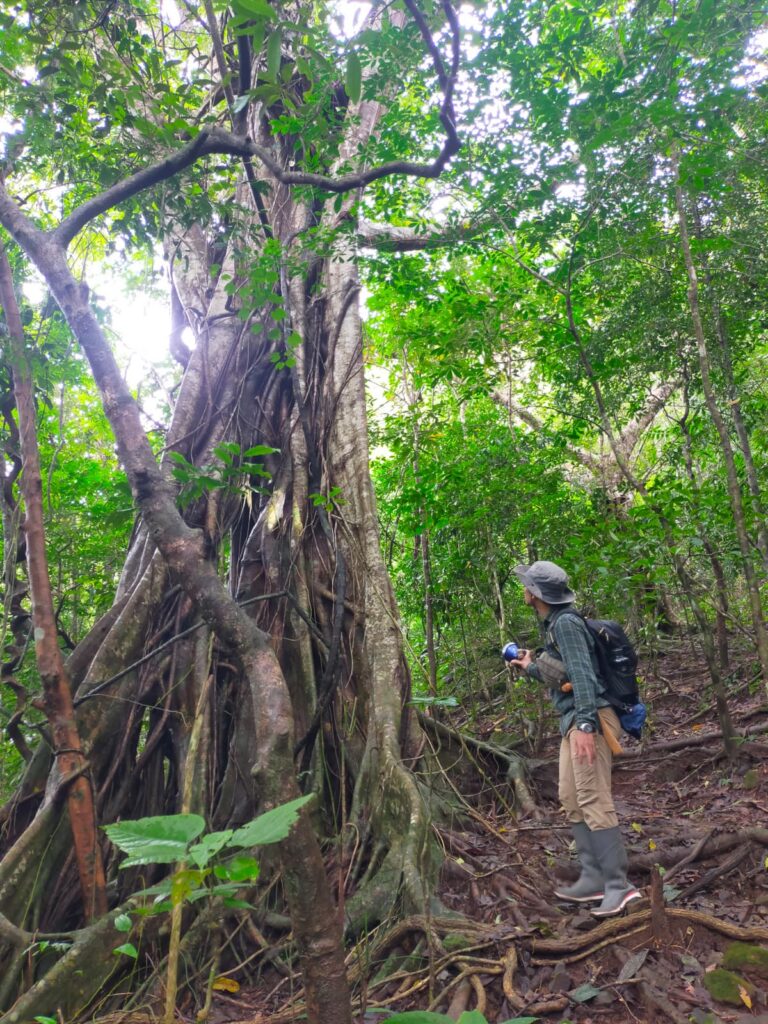
Unlike birds or squirrels, Sulawesi tarsiers do not construct nests. Instead, they rely on naturally occurring refuges that provide protection from predators and harsh environmental conditions. Previous studies have shown that tarsiers frequently select large strangler fig trees (Ficus spp.), tree cavities, dense aerial root systems, bamboo clumps, vine tangles, and thick shrubs as daytime sleeping sites because these structures offer multiple escape routes and stable microclimatic conditions.
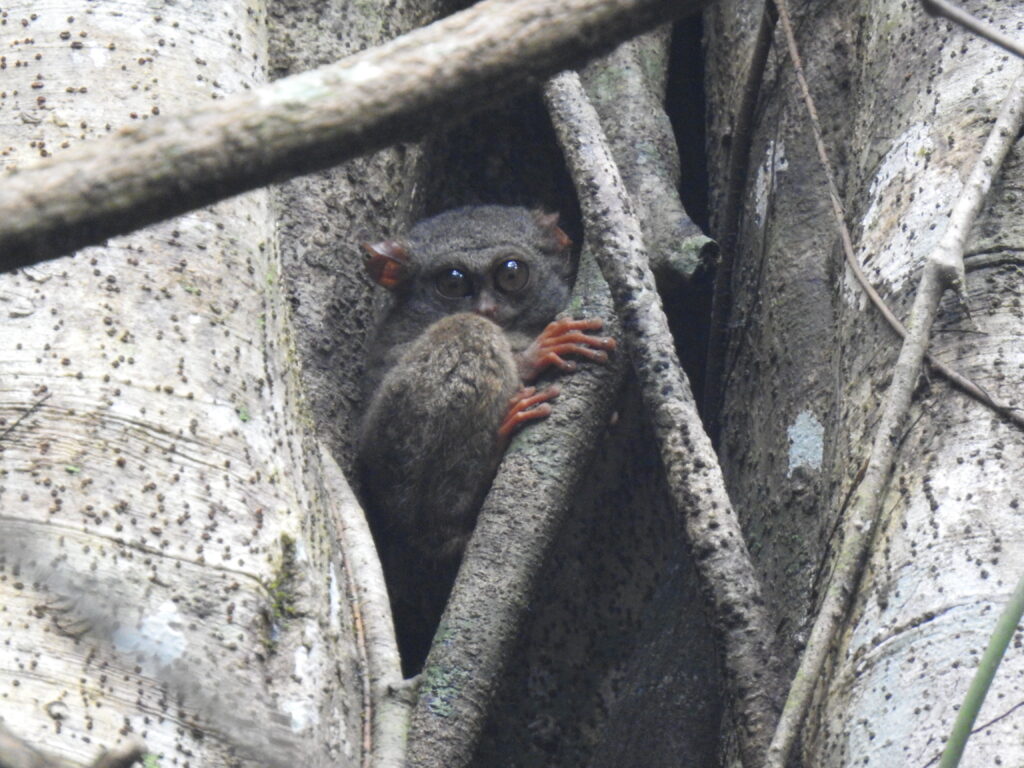
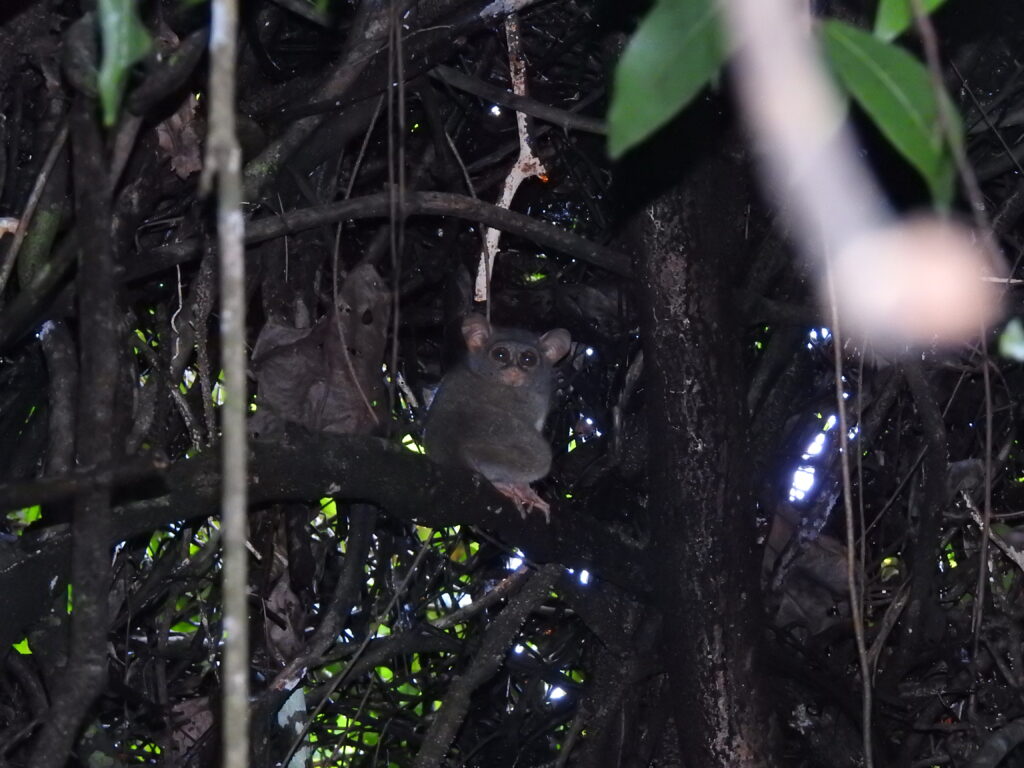
During the expedition, researchers encountered several large Ficus trees with extensive buttress roots and intertwined aerial roots, making them highly suitable as potential sleeping sites. Other locations included dense shrubs and naturally enclosed vegetation that may also serve as daytime refuges. Each site was carefully evaluated and permanently marked for future observations.
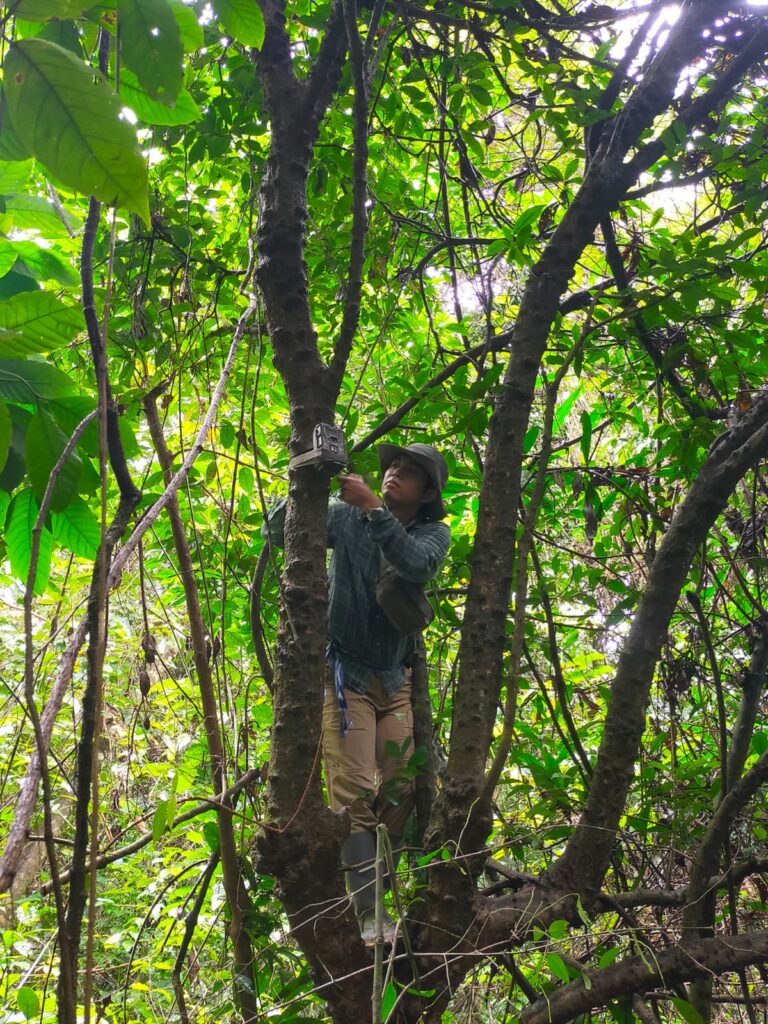
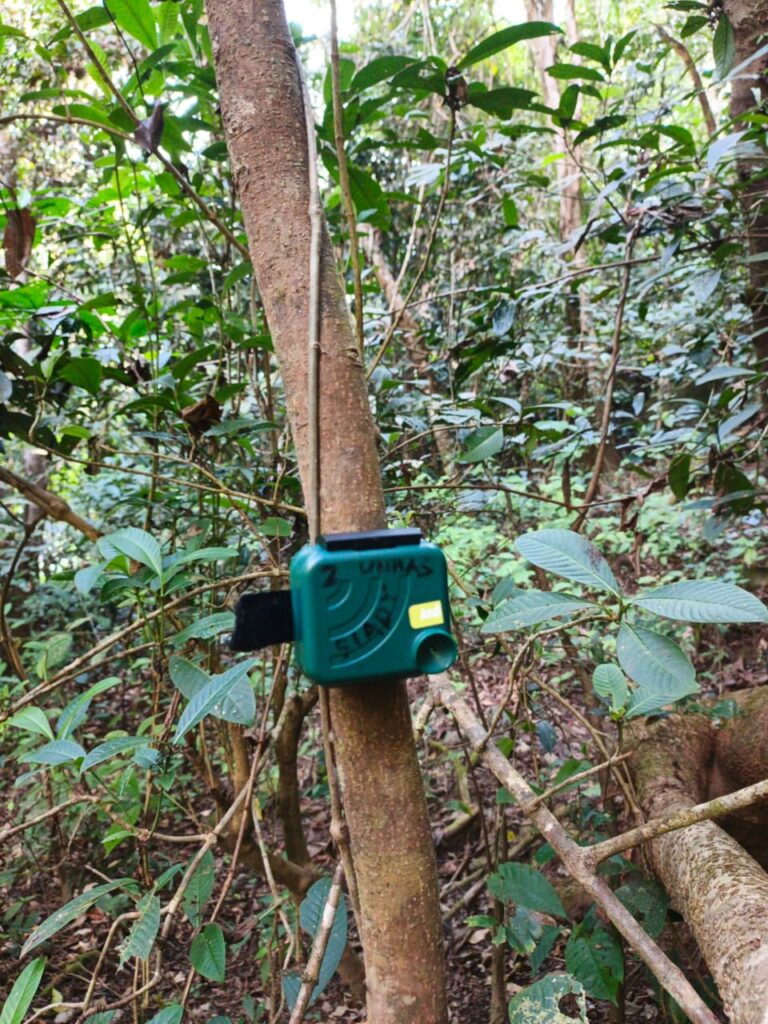
To determine whether these locations are actively used by tarsiers, the team installed camera traps near selected sleeping trees. The cameras are expected to capture tarsiers as they leave their shelters at dusk and return before sunrise while also documenting other wildlife that may share the habitat.
In addition to camera traps, researchers deployed passive acoustic recorders (sound traps) around several tagged sites. Because tarsiers produce distinctive vocalizations during dawn and dusk, these autonomous recording devices allow researchers to detect their presence without disturbing their natural behavior. Combining acoustic monitoring with camera trap data will provide a more comprehensive understanding of site occupancy, activity patterns, and habitat use.
The information collected from this survey will contribute to the development of a long-term inventory of tarsier sleeping sites in the Hasanuddin University Teaching Forest. By revisiting tagged trees over time, researchers hope to determine whether tarsiers repeatedly use the same sleeping sites, how habitat characteristics influence site selection, and how environmental changes affect their daily behavior.
As one of Hasanuddin University’s primary centers for field education and biodiversity research, the Hasanuddin University Teaching Forest provides an ideal natural laboratory for studying Sulawesi’s endemic wildlife. Through the dedication of lecturers and students conducting field-based research, each documented sleeping site brings scientists one step closer to understanding the ecology of these remarkable nocturnal primates and developing science-based strategies for their conservation.
Contact:
A. Siady Hamzah
+62 852-4245-7696
siadyhamzah@unhas.ac.id