
MAKASSAR, Indonesia, February 26, 2026 /TREDIC/ – Imagine a former nickel mining site transformed into a place where birds sing, fruit bats return, and native trees begin to flourish again. While mining often leaves behind damaged landscapes, nature has an incredible ability to recover when people commit to ecological restoration. A recent study from South Sulawesi, Indonesia, shows that restoring habitats is not simply about planting trees, it is about rebuilding an entire living ecosystem where plants, birds, and mammals interact once again.
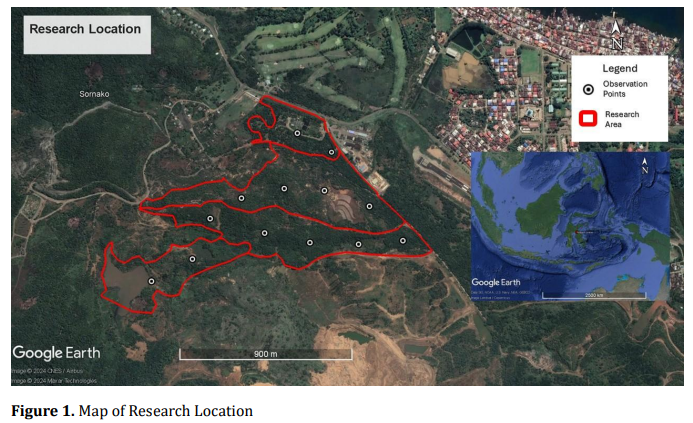
Researchers surveyed a 71-hectare rehabilitated mining area in the Sawerigading Wallacea Biodiversity Park, a former PT Vale Indonesia nickel concession that has been under restoration for 21 years. During a 28-day field survey, they recorded an impressive 42 bird species, 7 mammal species, and 63 plant species, demonstrating that wildlife is gradually returning to the restored landscape. The presence of these species indicates that the ecosystem is moving through a natural process known as ecological succession, where life slowly rebuilds after disturbance.
However, counting species alone does not tell the whole story. Scientists also examined feeding guilds: groups of animals that share similar diets, such as insect-eaters, fruit-eaters, nectar-feeders, omnivores, and carnivores. These feeding guilds reveal how healthy an ecosystem truly is because every group performs different ecological roles. Fruit-eating birds and bats disperse seeds, nectar-feeding birds pollinate flowers, insect-eating birds naturally control pests, and predators help maintain ecological balance. Together, these interactions keep forests functioning.
The study found that insect-eating birds were the most common group, while omnivorous mammals dominated among mammals. This suggests that the restored habitat is improving but has not yet reached the complexity of a mature forest. Scientists recommend increasing the diversity of fruiting and flowering plants so that more seed dispersers and pollinators can thrive. These species are essential because they help forests regenerate naturally, making restoration more resilient over time.
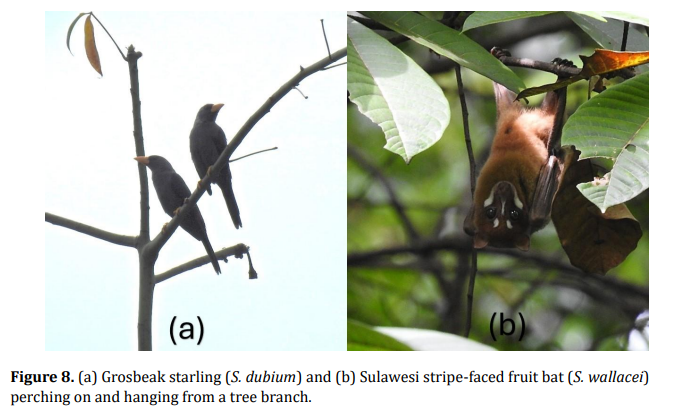
One particularly encouraging finding was the abundance of the Grosbeak Starling, an endemic Sulawesi bird, and the Sulawesi Stripe-faced Fruit Bat, both of which rely on the availability of trees and fruits. Their presence demonstrates that restored habitats can once again support native wildlife when suitable food and shelter are available.
This research reminds us that ecological restoration is a long-term investment rather than an instant solution. Planting trees is only the beginning; success is measured by whether wildlife returns and ecological interactions recover. Every bird carrying seeds, every bat pollinating flowers, and every tree providing shelter represents another step toward rebuilding a healthy ecosystem.
This work directly contributes to the United Nations Sustainable Development Goals (SDGs), particularly SDG 15: Life on Land, by promoting ecosystem restoration, biodiversity conservation, and sustainable land management. It also supports SDG 13: Climate Action, as restoring degraded ecosystems strengthens resilience to climate change and enhances carbon storage through recovering vegetation.
Reference :
DOI: 10.1088/1755-1315/1553/1/012049
Contact:
A. Siady Hamzah
siadyhamzah@unhas.ac.id