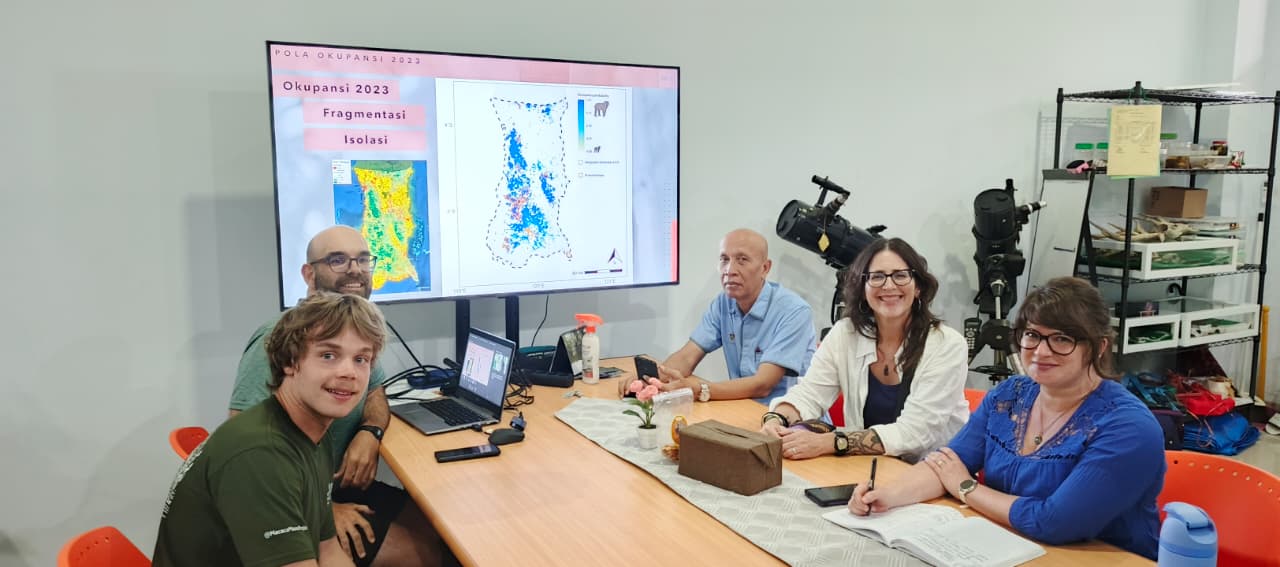

Makassar, South Sulawesi – Advancing conservation science requires more than fieldwork; it depends on meaningful collaboration and the exchange of knowledge across institutions and countries. On July 8, 2026, researchers from Indonesia, the United States, Germany, and Mexico gathered at Hasanuddin University to discuss recent research findings and identify future directions for collaborative primate conservation research in Sulawesi.
The research discussion was attended by five participants representing Hasanuddin University (Indonesia), San Diego State University (USA), Georgia State University (USA), Universidad Veracruzana (Mexico), and Universität Leipzig (Germany). The meeting reflects a growing commitment to international scientific collaboration in understanding and conserving Indonesia’s endemic wildlife.
The activity contributes to several Sustainable Development Goals (SDGs), particularly SDG 15 – Life on Land through biodiversity conservation research, SDG 4 – Quality Education by promoting academic knowledge exchange and student involvement, and SDG 17 – Partnerships for the Goals by strengthening international collaboration among universities and research institutions.
The discussion was led by Prof. Dr. Ngakan Putu Oka from Hasanuddin University and Prof. Dr. Erin P. Riley from the Department of Anthropology, San Diego State University (USA). Joining the discussion were Dr. Amanda L. Ellwanger from Georgia State University (USA), Dr. Victor B. Frances from Universidad Veracruzana (Mexico), and a master’s student from the Institute of Biology, Human Biology and Primate Cognition, Universität Leipzig (Germany). The meeting provided an opportunity for each collaborator to present recent research findings, exchange perspectives, and discuss future collaborative initiatives.
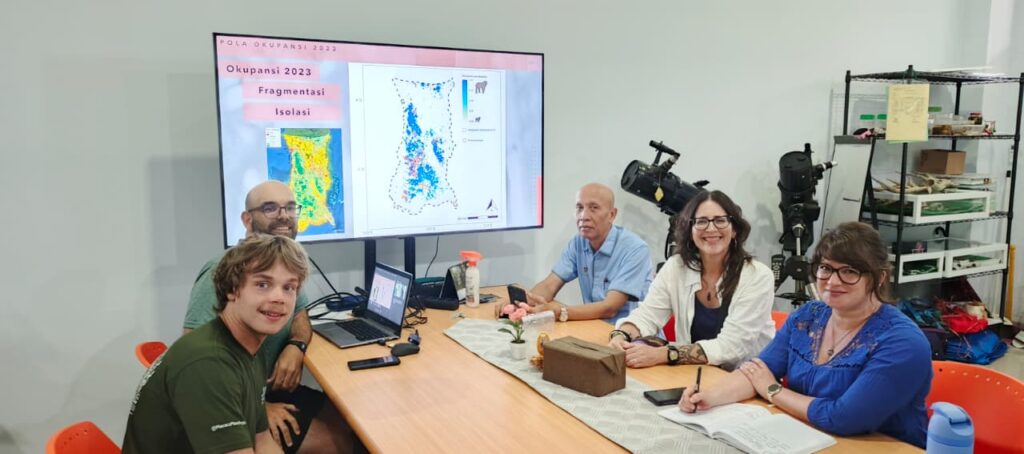
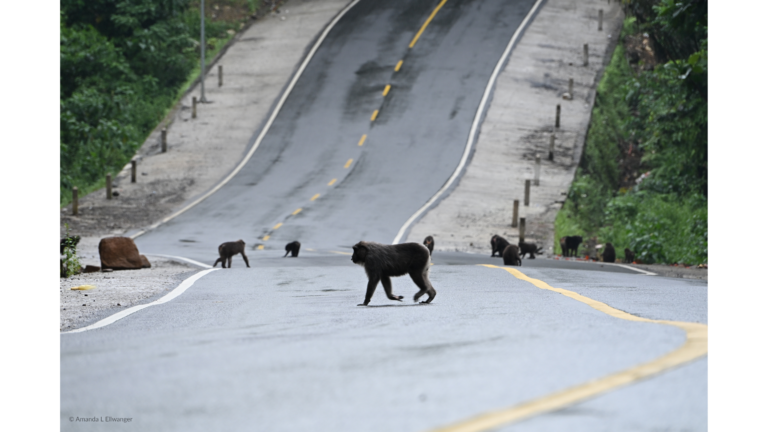
Throughout the session, participants reviewed ongoing studies on Sulawesi’s endemic primates, habitat use, landscape fragmentation, and conservation challenges. The discussion emphasized how long-term ecological monitoring and interdisciplinary research can provide valuable insights for evidence-based conservation management. Researchers also explored opportunities to integrate behavioral ecology, habitat assessment, and emerging technologies into future studies.
Beyond sharing research results, the meeting served as a platform to strengthen partnerships among collaborating institutions. Participants discussed future joint research projects, student exchanges, collaborative publications, and strategies for expanding international cooperation in biodiversity conservation and primate research.
The collaborative atmosphere highlighted the importance of bringing together researchers with diverse expertise and geographical perspectives. Such partnerships not only enhance scientific understanding but also foster innovative approaches to addressing conservation issues in one of Indonesia’s most biodiverse regions.
As international collaboration continues to grow, Hasanuddin University remains committed to serving as a hub for conservation research and capacity building. Through partnerships with universities across the globe, researchers are working together to generate scientific knowledge that supports the conservation of Sulawesi’s unique biodiversity while inspiring the next generation of conservation scientists.