

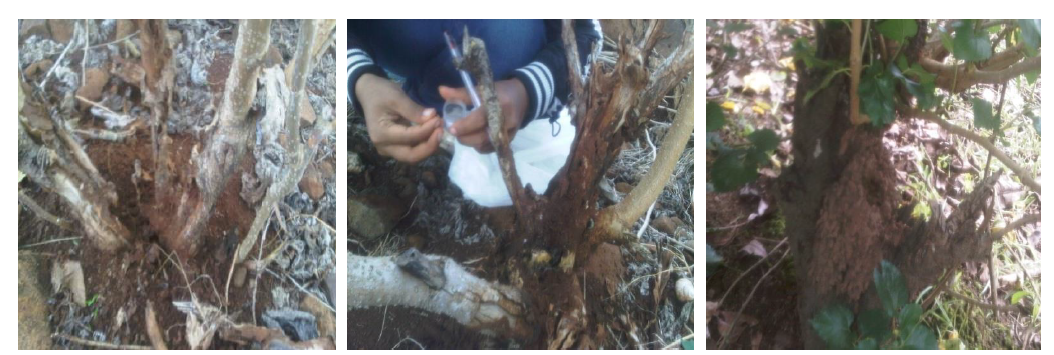

MAKASSAR, Indonesia May 11 2026 /TERMITE/-Mulberry plants may not receive as much public attention as other agricultural crops, but they play an important role in supporting ecosystems, livestock feed, traditional medicine, and silk production. In many regions, mulberry cultivation also contributes to local livelihoods and environmental sustainability. However, behind their economic and ecological value, mulberry plants face a hidden threat from one of nature’s smallest but most destructive insects: termites.
This issue was discussed in the scientific article titled “Identification of Termite Genera and Intensity of Attack on Mulberry (Morus indica and M. cathayana)”, published in The First Forest and Society International Conference 2024 by IOP Publishing in 2024. The study examined the types of termites attacking mulberry plants and the intensity of the damage they caused.
The research found that several termite genera were responsible for attacking mulberry plants. These termites feed on plant tissues and roots, weakening plant growth and reducing overall productivity. In severe cases, termite infestations can lead to plant death, causing significant economic losses for farmers and reducing the sustainability of mulberry cultivation.
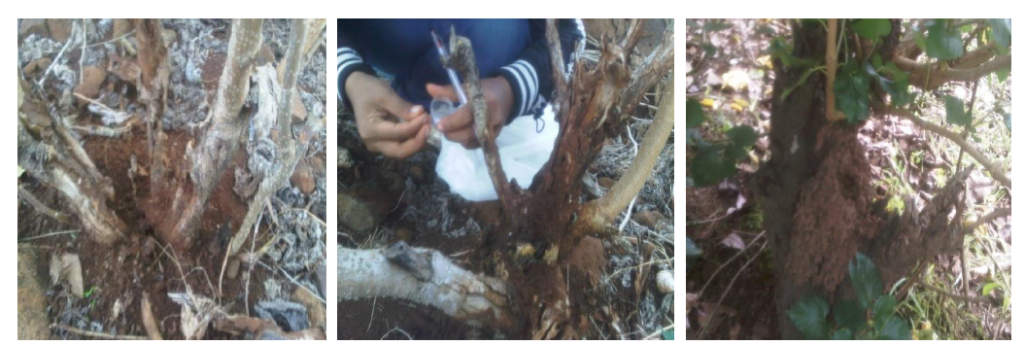
At first glance, termites may appear to be simple agricultural pests. However, the issue is much broader and closely connected to SDG 15: Life on Land, one of the Sustainable Development Goals established by the United Nations. SDG 15 focuses on protecting terrestrial ecosystems, preventing biodiversity loss, and promoting sustainable land management. Healthy plant systems are essential for maintaining ecosystem balance, soil quality, and biodiversity.
Interestingly, termites are not entirely harmful organisms. In natural ecosystems, termites help decompose dead organic matter and recycle nutrients back into the soil. Their activity improves soil fertility and supports ecological processes. Problems occur when termite populations become uncontrolled in agricultural or plantation areas, where they begin attacking economically valuable plants such as mulberry.
The findings from this study highlight the importance of sustainable pest management strategies. Farmers and land managers should not rely solely on chemical pesticides, as excessive chemical use may damage soil health and surrounding ecosystems. Instead, integrated pest management approaches, environmental monitoring, and proper land maintenance can help control termite populations more sustainably.
The research also demonstrates how scientific studies contribute to public awareness and environmental conservation. By identifying termite genera and understanding their attack intensity, researchers can provide important recommendations for protecting crops while maintaining ecological balance.
In addition, the study reminds society that even small insects can have major impacts on agriculture, biodiversity, and economic sustainability. Protecting plants from biological threats is not only about increasing productivity, but also about ensuring long-term environmental resilience.
Scientific publications such as “Identification of Termite Genera and Intensity of Attack on Mulberry (Morus indica and M. cathayana)” play an important role in connecting science with sustainable development. Through collaboration between researchers, farmers, academic institutions, and policymakers, sustainable agricultural systems can be strengthened for future generations.
Ultimately, protecting mulberry plants from termite attacks is not just an agricultural issue. It is also part of the global effort to support SDG 15: Life on Land, ensuring healthier ecosystems and a more sustainable future for all.
Article Metadata
Article Title: Identification of Termite Genera and Intensity of Attack on Mulberry (Morus indica and M. cathayana)
Journal/Conference Proceeding: The First Forest and Society International Conference 2024
Publisher: IOP Publishing
Publication Year: 2024
Related SDG: SDG 15 – Life on Land
Reference:
doi:10.1088/1755-1315/1430/1/012004
Contact:
Prof. Dr. Ir. Astuti Arif, S.Hut., M.Si., IPU.
+62 811-442-171
astuti_arif@unhas.ac.id


