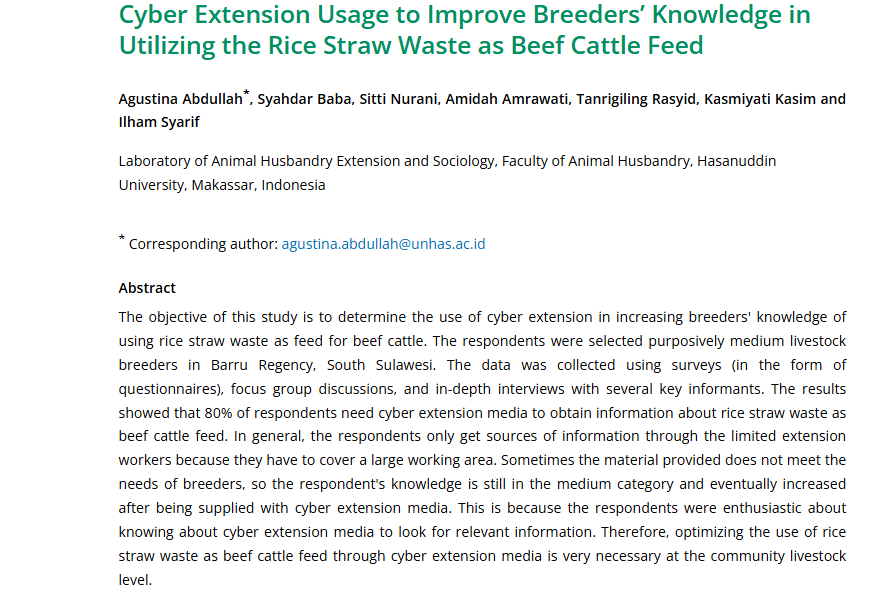
MAKASSAR, Indonesia March 11 2026 /SLF-RG/ – In the rice fields of Barru Regency, South Sulawesi, mountains of rice straw waste lie scattered after every harvest. Most farmers see it as useless leftovers to be burned. But a group of cattle breeders is learning something new: those dry stalks can become high-quality feed for their beef cattle. A recent study titled “Cyber Extension Usage to Improve Breeders’ Knowledge in Utilizing the Rice Straw Waste as Beef Cattle Feed,” published in the BIO Web of Conferences by EDP Sciences on May 22, 2025, shows that digital technology can unlock this hidden potential.
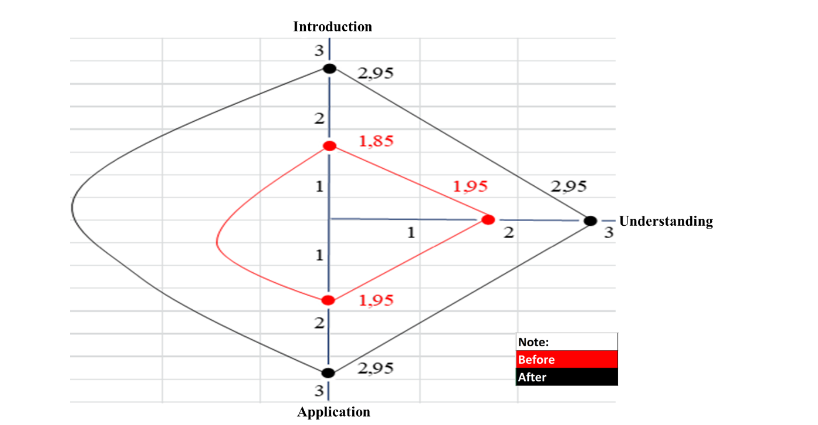
The research involved 20 cattle breeders from advanced farmer groups. At first, their knowledge about using rice straw as animal feed was only medium—scoring 1.85 out of 4. Many had never heard that straw could be fermented or mixed with supplements to become nutritious feed. Their only source of information was local extension workers, who were too few to cover the vast working area. Sometimes the advice given did not even match what breeders really needed.
Then the researchers introduced cyber extension: a digital information system accessible via computers and smartphones. Breeders learned how to search for videos, articles, and practical guides on processing rice straw waste. The result was remarkable. After using cyber extension, their knowledge jumped to 2.95—well into the high category. They understood how to chop, ferment, and store straw as sustainable feed. This matters because beef cattle need good nutrition to grow fast and healthy.
Why is this important for global goals? Because it directly supports SDG 15 (Life on Land) . Using rice straw waste reduces open burning, which damages soil health and releases smoke into the air. Instead of harming the land, breeders now turn agricultural waste into valuable resources. This also reduces pressure on natural grasslands and forests, protecting ecosystems.
But the benefits go further. SDG 4 (Quality Education) is at the heart of cyber extension. Breeders, even those who did not finish elementary school, learned through easy-to-understand digital content. SDG 17 (Partnerships for the Goals) is equally vital. Universities, government agencies, and tech providers must work together to build affordable digital platforms and ensure internet access reaches remote villages.
The study proves that knowledge is power—and digital tools can deliver that knowledge directly to farmers’ hands. No more waiting weeks for an extension worker to visit. With a smartphone and curiosity, breeders can learn at their own pace. Turning waste into feed not only saves money but also protects the land for future generations. In a world facing climate change and food security challenges, small innovations like this create big ripples.
Reference
DOI: https://doi.org/10.1051/bioconf/202517701003
Contact:
Dr. Agustina ABDULLAH
+62 812-4237-920
agustina.abdullah@unhas.ac.id