

In a world facing climate change, environmental degradation, and social inequality, solutions often seem overwhelming. However, a recent study shows that meaningful transformation can start from small, community-driven actions. The article titled “Mechanisms of synergy creation for social-ecological transformation: Leverage point analysis of the emergence of autonomous innovations,” published in PLOS ONE by the Public Library of Science on May 14, 2025, offers an inspiring perspective on how local innovations can create powerful change.
The research highlights the concept of “autonomous innovations,” which are grassroots initiatives developed by communities, especially in developing countries. These innovations are not imposed from the top down but emerge from local needs, knowledge, and collaboration. What makes them especially impactful is their ability to create synergies—situations where one action benefits multiple aspects of life, such as the environment, economy, and social well-being.
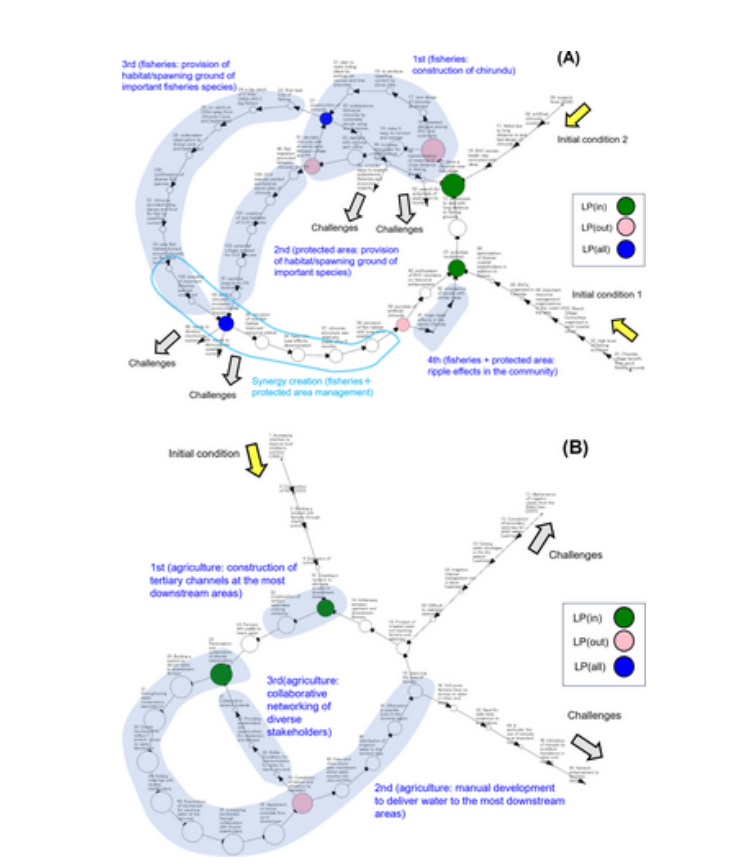
For example, a community might begin by improving fisheries to increase food supply. Over time, this effort can also support ecosystem conservation, tourism, and income generation. According to the study, these overlapping benefits are key to transforming what scientists call “social-ecological systems”—the complex relationship between humans and nature.
One of the most important findings of the study is that transformation begins early. When communities recognize connections between different challenges—like poverty, environmental damage, and lack of education—they are more likely to create solutions that address multiple issues at once. This process is supported by what researchers call “leverage points,” or small changes that can lead to significant impacts across a system.
Crucially, the study identifies several factors that help create synergy. These include changes in people’s perceptions, the ability to identify new challenges, and the creation of shared values. When individuals begin to see problems as interconnected rather than isolated, they are more likely to collaborate and innovate effectively.
This research strongly connects with Sustainable Development Goal (SDG) 15: Life on Land, which focuses on protecting ecosystems, managing forests sustainably, and halting biodiversity loss. By promoting integrated approaches to natural resource management, autonomous innovations help communities protect their environment while also improving livelihoods. In this way, local actions directly contribute to global sustainability goals.
Moreover, the study emphasizes that these transformations are not linear or predictable. Instead, they evolve through continuous learning, collaboration, and adaptation. Communities that succeed are those that remain open to new ideas and actively engage diverse stakeholders.
In conclusion, the article from PLOS ONE reminds us that solving global challenges does not always require large-scale interventions. Sometimes, the most powerful changes begin at the local level, driven by people who understand their environment best. By fostering collaboration, embracing complexity, and focusing on synergy, communities can create sustainable futures—not just for themselves, but for the planet as a whole.
https://doi.org/10.1371/journal.pone.0323451
Contact:
Prof. Agnes Rampisela
metroxylonsagu@trg.unhas.ac.id


