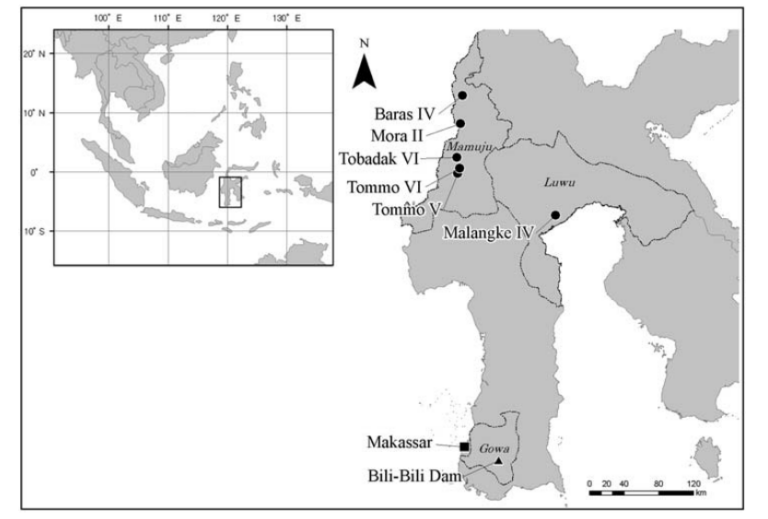
Cities are growing faster than ever, bringing opportunities for economic development, better infrastructure, and improved living standards. But behind this rapid growth lies a critical question: can the environment support it? A scientific study titled “Quantifying Future Environmental Carrying Capacity Based on Land Use/Land Cover Data and Ecosystem Services Valuation: A Case Study in Makassar City, Indonesia,” published in the International Journal of Environmental Studies by Routledge Taylor & Francis Group on 25 June 2021, explores this urgent issue .
The study focuses on Makassar City, one of the fastest-growing urban areas in Indonesia. Using land use and land cover data combined with ecosystem service valuation, researchers predicted how the city’s environmental capacity will change by 2031. In simple terms, environmental carrying capacity refers to how much pressure nature can handle while still supporting human life.
The results are concerning. The study predicts that all types of ecosystem services—such as clean water supply, climate regulation, and biodiversity—will continue to decline over time . By 2031, many of these services are expected to drop to less than half of their current levels. This decline is largely driven by rapid urban expansion, where natural areas like forests and agricultural land are being replaced by buildings and infrastructure.

Why are ecosystem services important? Because they directly support our daily lives. For example, vegetation helps regulate air quality and temperature, while water bodies provide clean water and reduce flooding risks. As these natural systems weaken, cities become more vulnerable to environmental problems such as heatwaves, water shortages, and pollution.
One major driver of this problem is population growth. As more people move into cities, the demand for housing, transportation, and resources increases. explains that this growing demand puts additional pressure on limited land and natural resources, leading to environmental degradation. Without proper planning, this trend could make cities less livable in the future.
This issue is strongly connected to Sustainable Development Goal (SDG) 15: Life on Land. SDG 15 emphasizes the need to protect ecosystems, prevent land degradation, and ensure sustainable use of natural resources. The findings of this study highlight the urgency of balancing urban development with environmental conservation.
The study also offers an important message for policymakers and communities. It suggests that cities like Makassar need to adopt sustainable development strategies, such as the “Green City” concept. This approach focuses on integrating nature into urban planning by preserving green spaces, improving land management, and promoting environmentally friendly infrastructure.
In addition, public awareness plays a crucial role. People need to understand that their daily choices—such as land use, consumption patterns, and environmental behavior—have long-term impacts on the city’s sustainability.
In conclusion, the future of Makassar depends not only on how much it grows, but on how wisely it develops. The study published in the International Journal of Environmental Studies reminds us that ignoring environmental limits can lead to serious consequences. By protecting ecosystem services and planning responsibly, cities can grow while still maintaining a healthy and sustainable environment for future generations.
https://doi.org/10.1080/00207233.2021.1941674
Contact :
Prof. Agnes Rampisela
metroxylonsagu@trg.unhas.ac.id