Makassar, Indonesia/May 21, 2026/PRG/Deep beneath the dense forests of East Kalimantan, a sophisticated yet elegantly simple technique is quietly transforming the way petroleum engineers locate and evaluate underground hydrocarbon reservoirs. Rather than relying solely on expensive conventional tools, geoscientists are now turning to something far more immediate — the gases liberated the moment a drill bit fractures subsurface rock.
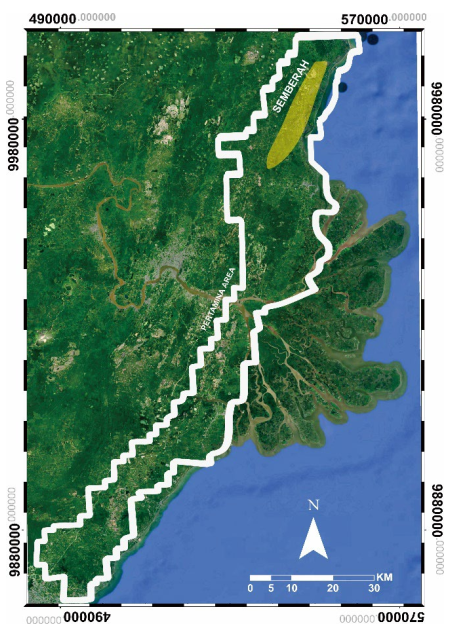
Published in the International Journal of GEOMATE (2025), a collaborative study by researchers from Hasanuddin University and Pertamina offers a compelling case for gas ratio drilling analysis as a practical, cost-effective approach to subsurface hydrocarbon evaluation — applied specifically to the Semberah Field in the Kutai Basin, one of Indonesia’s most storied onshore petroleum provinces.
The Secret Language of Escaping Gas
As a drill bit advances through rock formations, it liberates minute gas molecules that migrate upward through the drilling mud to the surface. To the untrained eye, these are little more than incidental byproducts of the drilling process. To a trained geoscientist, however, they constitute a real-time data stream of remarkable value — a chemical fingerprint capable of revealing what lies hidden hundreds of meters below.
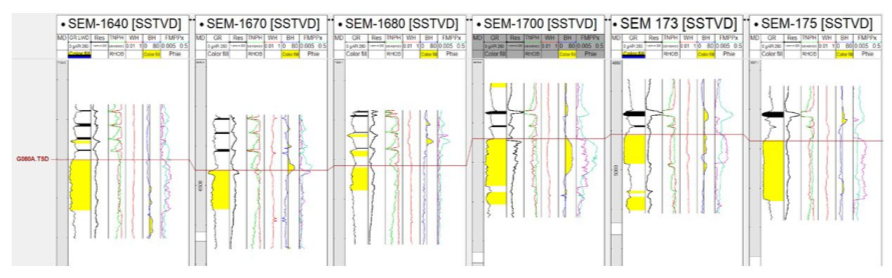
The analytical framework centers on measuring the proportional relationships between hydrocarbon gas components: methane (C1), ethane (C2), propane (C3), and heavier molecular fractions. From these measurements, two key diagnostic indicators are derived — Wetness (WH) and Balance (BH). A BH value exceeding 50 is characteristic of a gas-bearing reservoir, while lower values tend to indicate water-saturated zones or undeveloped intervals. Across the six wells analyzed between 2022 and 2023, the C1/SumC ratio ranged consistently between 0.86 and 0.95, confirming the co-presence of both gas and oil hydrocarbons within the G-80 sandstone — a known productive interval within the field. Crucially, these results aligned closely with data obtained through conventional wireline logging, validating the technique’s reliability.
Revitalizing a Mature Field
The Semberah Field has been in production since 1974, and like many long-producing assets, its most accessible reserves have largely been extracted. Identifying residual hydrocarbon pockets demands increasingly sophisticated and economical methods. Gas ratio analysis addresses this challenge directly — delivering subsurface intelligence in real time, during the drilling operation itself, without the logistical complexity and cost burden of dedicated wireline runs.
Science, Industry, and Sustainability in Partnership
Beyond its technical merits, this research exemplifies the collaborative model that modern energy challenges demand. The partnership between academic researchers, industry operators, and advanced analytical technology reflects the principles embedded in Sustainable Development Goal 17, which champions cross-sector cooperation as a vehicle for achieving shared objectives more efficiently.
Fewer unnecessary wells, reduced surface disturbance, and more informed drilling decisions collectively translate into a lower environmental footprint for petroleum exploration. As Indonesia navigates the complex intersection of energy security and ecological stewardship, innovations grounded in rigorous geoscience offer a promising path — one that prioritizes finding energy more intelligently, rather than simply more extensively.
Reference:
DOI: https://doi.org/10.21660/2025.135.5183
Contact person:
Meutia Farida | +62 812 8828 0303 | meutia.farida@unhas.ac.id