Makassar, Indonesia/May 21, 2026/PRG/Hidden inside ancient sandstones in South Sulawesi, scientists have found clues to a 50-million-year-old puzzle — and the answers could shape how we use the Earth’s resources more wisely.
Based on peer-reviewed research published in IOP Conference Series: Earth and Environmental Science (2025) | Science Communication Feature
SDG 15 — Life on Land
Imagine picking up a handful of sand and being able to read the entire geological history of a land — where the grains came from, how they traveled, and what ancient forces shaped them. That is precisely what a team of geologists from Hasanuddin University, Indonesia, has managed to do with the sandstones of the Mallawa Formation in South Sulawesi.
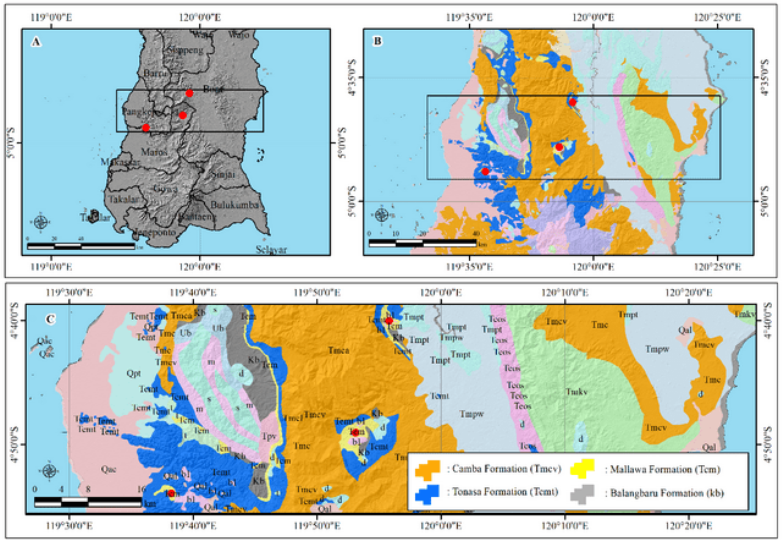
The Mallawa Formation is a thick layer of ancient rock deposited roughly 50 million years ago during a period called the Paleogene. It stretches across the southern arm of Sulawesi, and to the untrained eye, it looks like just another rocky hillside. But beneath the surface lies a record of extraordinary geological drama.
“The sedimentary rocks of the Mallawa Formation hold abundant potential mineral resources — coal, oil and gas prospects, and vast quartz mineral deposits valuable for the renewable energy industry.”
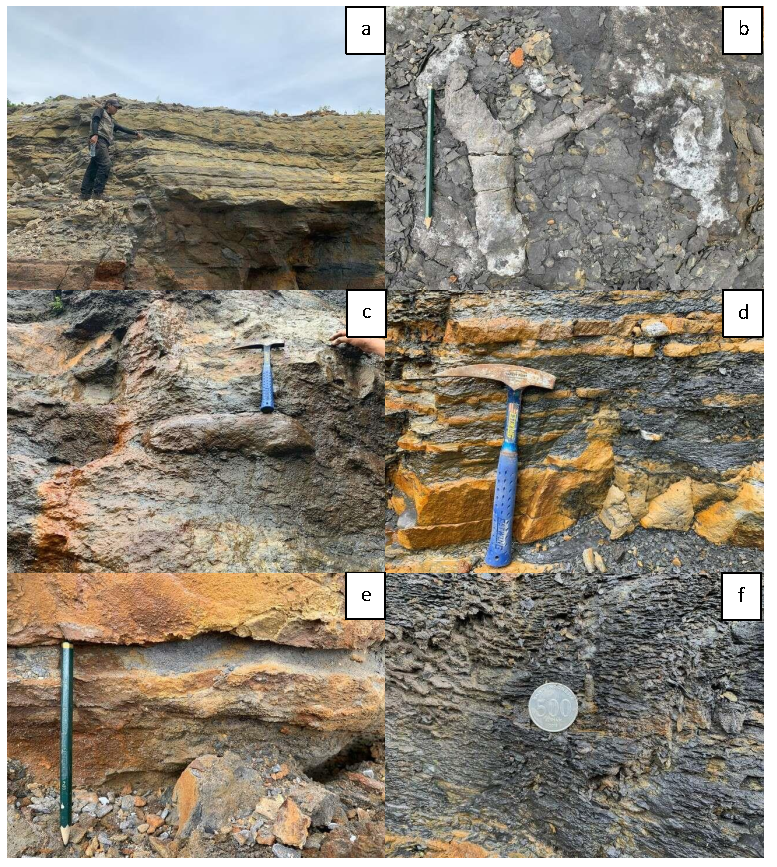
Using a technique called petrographic analysis — essentially slicing rocks wafer-thin and examining them under a microscope — researchers identified exactly what minerals make up these sandstones. They found a rich mixture of quartz, feldspar, and fragments of both volcanic and metamorphic rocks. This composition tells a fascinating story: the sand grains were not formed locally. They were eroded from ancient mountains, carried by rivers, and deposited in a vast coastal delta environment that once covered this region.
The study, conducted across three field sites in Maros, Bone, and Pangkep Regencies, concluded that this sandstone originated from what geologists call a Recycled Orogen — an environment where old mountain belts were uplifted, eroded, and reworked by tectonic forces over millions of years. The source rocks are believed to be igneous formations, as well as the Bantimala and Barru basement complexes — ancient crustal blocks that once formed the deep roots of Sulawesi’s geology.
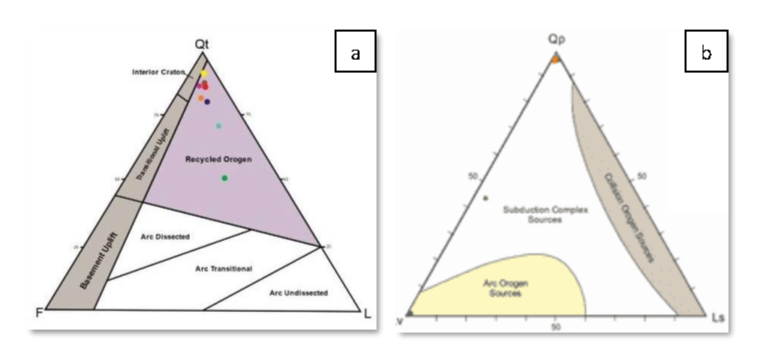
Why does this matter today? The answer connects directly to Sustainable Development Goal 15: Life on Land, which calls for the sustainable management of terrestrial ecosystems and the responsible use of natural resources. Understanding the provenance — the origin — of rocks like these is essential for identifying and protecting mineral-rich zones before exploitation begins. Quartz, abundantly present in the Mallawa Formation, is a critical raw material in the production of solar panels and semiconductor technology, both pillars of a sustainable energy future.
By mapping where these resources come from and how they were formed, scientists equip policymakers and industries with the knowledge needed to mine responsibly, minimize environmental damage, and preserve the surrounding land ecosystems for future generations. Science, in this case, is not just curiosity — it is a tool for stewardship of the Earth.
Source publication:
Title: The Provenance of Quartz-rich Sandstone in Paleogen Clastic Rock of Mallawa Formation From The Southern Arm Of Sulawesi
Authors: Safruddim, A. M. Imran, Ulva Ria Irfan, Meutia Farida
Journal: IOP Conference Series: Earth and Environmental Science, Vol. 1525, Article 012010 (2025)
Publisher: IOP Science / IOP Publishing Ltd
DOI: 10.1088/1755-1315/1525/1/012010
Contact person:
Safruddim
+62 853 4258 9109
safruddim@unhas.ac.id